
Meta Lead Ads for a Benefits Claims Service: 4,096 Leads at $1.87

Lead campaigns for legal and claims assistance services can scale sales, as long as the campaign does not end at the form. In this case study we show a project for one of our clients in Poland, where the optimized cost per form lead was about $1.87-2.10 and the campaigns generated thousands of leads and hundreds of connected phone calls.
The main takeaway is simple: in a lead campaign, the result does not depend on the ad click alone. What matters is messaging that complies with platform policies, fast follow-up on fresh leads, a CRM, and the signals that separate a valuable lead from a mere form submission.
How to generate leads for a benefits claims service
The answer from this project: Meta Ads and TikTok Ads campaigns delivered leads for a service that requires careful messaging, without promising customers something that cannot be guaranteed.
The client is a company that helps people apply for a government support benefit. The service covers eligibility checks, document preparation and guidance through the formal process. This is not a simple cart purchase. The customer’s decision requires trust, a clear explanation of the rules and prompt follow-up after they leave their details.
The client operates nationwide in Poland, so the goal was not “a handful of local inquiries” but a lead generation system that could scale.
Marek’s situation before the campaign
Marek sells a legal and paperwork service that helps people through the process of obtaining a support benefit. The acquisition model is lead-based: Meta instant forms and phone calls.
The main challenge was twofold. First, the number of leads had to grow without losing control of the cost per lead. Second, the growing volume of inquiries required efficient handling, because in lead campaigns response time has a direct impact on how much a lead is actually worth.
So the starting point was not the usual “fix broken tracking and launch ads”. The technical setup was correct. The main job was scaling the campaigns and organizing the process so that growing lead volume would not become an operational problem.
First contact with adsfox
The client found adsfox through a Meta ad. That is an important detail, because it shows the project was rooted from the start in the channel that later became the main source of leads.
We are not going to expand on an unverified history of earlier marketing or the reasons for choosing an agency. We focus on what can be shown honestly: the industry, the acquisition model, the budget, what we implemented and the ad platform results.
Free consultation and project assumptions
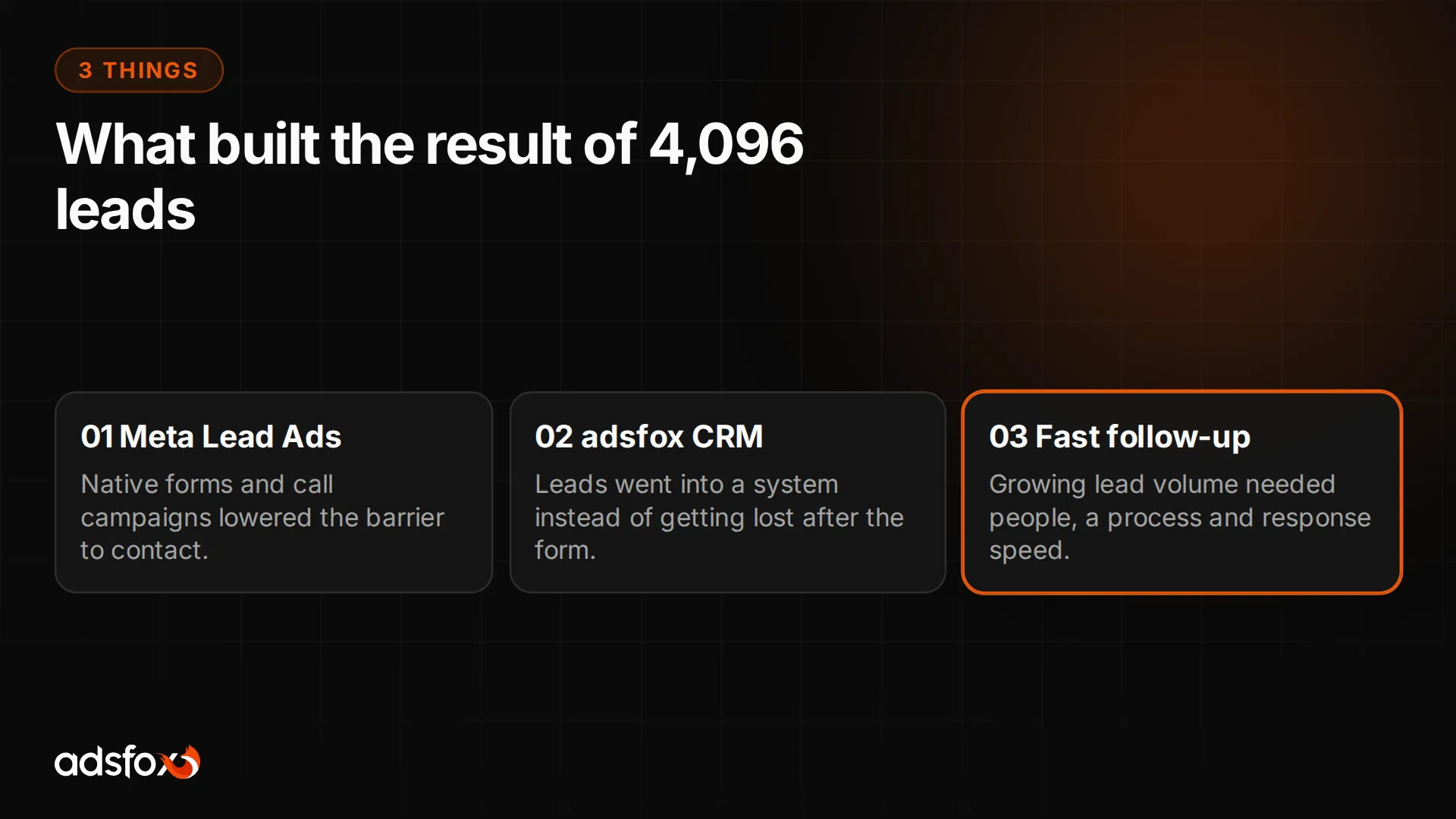
At the start we set three operating assumptions:
- the main acquisition channels would be Meta Lead Ads forms and call campaigns,
- the cost per lead had to stay profitable as the budget grew,
- lead handling had to keep pace with campaign scale.
In practice that meant working not only on the ads but also on the flow of leads. So we implemented adsfox CRM and an integration with the client’s CRM. Lead campaigns work when the specialist sees not only the number of forms, but also what happens to each lead after submission.
adsfox is a Badged Meta Business Partner and a Google Partner, but in a project like this the partner status alone is not enough. The key was turning lead campaign experience into careful messaging and a solid follow-up process.
Ad budget for a claims assistance service
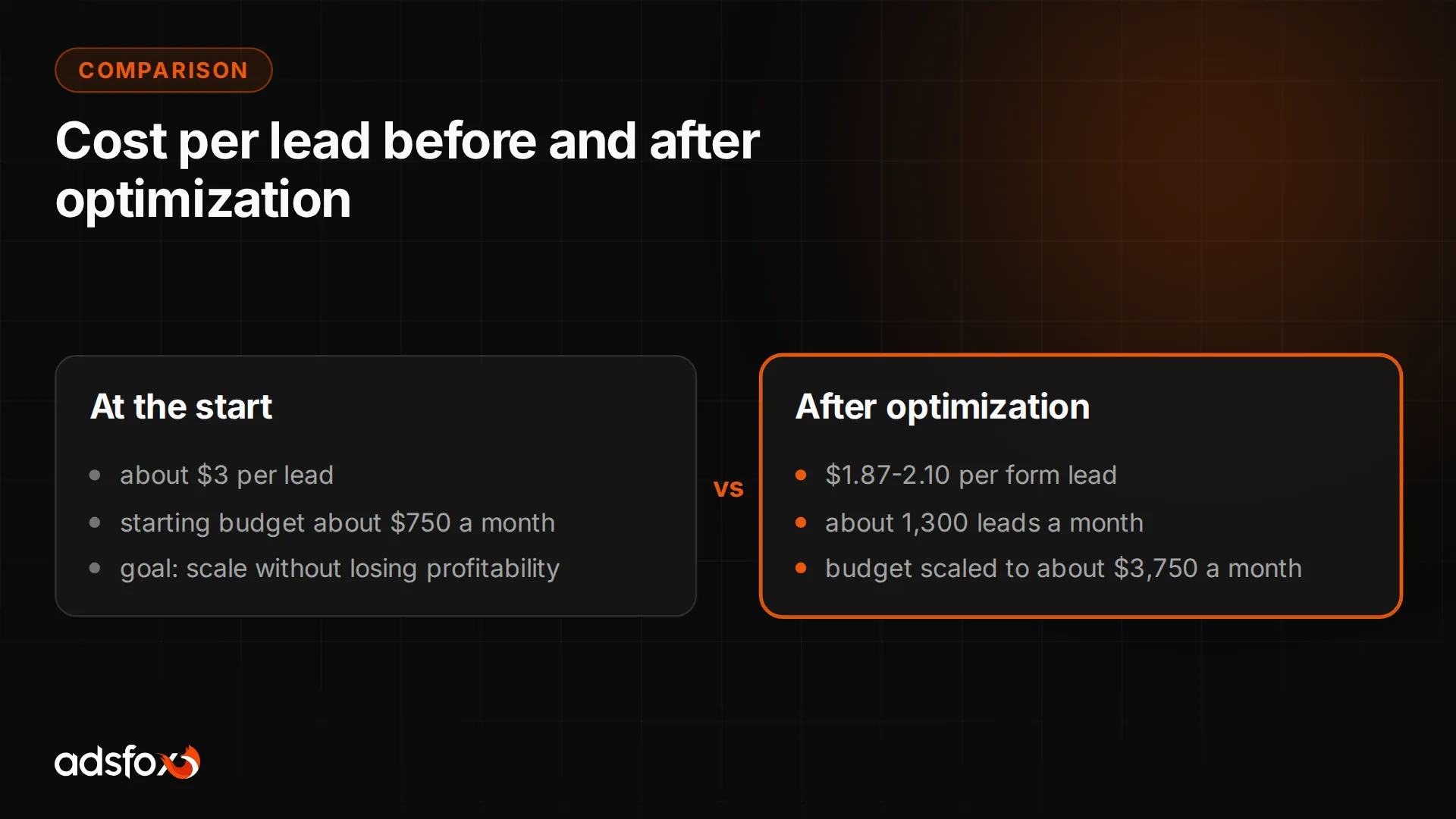
The starting ad budget was about $750 a month. As results came in, the budget was scaled based on performance, with no fixed cap. Today the budget is roughly $3,750 a month.
The channel split looked like this:
- Meta Ads: 80% of the budget,
- TikTok Ads: 20% of the budget.
The key results shown in this write-up come from Meta Ads. That is where the Lead Ads campaigns, instant forms, Advantage+ campaigns and call campaigns ran.
What we implemented in the Meta Lead Ads campaigns
Meta Lead Ads is a campaign format where the user submits their contact details without visiting a website. The form opens directly inside Facebook or Instagram, so the barrier to submitting is lower. For legal and claims services that is an advantage, but also a risk: a cheap form does not always mean a high-quality sales conversation.
That is why we optimized the campaigns for two types of contact:
- leads from Meta instant forms,
- connected phone calls.
The structure used Lead Ads, Advantage+ campaigns and call campaigns. In parallel, we worked on getting fresh leads into follow-up as quickly as possible, so the client could grow organizationally alongside the campaign.
What was unusually difficult
The biggest constraint was Meta’s policy on health and disability-related messaging. In these campaigns you cannot write ads as if the system knew the reader’s health status. You also cannot promise that a benefit will be granted, because the decision depends on a formal review and eligibility criteria.
That requires a different approach to the ads. The message has to be specific enough to attract the right person, but also legally safe, compliant with platform policies and honest with the reader.
What worked in this industry:
- Meta instant forms,
- broad Advantage+ audiences,
- interest targeting,
- fast contact with fresh leads.
We avoided messaging that implied the reader’s health condition, overly direct disability-related wording, and promises guaranteeing that a benefit would be obtained.
Results of the Meta Lead Ads campaign for the claims assistance service
The campaigns in this project delivered results at high lead volume. Cost per lead at the start was about $3. After optimization, the cost per form lead dropped to about $1.87-2.10, and the campaigns generated around 1,300 leads a month.
Key numbers from the project:
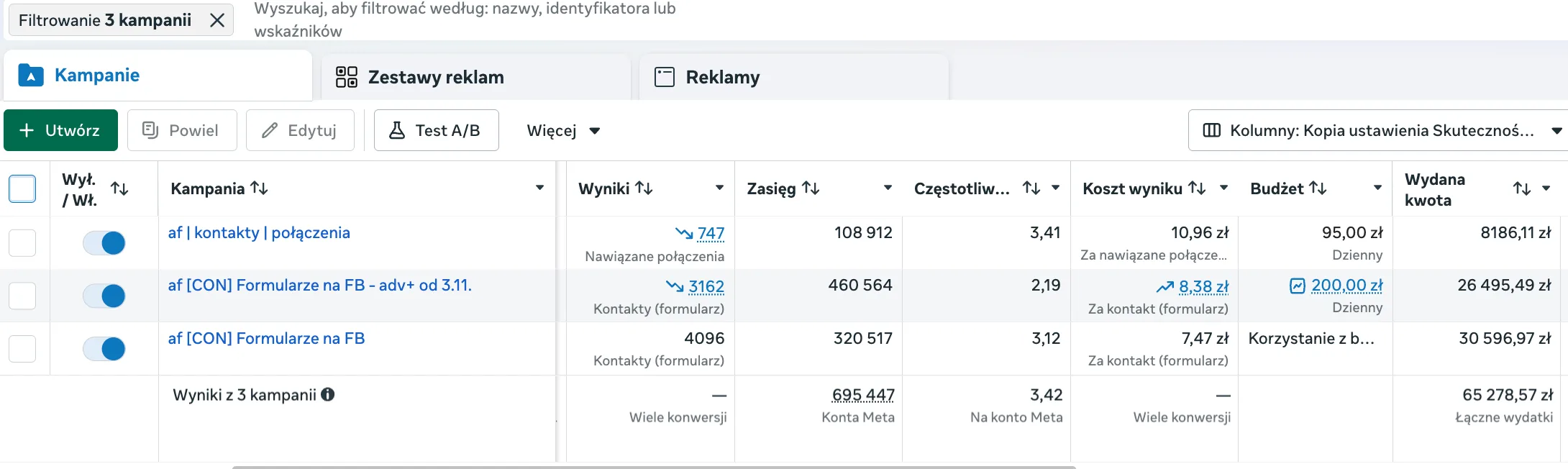
- 4,096 form leads at about $1.87 per lead,
- 3,162 form leads at about $2.10 per lead,
- 747 connected phone calls at about $2.74 per call,
- total reach in the main report: 695,447 Meta accounts,
- total spend in the main report: roughly $16,320.
Below we show both original screenshots close together, so it is easier to compare the earlier stage of the campaign with the later, optimized result.
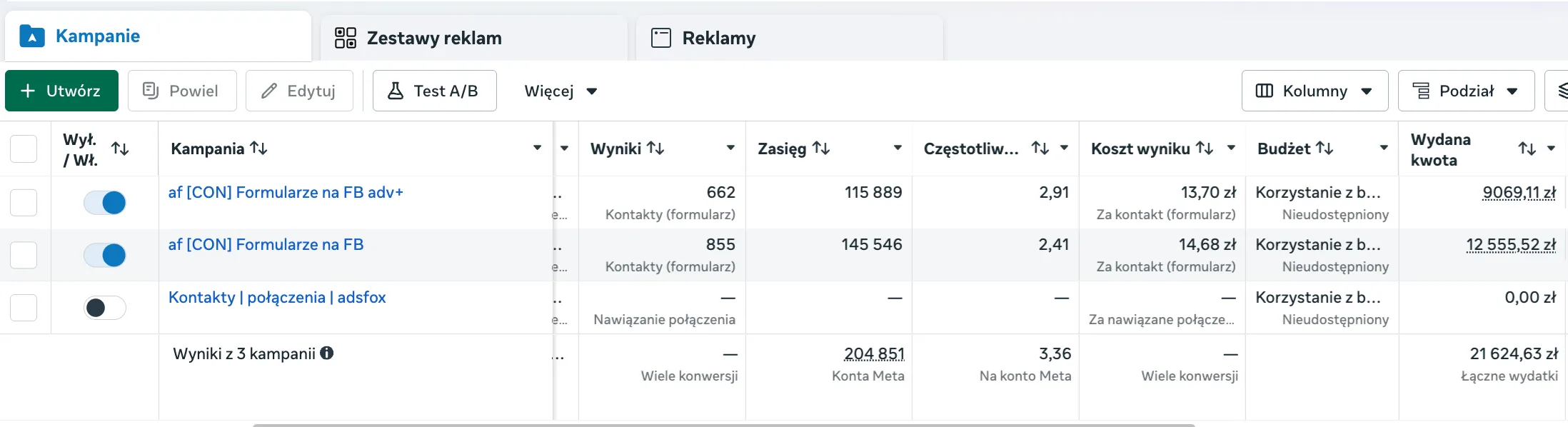
The second screenshot shows an earlier stage with two form campaigns. It shows 662 and 855 form leads at about $3.43 and $3.67 per lead. That is useful context for the main result: further optimization and scaling led to a lower CPL at a higher lead volume.
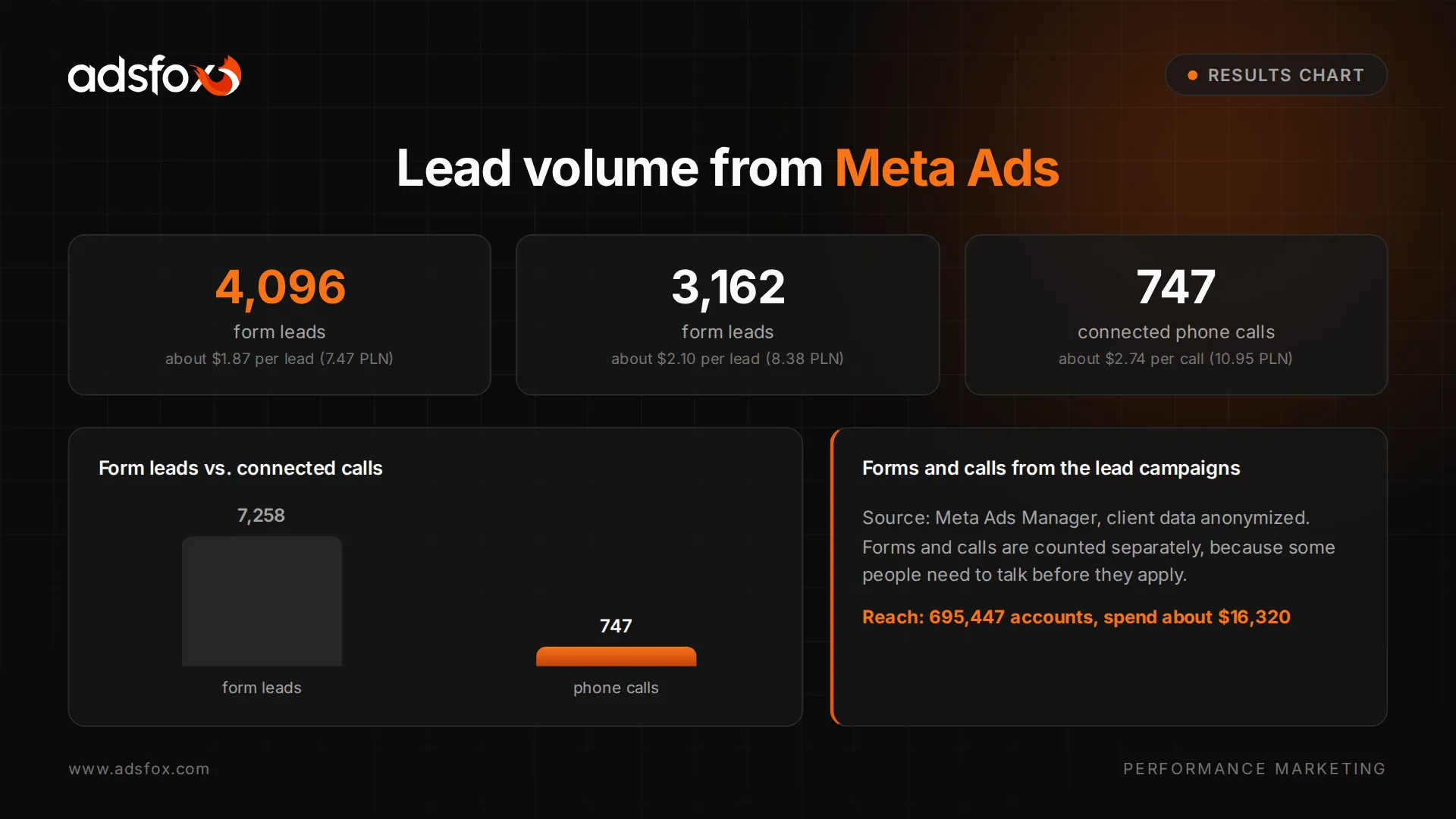
The result was not based on a single campaign that “happened to work”. The report shows several lead sources: forms and calls. That matters, because for services that require a phone conversation, a form alone is not always enough. Some people need to talk, clarify their situation or check whether they qualify at all.
What actually changed for the client
The biggest change was not the number in Meta Ads Manager. It was the campaign’s impact on how the client’s business was organized.
After optimization, three business effects followed:
- a significant increase in lead volume,
- the ability to scale ad spend,
- hiring new staff to handle the growing number of leads.
This is the most important moment in the whole case study. When ads start delivering hundreds and thousands of leads, the company needs a sales process, people and a system to handle them. Otherwise a low CPL looks good in a report but does not translate into real growth.
If you want to check whether your lead campaigns can scale without losing quality, book a free consultation and we will review your campaign structure, cost per lead and follow-up process.
Profitability and next steps
The plan for the following months was to keep scaling Meta Ads while holding the cost per lead below $2.50. An ambitious but logical target, given that the main form campaigns ran at about $1.87-2.10 per lead.
The second direction was improving the quality and speed of lead handling. In service campaigns, the first contact often decides whether a lead becomes a sales conversation or just another record in the CRM.
The third area was automating lead qualification and first contact. This is not about replacing people. It is about keeping repetitive steps from slowing the team down, so a fresh lead gets a response as fast as possible.
How to run lead generation campaigns in this industry
The lessons from this project come down to four rules.
First, the messaging must be careful. If the ad touches a sensitive topic, information and help with the process beat bold promises.
Second, broad audiences and Advantage+ can work, if the algorithm gets enough data and the campaign has a well-defined objective. In this project, both broad and interest-based audiences performed.
Third, the form is only the beginning. The lead should quickly reach someone who can call back, verify the situation and move the conversation forward.
Fourth, the CRM is not an add-on to the campaign. The CRM is where you can see whether the ads generate only cheap submissions or real sales opportunities. That is why we tie lead campaigns to the handling and qualification process. This is how lead generation optimization and our Facebook ads agency service work together at adsfox.
What to avoid
Three things are especially risky in this industry:
- messaging that implies the ad “knows” the reader’s health situation,
- overly direct use of disability-related terms,
- promises that a benefit will be granted.
These are not minor wording issues. A mistake in the copy can mean a rejected ad, account restrictions or attracting people who do not fit the process. Effective advertising in an industry like this has to combine results with responsibility for the message.
Summary
This case study shows that Meta Lead Ads can work in a demanding industry, but only when the campaign is part of a larger system. Here the result was built from careful messaging, Meta instant forms, call campaigns, adsfox CRM, an integration with the client’s CRM and fast lead handling.
The key number is about $1.87-2.10 per form lead after optimization. The key business result is bigger: the client could scale the budget and hire more people to handle the growing lead volume.
adsfox is a marketing agency for service businesses that runs the whole funnel: content, SEO and GEO, paid campaigns and the website. More than 350 clients since 2018, Badged Meta Business Partner and Google Partner.
Book a free consultation and we will check whether your lead campaigns have room to scale and where you are losing valuable leads.
Related adsfox services
We can run a campaign like this for your company as your Facebook ads agency, and the second channel from this project is covered by our TikTok ads agency service. Handling a growing lead volume is covered by lead generation optimization. See results from other projects in our case studies.