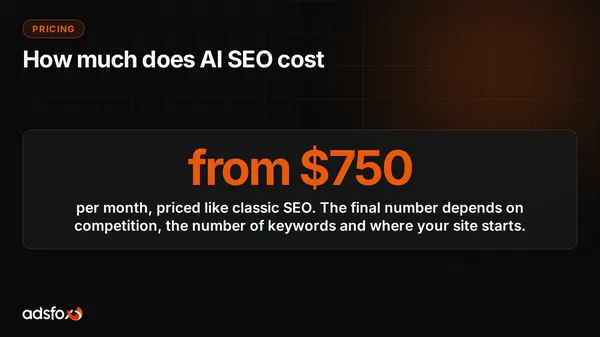
AI SEO is priced like classic SEO: from $750 a month. What the service includes, what drives the price, and how to tell you are paying for work, not a report.

Generative engine optimization (GEO) is the practice of getting your brand cited and recommended in AI-generated answers: ChatGPT, Perplexity, Gemini, and Google AI Overviews. Below are our guides on how AI models choose sources, how to make a website quotable, and how GEO fits with classic SEO. If you want it done for you, see our AI SEO agency page.
AI SEO is priced like classic SEO: from $750 a month. What the service includes, what drives the price, and how to tell you are paying for work, not a report.
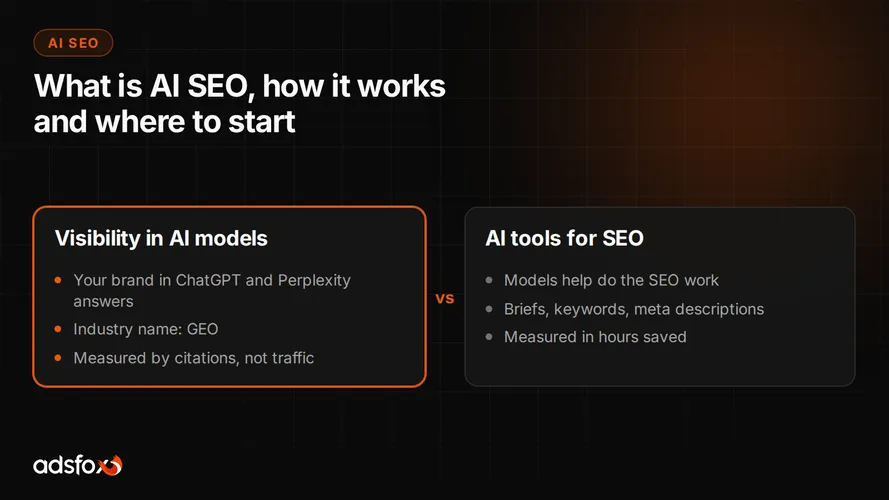
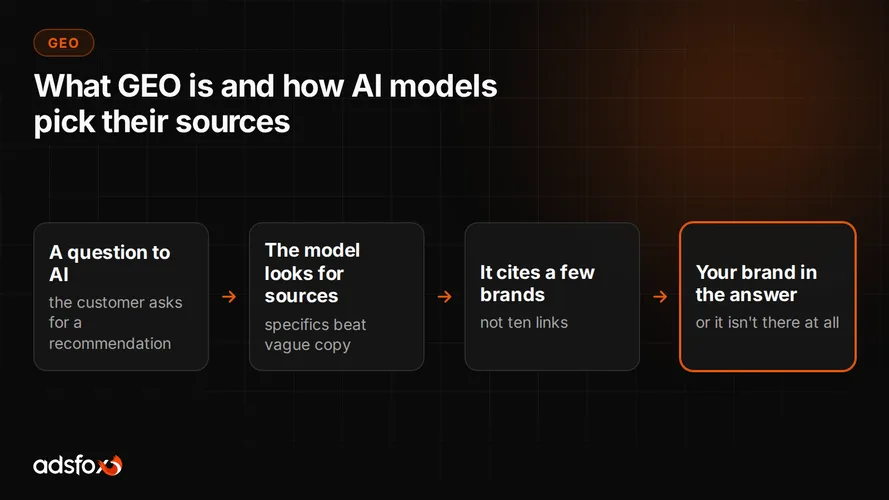
Generative engine optimization is search engine optimization for a world where the "search result" is a paragraph written by an AI model instead of a list of ten links. When someone asks ChatGPT "which CRM is best for a small law firm" or Google shows an AI Overview for "how much does a new roof cost in Texas," the model assembles an answer from a handful of sources and names a few brands. GEO is the work of becoming one of those sources and one of those brands. It is also called AI search optimization, LLM SEO, or answer engine optimization; the names differ, the goal is the same.
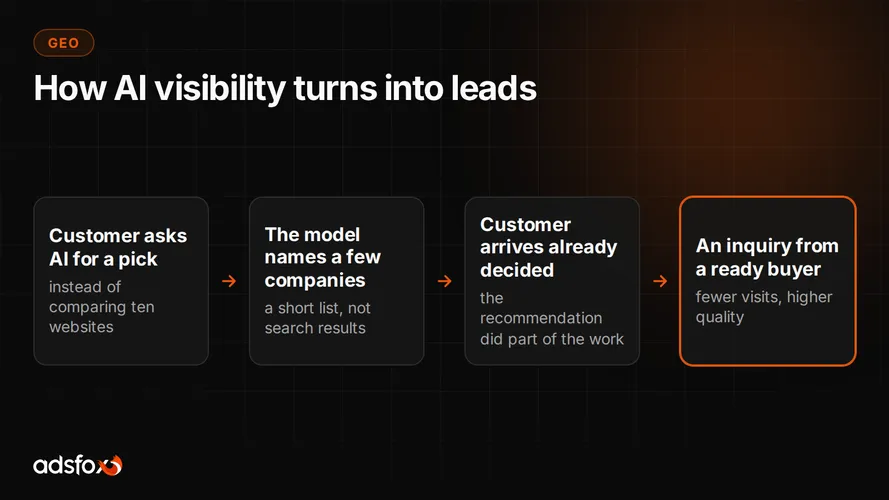
Why it matters: a growing share of buying research now starts in a chat window. When a business owner asks an assistant for a shortlist of vendors, the brands that are not mentioned lose the deal before the prospect ever visits a website. Being cited in that answer is the new equivalent of ranking on page one.
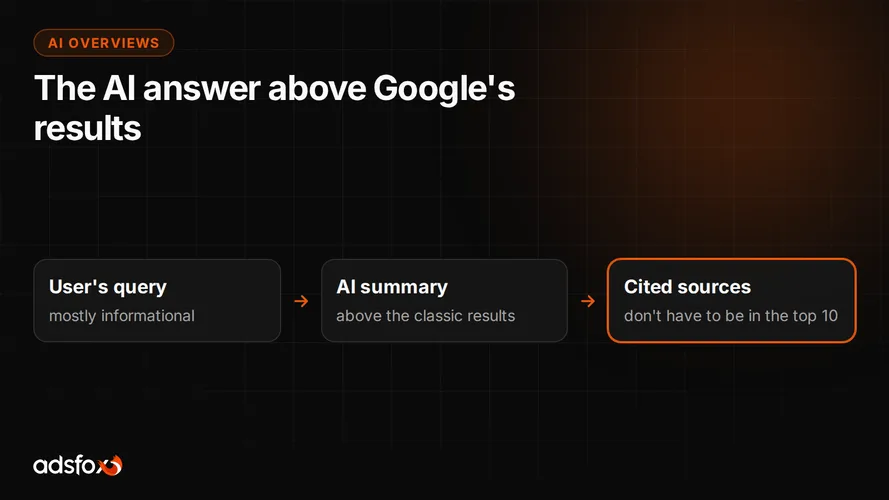
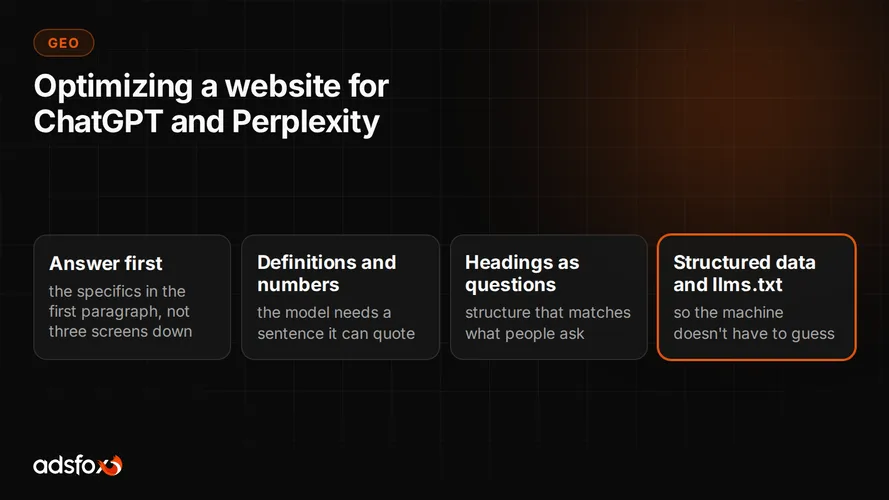
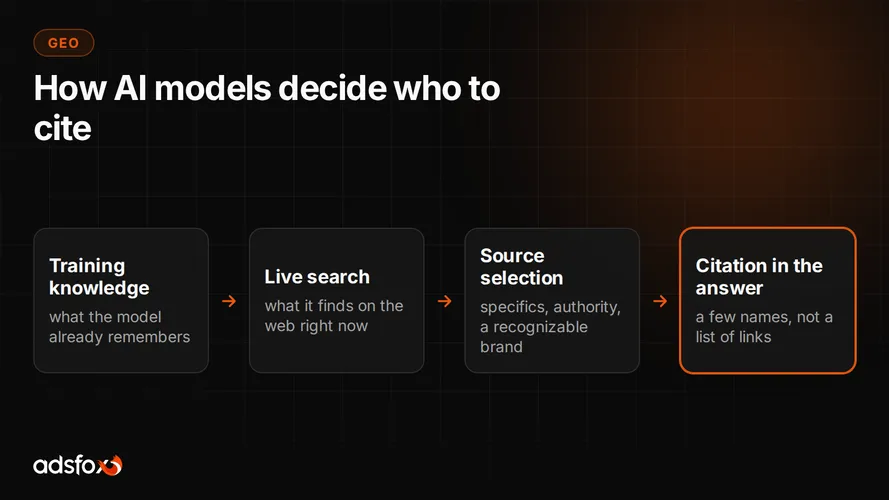
Models such as ChatGPT with browsing, Perplexity, and Google's AI mode do not have a secret index. They run searches on Google or Bing, pull the top results, read them, and compose an answer. That means the first filter is classic search visibility: if you do not rank, you are rarely read. The second filter is quotability. Models favor pages that state facts plainly, answer a specific question in the first few sentences, use clear headings, include numbers and comparisons, and come from a site that looks like a credible source on the topic. The third filter is consistency: brands that are described the same way across their site, directories, reviews, and third-party articles get named with more confidence.
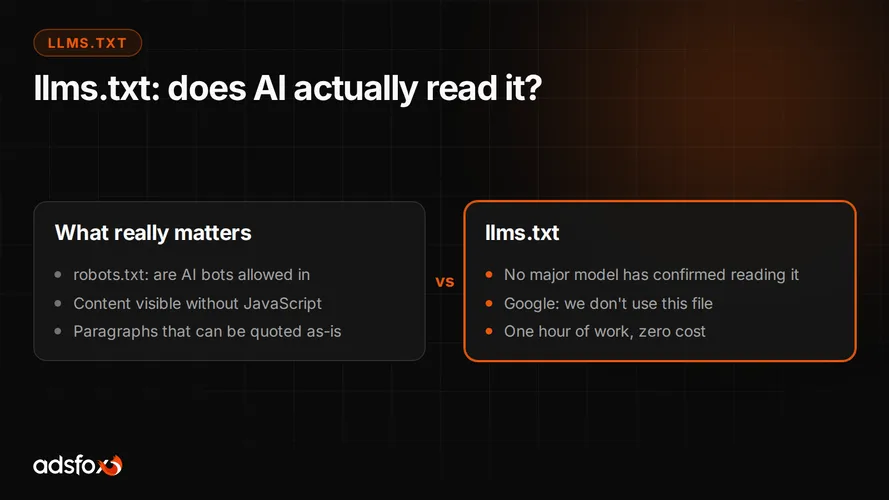
Start with access. Check your robots.txt and firewall rules so that GPTBot, PerplexityBot, Google-Extended, and similar crawlers are not blocked, and make sure your content is rendered in HTML rather than loaded by JavaScript after the fact. Then restructure key pages so that each one answers one clear question: a direct definition or answer at the top, a short list of criteria or steps, specific figures (prices, timelines, percentages), and an FAQ with schema markup. Publish original data when you can (your own benchmarks, surveys, case study results), because models prefer citing primary sources. Finally, work on mentions off your site: industry directories, reviews, guest articles, and press, all describing your business consistently.
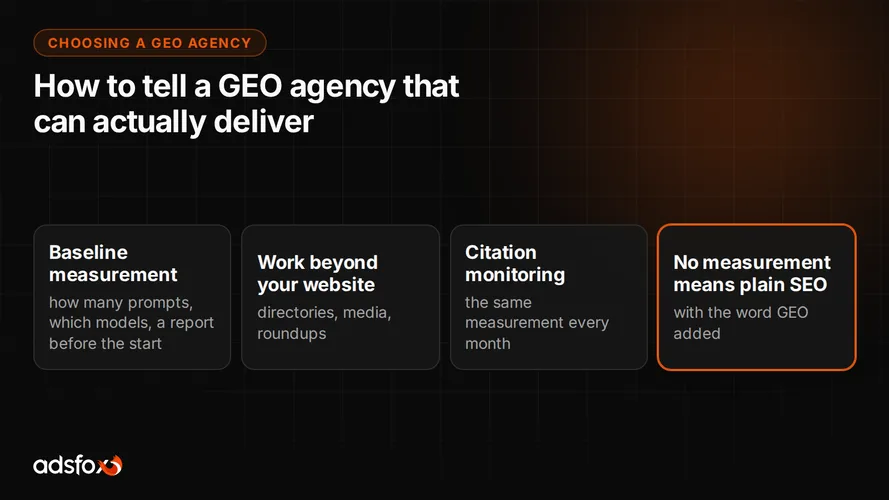
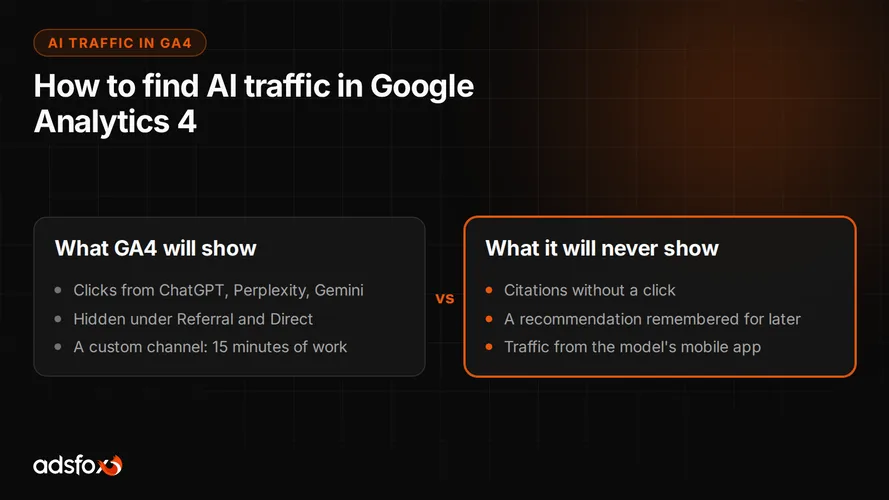
Measure it. Ask the assistants your customers' questions every month and log whether you appear, track referral traffic from chat.openai.com, perplexity.ai, and Gemini in GA4, and watch branded search volume, which tends to rise when a brand starts showing up in AI answers.
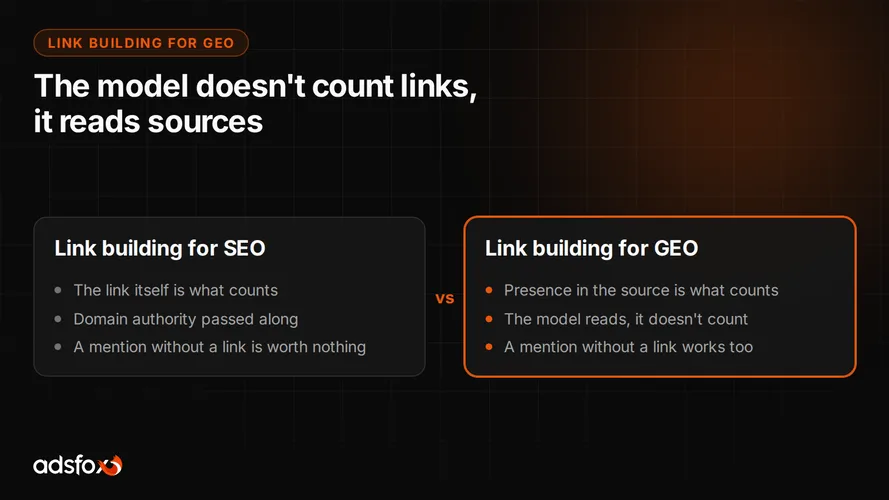
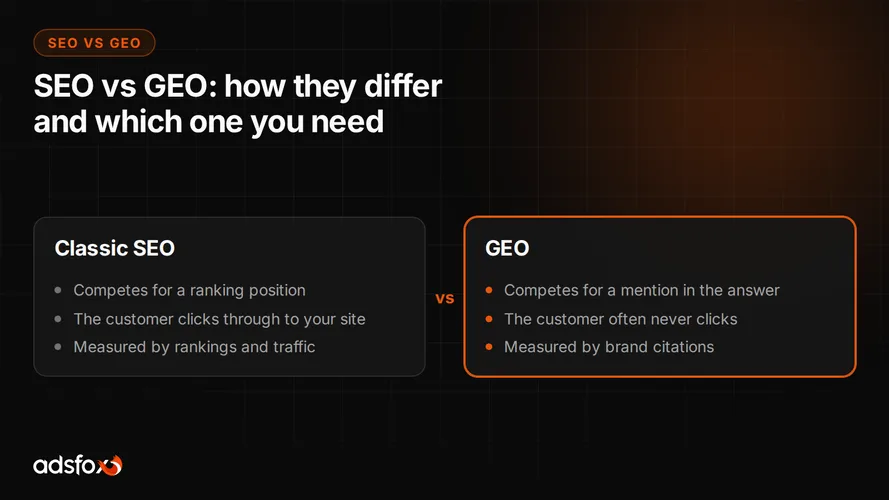
GEO does not replace SEO; it extends it. The technical foundation (crawlability, speed, clean structure) and the authority signals (links, mentions, reviews) are shared. What changes is the writing: SEO content could win by being comprehensive, while GEO content wins by being quotable, specific, and easy to extract. What also changes is measurement: instead of positions and clicks alone, you track citations and mentions. If your SEO is weak, GEO has nothing to stand on. If your SEO is strong, GEO is often a matter of restructuring the pages you already have.
Demand for the phrase itself is still small compared to SEO, because the discipline is new. That is not the point. The point is that your customers are already asking AI assistants for recommendations, whether or not they know the term. We treat GEO less as a source of Google traffic and more as a way to be on the shortlist when a model is asked, before your competitors figure it out.
OpenAI now sells ads inside ChatGPT conversations, which is a separate, paid path to the same audience. We cover that channel in our ChatGPT ads guides. The two reinforce each other: a brand the model already cites organically tends to convert better when its ad shows up in the same conversation.
Fix crawler access and rendering, rewrite your five most important pages to be quotable, add FAQ schema, publish one piece of original data, and set up a monthly citation check. That is usually enough to see the first mentions within a few months. If you would rather hand it off, our AI SEO agency page describes how we run generative engine optimization alongside classic SEO, or you can book a free consultation.
GEO stands for generative engine optimization: optimizing your content and brand presence so that AI models such as ChatGPT, Perplexity, Gemini, and Google AI Overviews cite and recommend you in their answers.
No. AI models pull from pages that already rank well in search engines, so solid SEO is the prerequisite. GEO adds a layer on top: quotable writing, structured answers, original data, and consistent brand mentions across the web.
Rank for the questions your customers ask, write pages that answer them directly in the first sentences, allow AI crawlers in robots.txt, add FAQ schema, and build consistent mentions in directories, reviews, and industry sites. Then check monthly whether the model names you.
Track citations by asking the assistants a fixed set of customer questions every month, monitor referral traffic from AI tools in GA4, and watch branded search volume. Positions and clicks still matter, but mentions are the new metric.
If your site already ranks, restructuring key pages can produce the first citations within two to four months. If it does not rank, plan for the same six to twelve months that SEO needs, because the model has to be able to find you first.