AI SEO Pricing: How Much Does GEO Cost per Month?
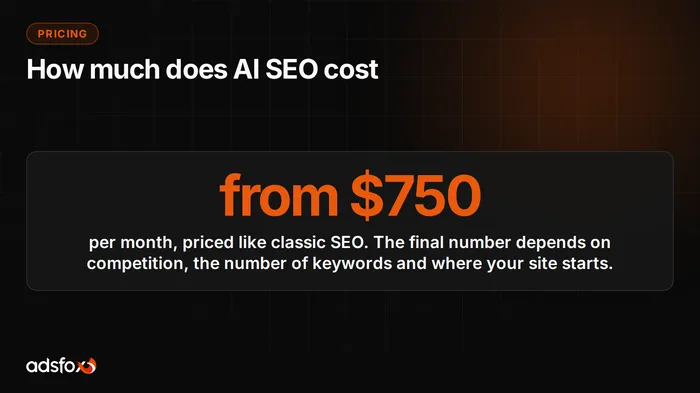
AI SEO is priced much like classic SEO: the service starts at $750 a month. The upper end is set by how competitive your industry is, the number of keywords and questions you care about, and the state of your website at the start. In this article we break down exactly what goes into such a retainer, what drives the price, and how to tell you are paying for work rather than a report about nothing.
One sentence of context, because it organizes the whole price list: AI SEO is not a separate world, it is SEO extended with a visibility layer in the answers of models such as ChatGPT, Perplexity, Gemini, and Google AI Overviews. That is why a large part of the scope and cost overlaps with classic SEO, and the differences come down to how content is written and what gets measured.
What the service includes
An AI SEO retainer is systematic work across several areas. The emphasis shifts with the industry and the goals, but the full scope looks like this:
- creating valuable, unique content, written so a specific answer can be extracted from it, because that is the condition for being cited by models,
- expanding existing posts, especially the ones sitting just outside the top 10 that need more depth rather than a new article next to them,
- curating the content on the site: tidying up pages, removing content that cannibalizes itself, and keeping the company description consistent,
- keyword analysis, including the questions people ask AI assistants, which classic keyword planners often do not report at all,
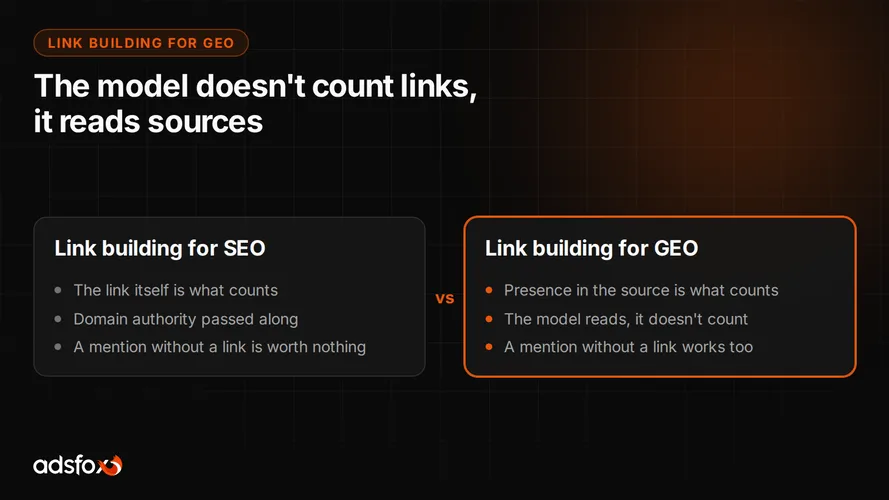
- creating, buying, and earning backlinks, with quality screening, because in the AI layer presence in sources people actually read matters more than the number of links,
- earning valuable publications on partner sites and in industry media, meaning the mentions from which models build their picture of the brand,
- reviewing Google Search Console for the appeal of your meta titles and SEO titles: a page that gets impressions but no clicks is losing traffic on its snippet alone,
- ongoing competitor checks: who holds the spots we want, with what content format, and whom the models cite in our category.
The control layer over all of it is a monthly measurement: Google rankings for an agreed keyword list, plus monitoring of whether the brand appears in AI model answers and who is named instead. That is what separates serious AI SEO from SEO with a trendy word tacked on.
What drives the price
If the entry point is $750 a month, what decides that one business pays that and another pays several times more? Four factors.
Industry competitiveness. Keywords where dozens of companies with content and link budgets fight for the customer require more work per month just to get moving. In niches, a low budget can produce results quickly, because the competition is asleep.
Number of keywords and questions. The wider the front, the more content, measurement, and link work. On a smaller budget it is more honest to narrow down to keywords with buying intent than to spread the effort across everything.
The state of your website at the start. A site with clean technical foundations, good structure, and a healthy link profile starts building right away. A site with technical problems or a cluttered link profile needs a cleanup first, and that is work too.
The pace you want. More content and publications per month means faster results and a higher retainer. The same scope spread over a longer period costs less per month, but the results arrive later.
How to tell you are paying for work, not a report
The AI SEO market is young, so it is easy to run into offers that are classic SEO in new packaging or, worse, a report without any work behind it. Three control questions settle it.
What exactly was done this month? The list should contain specifics: which content was created or expanded, which publications went live, what changed on the site. “We carried out optimization activities” is not an answer.
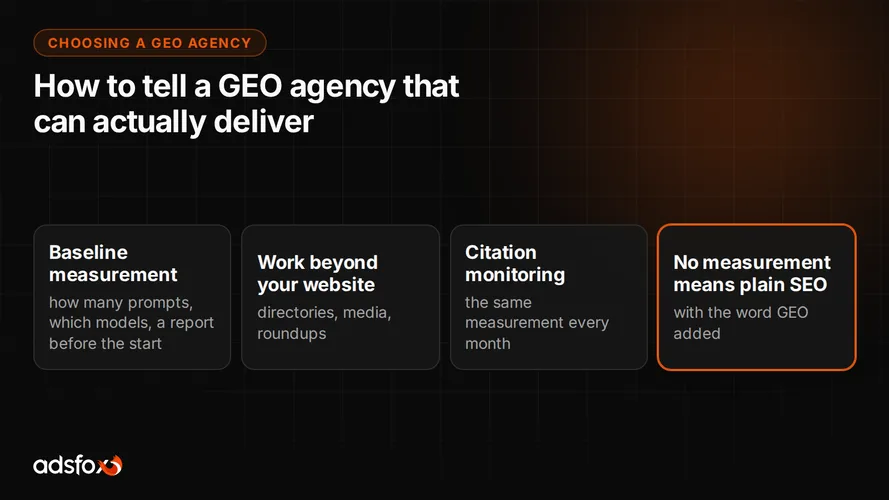
What does the AI visibility measurement look like? There should be a fixed list of questions, asked every month to the same models, with results in numbers: how many mentions, how many citations, who is named instead of us. Without that, you cannot tell the effect of the work from chance.
What happens if there is no progress after a quarter? An honest answer contains a correction plan, not a reassurance that it will surely be fine. We take the criteria for choosing a provider apart in detail in how to choose a GEO agency.
AI SEO and classic SEO: one budget, not two
A common question: do you need to buy a separate “AI package” on top of an SEO retainer? In a well-structured service, no, because most of the work is shared. Content written to be cited also works in classic search results. Links and publications build domain authority and the brand’s image in the models at the same time. Keyword analysis covers both worlds. The difference is in how the content is written and what is measured, not in a double cost.
If you want to compare price levels, we describe classic SEO in a separate pricing guide: how much does SEO cost. For the “how does visibility in models work at all” layer, see our guide to ChatGPT SEO.
Summary: a starting budget
A reasonable starting range looks like this: from $750 a month in industries with moderate competition and a narrowed keyword list, and noticeably more where strong competitors with content and publication budgets are fighting for the same model answers. On top of that, it pays to establish a baseline once: a measurement of visibility in the models before the engagement starts, so there is something to compare against after a quarter.
If you want a quote for your industry, start with our AI SEO agency page or book a free consultation: we will check the competition in your category and show you the baseline before any budget decision is made.