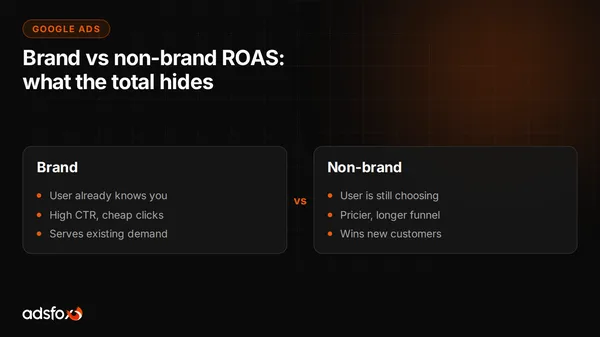
Brand vs non-brand ROAS: your blended return can hide a losing campaign. Learn how to split the two in Google Ads and make better budget decisions.

Google Ads is no longer just about campaign settings and bids. How much you earn on every dollar increasingly depends on the quality of the data you feed the system. This section collects practical Google Ads guides: how the auction works, what clicks cost, how first-party data and conversion tracking change results, and what the shift to AI-driven campaign types means for your account. If you would rather hand the campaigns to specialists, see how our Google Ads agency works.
Brand vs non-brand ROAS: your blended return can hide a losing campaign. Learn how to split the two in Google Ads and make better budget decisions.
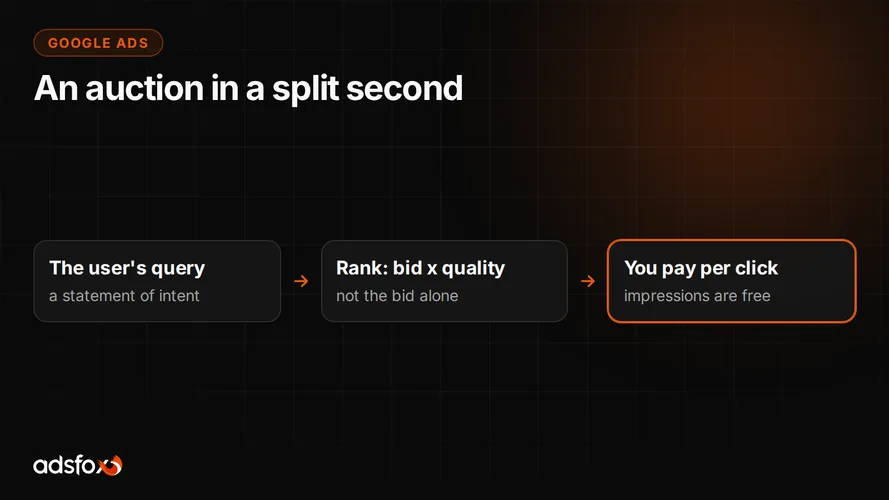
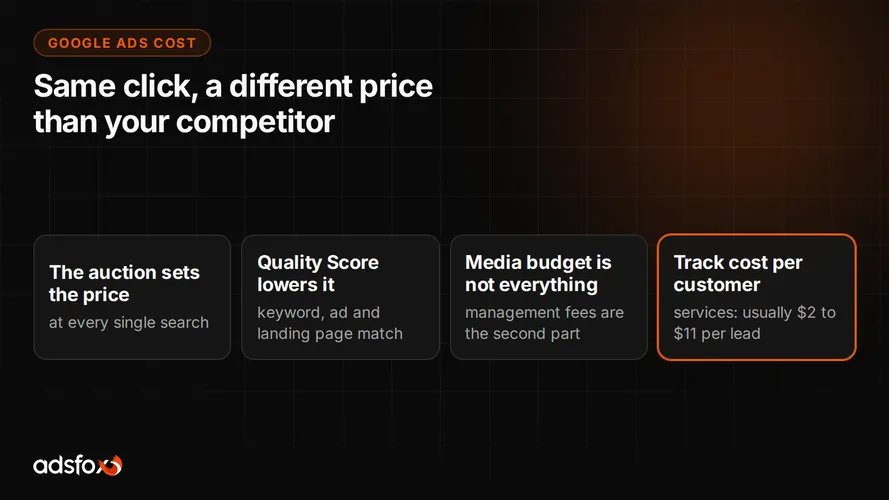
Google Ads is an auction. When someone searches "water heater replacement near me," Google looks at every advertiser bidding on that phrase, multiplies each bid by a quality score (expected click-through rate, ad relevance, landing page experience), and shows the best combinations. You pay only when someone clicks, and you can pay less than a competitor with a higher bid if your ad and page are more relevant. Beyond Search, the same account runs Shopping ads for products, YouTube video, Display banners, Demand Gen feeds, and Performance Max, which mixes all of them under one automated campaign.
There is no minimum, but there is a practical floor. In the US, clicks on service phrases run from about $2 to $10 in most local industries and $20 to $80 or more in legal, insurance, home services, and B2B software. The average across industries is around $4 to $5 per click on Search. What matters is the cost per lead or per sale that results, and that depends on your landing page and offer as much as on the click price. A budget that allows at least 15 to 30 conversions a month gives the algorithm enough data to learn; below that, expect volatility. We break down media budgets and management fees on our Google Ads pricing page. Campaign management with us starts from $490 a month plus your ad budget.
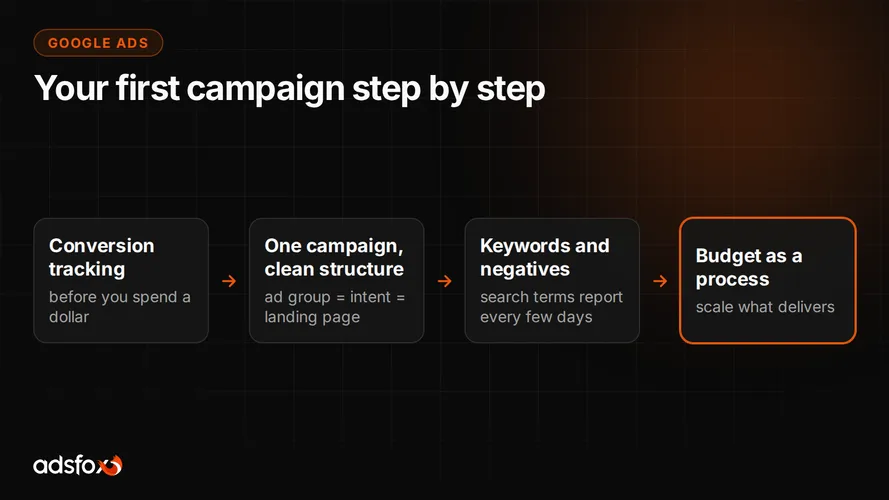
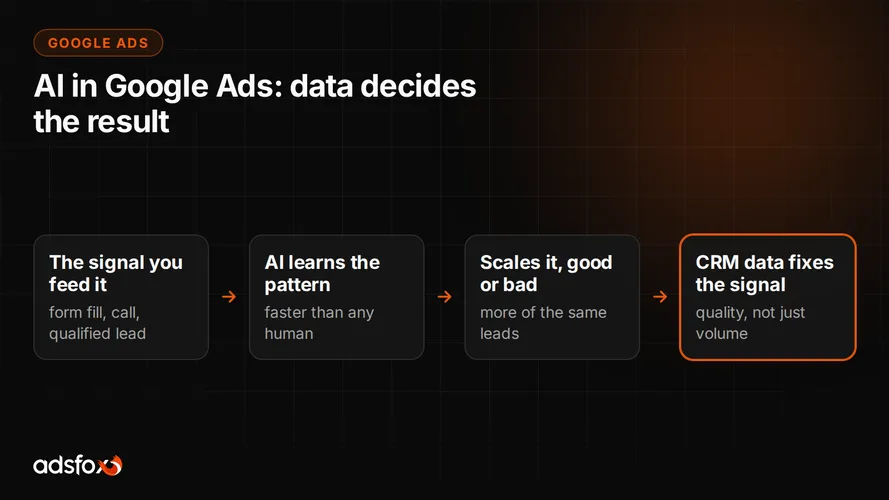
Google's bidding algorithms learn from the data you give them. If the account receives incomplete or noisy conversion signals, even a well-built campaign will optimize in the wrong direction. That is why the starting point is measurement quality: every valuable action (call, form, booking, purchase) tracked as a conversion, with a value where possible, and nothing counted twice. Smart Bidding is only as good as the conversions it is trained on. Cleaning up tracking often improves results more than any change to bids or keywords.
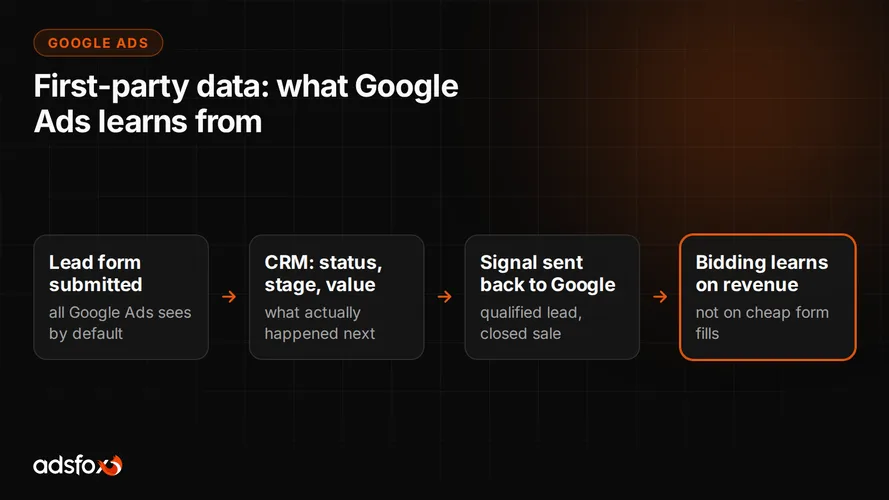
As third-party cookies disappear, data you collect directly from customers matters more: email addresses, transaction values, CRM stages, lifetime value. This data powers Enhanced Conversions, Customer Match audiences, and value-based bidding. The biggest lever for service businesses is closing the loop: sending back to Google which leads became customers and what they were worth, so the algorithm bids for the right people instead of the cheapest form fill. That is what offline conversion tracking and the adsfox integration do, and it is what turns Google Ads from a lead machine into a customer machine.
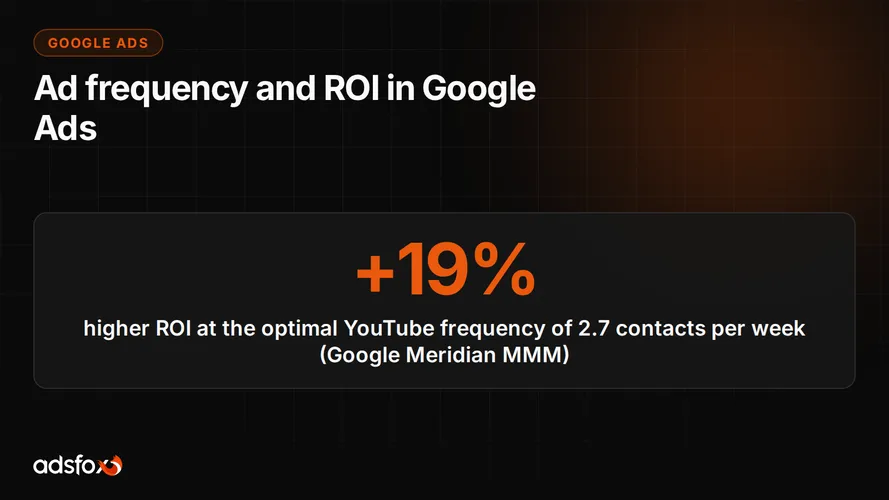
More impressions do not mean more sales. Above a certain point the same person sees your ad too often and cost rises faster than results, especially on Display, YouTube, and Demand Gen. Watch frequency and reach in your reports, cap frequency where the platform allows it, and judge campaigns on cost per customer over 30 to 90 days rather than on last week's cost per click.
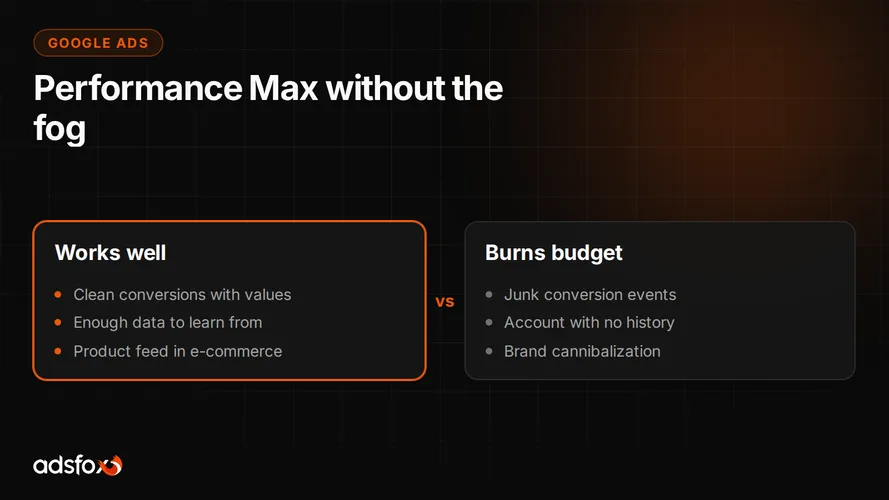
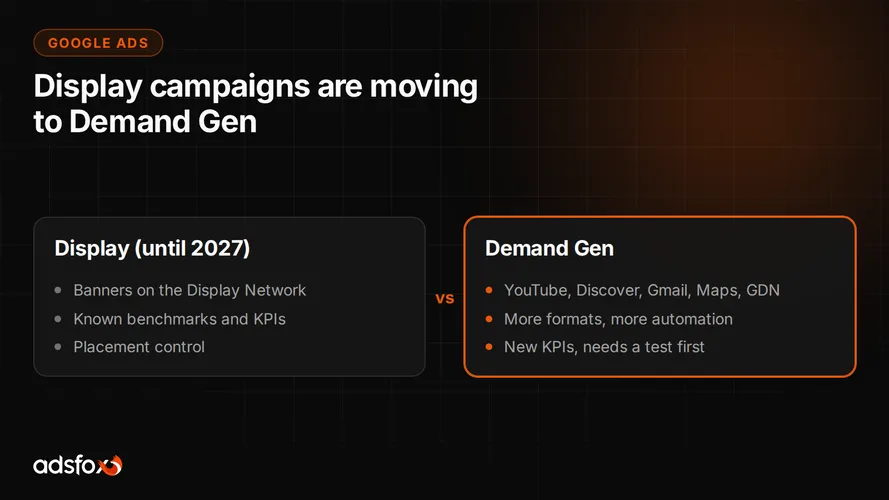
Google is consolidating formats. Performance Max runs across Search, Shopping, YouTube, Display, Gmail, and Maps from one campaign with automated targeting; Demand Gen is replacing classic Display and video action campaigns with feed-style creative on YouTube, Discover, and Gmail. For advertisers the change is not cosmetic: creative requirements, audience signals, and reporting all differ. These campaign types can work very well with good conversion data and strong creative, and they can burn budget quietly without either. Keep a Search campaign with your own keywords alongside them so you always have a control group.
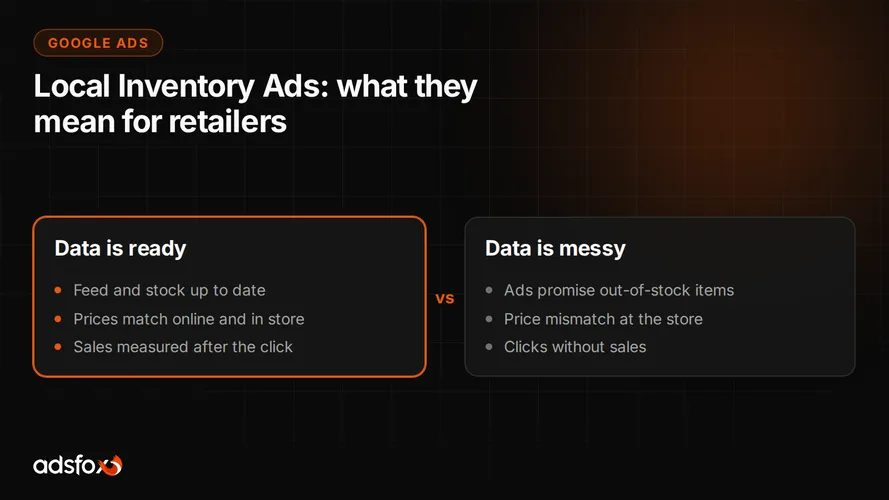
Businesses with physical stores can show product availability at a specific location directly in Google. Local Inventory Ads connect online searches with in-store visits, but they require a clean product feed and reliable inventory data through Merchant Center. Worth it for retailers with dozens of SKUs and steady foot traffic; a distraction for everyone else.
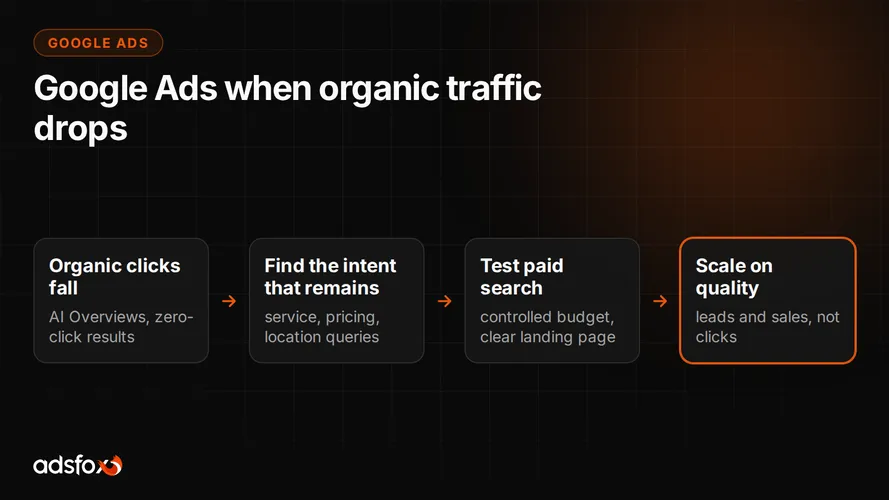
Paid campaigns do not operate in a vacuum. When organic traffic drops, for example because AI Overviews now answer the question above the results, some of those searches have to be recaptured with ads. Look at both channels together: which phrases you win organically, where ads fill the gap, and where you are paying for clicks you would get for free. Our SEO guides cover the organic side, and a marketing audit looks at both at once.
All of these topics share one thing: without good measurement and clean data, even a good campaign will not show its full potential. If you want certainty that conversions are counted correctly, start with server-side tracking. If you would rather hand the whole thing to specialists, see how our Google Ads agency works and book a free consultation. We have run Google Ads campaigns since 2018 as a Google Partner.
Most small businesses spend $1,000 to $5,000 a month on the ad budget itself, with clicks costing $2 to $10 in typical local industries and far more in legal, insurance, or home services. Plan for enough budget to generate at least 15 to 30 conversions a month so the algorithm can learn. Management fees are separate; ours start from $490 a month.
Increasingly the quality of your data, not the settings. Automated bidding learns from conversion signals, so if tracking is incomplete or noisy the campaign optimizes in the wrong direction. Clean conversion tracking and first-party data usually deliver a bigger jump than another round of bid changes.
Data you collect directly from your customers: email addresses, transaction values, CRM stages, and lifetime value. It powers Enhanced Conversions, Customer Match, and value-based bidding, and its importance grows as third-party cookies disappear.
Neither is better in general. Performance Max can scale well when conversion data and creative are strong, but it hides where the results come from. Keep a standard Search campaign with your own keywords alongside it as a control, and judge both on cost per customer.
If you lack the time or resources to manage tracking, data, and constant format changes, an agency takes that weight and is accountable for results. adsfox has run Google Ads campaigns since 2018. The easiest first step is a free consultation where we go through your account and goals.