AI in Google Ads: Why Data Quality Decides Results
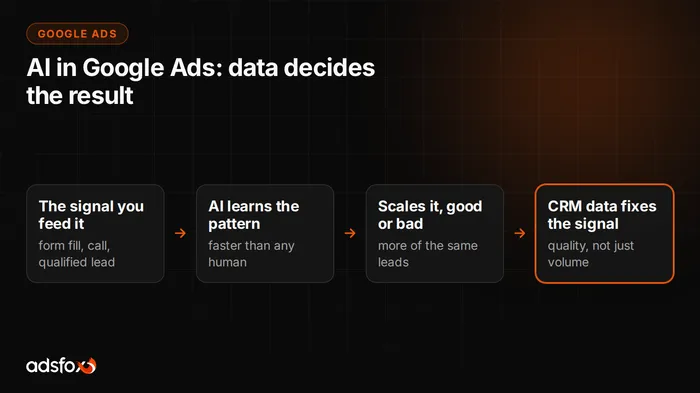
AI in Google Ads will not fix bad data. It can test faster, set bids faster and find similar users faster, but it still learns from the signals it gets. If a company shows the algorithm only form submissions, the system may optimize the campaign for the number of leads, not their quality.
AI in Google Ads is automation that uses data about conversions, audiences, search queries, creatives and results to make decisions inside campaigns. The problem is that even the best automation has no idea which leads were valuable if the company does not measure that in its CRM and does not pass it on.
Why does AI in Google Ads need good data?
In many companies Google Ads is judged by cost per click, cost per lead and the number of form submissions. Those numbers are needed, but they are not enough to judge the campaign’s real impact on sales.
PPC Hero puts it simply: Google’s AI is only as good as the data you give it. That sentence describes the direction of the whole performance marketing market. More and more of the campaign is automated, so the quality of the input data matters more and more.
If Google Ads only sees that someone submitted a form, every such conversion can look the same to the system. A lead that became a customer and a lead that never picked up the phone may be treated identically.
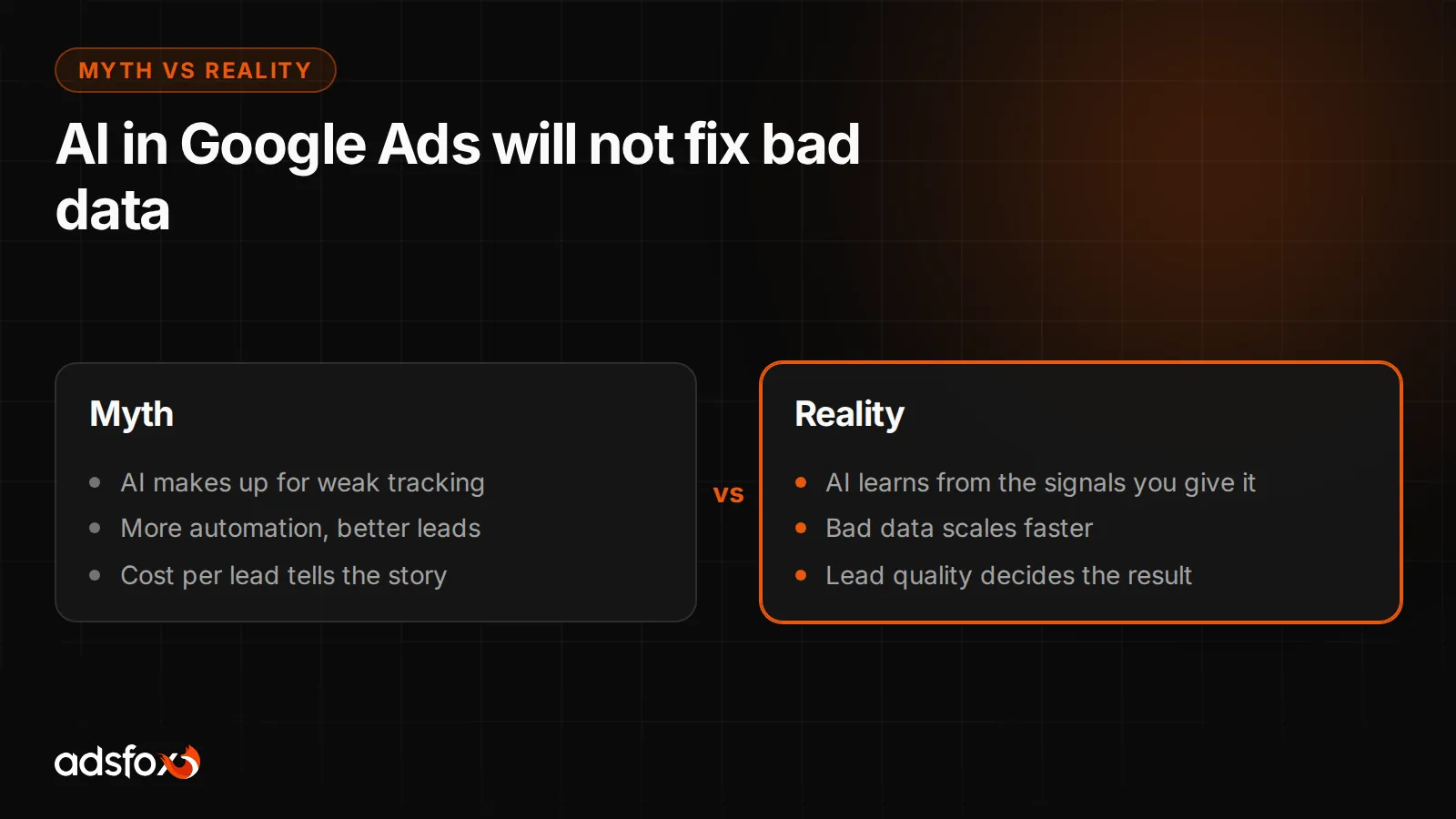
What happens when the campaign only sees forms?
If the main optimization signal is the form submission itself, the campaign will look for more users similar to the ones who submit forms. That can increase lead volume, but it does not have to increase sales.
In service businesses the gap between a lead and a customer can be huge. One contact may be ready to talk and have a real budget. Another may not fit the offer at all. A third may have left their details by accident and never respond.
To the ad dashboard, all of these look like one category: a conversion. To the business, they are completely different outcomes.
So the question is not just whether the campaign generates leads. The more important question is whether it generates leads that have value for sales.
Why a low cost per lead can be misleading
A low cost per lead looks good in a report, but it does not always mean effective marketing. If cheap leads do not answer the phone, do not pass qualification or never become customers, the campaign only looks good at the level of intermediate metrics.
This is one of the most common problems in Google Ads campaigns. The company sees a growing number of inquiries, but sales does not see a proportional increase in customers. The problem is not necessarily the budget or the creative. It may be the signal the algorithm learns from.
If the AI is told “more leads like these” and the company does not distinguish their quality, the system may keep repeating a pattern that does not support sales.
How a CRM changes Google Ads optimization
A CRM shows what the ad dashboard usually cannot. It shows whether a lead was handled, whether it moved through the process, whether it received a proposal, whether it became a customer and how much it was worth.
That information changes how decisions are made. Instead of asking only about cost per lead, you can ask:
- which campaign generates valuable inquiries,
- which keywords actually deliver customers,
- which ad groups attract random contacts,
- which sources have the best sales quality,
- whether automation is learning from the right signal.
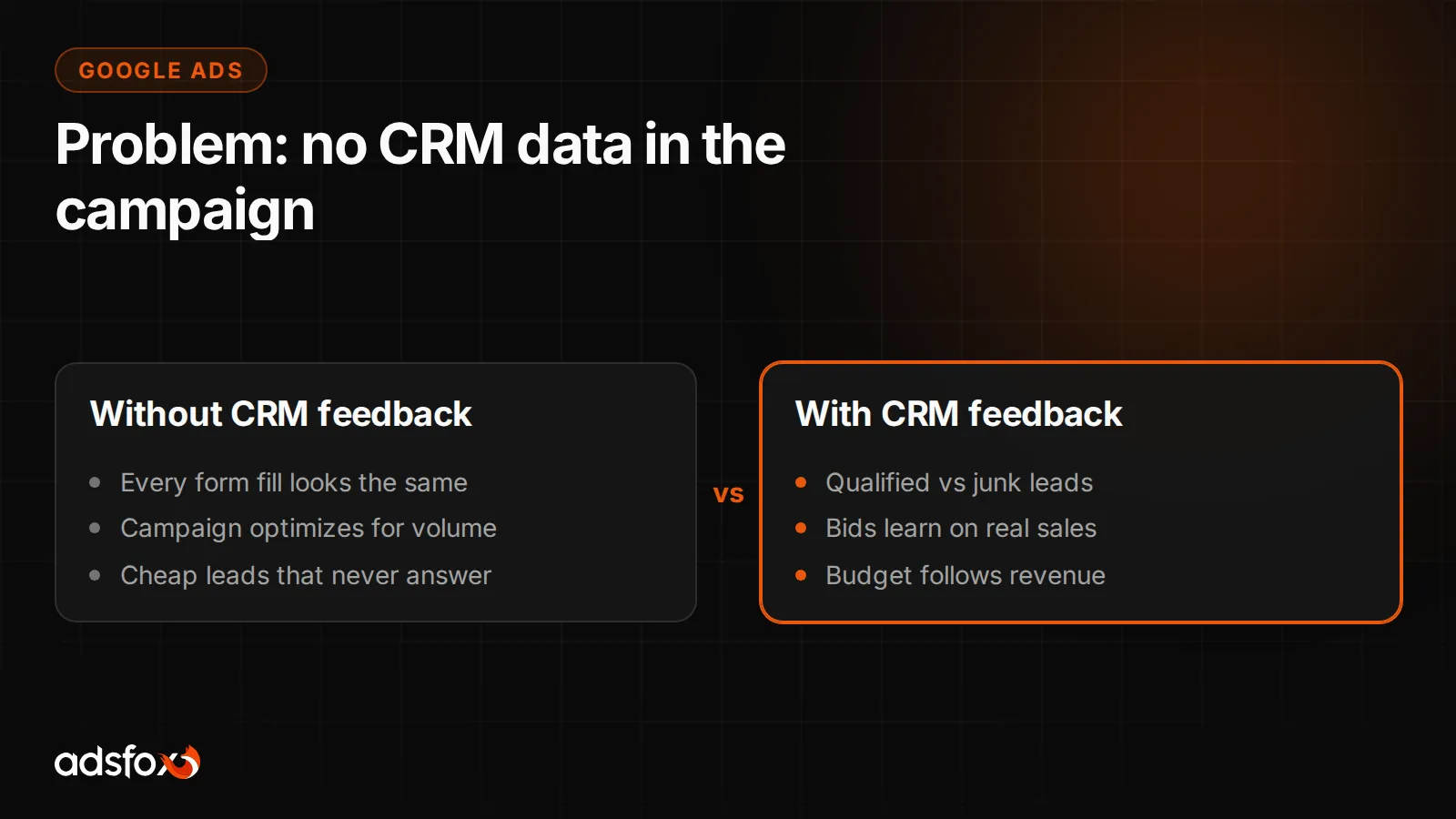
When CRM data flows back into the campaign, Google Ads gets a fuller feedback loop. Not just “lead acquired”, but “valuable lead”, “qualified lead” or “deal closed”. That is a completely different level of optimization.
Does AI replace campaign strategy?
No. AI in Google Ads can support strategy, but it does not replace it. Someone still has to decide what the campaign’s goal is, how conversions are measured, what values different events get and which data should flow back to the ad platforms.
Automation without a data strategy can simply be a faster way to scale bad signals. A good agency should not limit itself to switching on automated campaigns and checking cost per lead. It should help the company answer the question: what is the algorithm supposed to learn?
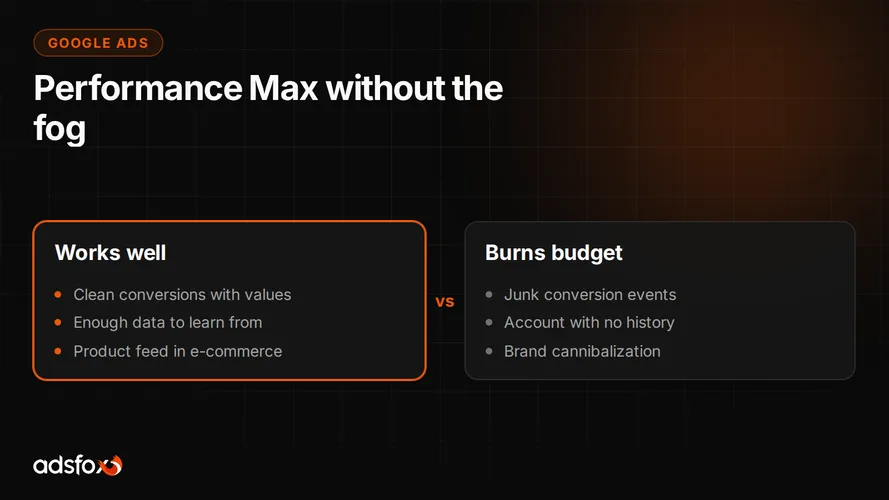
This is especially important for companies that use Smart Bidding, Performance Max, Demand Gen or other campaign types that rely heavily on conversion signals.
How adsfox approaches AI in Google Ads
At adsfox we treat AI as a tool for better optimization, not a magic solution. Automation makes sense when it is fed good data and sits inside a real sales process.
That is why we look at the whole system: ads, CRM, tracking, lead quality, sales data and business decisions. We help companies check whether Google Ads receives information about which leads actually have value.
If you run Google Ads campaigns, check not only the campaign settings, but also the quality of measurement. In many cases you need to clean up conversions, CRM data and server-side tracking so the ad algorithms learn from a fuller picture.
adsfox is a Google Partner, but knowing the tool is not enough. What matters is the way of working: marketing should be connected to sales, and campaigns should be optimized for the right business signals.
Summary: AI in Google Ads needs a data strategy
AI in Google Ads does not solve the problem of poor measurement. If a company only measures simple form fills, automation may optimize campaigns for volume rather than value.
That is why campaign effectiveness increasingly depends on whether a company can connect Google Ads with its CRM, tracking and sales data. Only then does AI have a chance to learn from signals that actually support the business.
Book a free consultation and we will check whether your marketing campaigns are optimized for the right signals.
Source: PPC Hero, “Google’s AI Is Only as Good as the Data You Give It”.