How to Run a LinkedIn Company Page That Actually Works
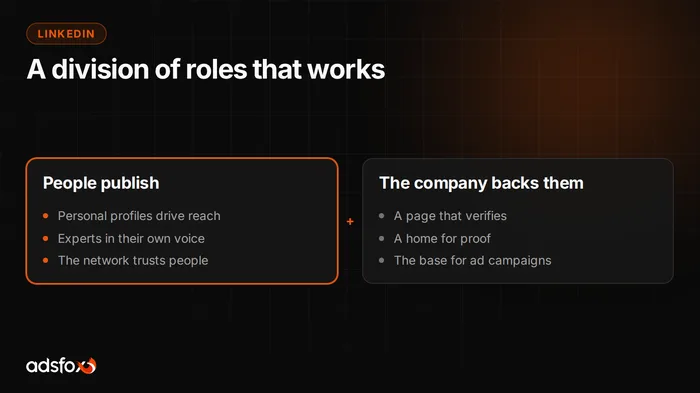
A LinkedIn company page is run differently than intuition suggests: the company page is a storefront and the backbone for ads, while reach is made by people. The algorithm and users favor content published by people, not by logos. So a sensible strategy is not “let’s run the company page” but a division of roles: experts publish, the company page organizes, proves and ties everything together with campaigns. This article turns that into a working system.
What role does the company page really play?
Three jobs in which the company page is irreplaceable:
- A verification storefront. A customer who has heard of the company checks it on LinkedIn before replying to a message or clicking an ad. An empty or dead page undercuts trust built elsewhere.
- The backbone for campaigns. LinkedIn Ads run from the company page. Without it there is no paid activity, and its quality affects how ads are received.
- A home for proof. Case studies, projects, testimonials, job openings. The place where the scattered activity of people adds up to a picture of the company.
What the company page usually will not do: build reach comparable to active personal profiles. That is not a flaw of your company, it is how the platform works.
Why do personal profiles have more reach?
Because LinkedIn is a network of people and distributes content accordingly. A person’s post reaches their connections and, through reactions, the connections of those people. A company page post has a weaker start and a lower tendency to get reactions, because nobody argues with a logo.
The practical conclusion: a company’s most valuable asset on LinkedIn is publishing experts. The owner, sales reps and specialists writing about customers’ problems build reach the company page will never achieve. The company should make that easier for them: topics, editorial help, permission to speak in their own voice. Forcing people to reshare corporate announcements works the other way: the network senses it and ignores it.
What should you post so it leads to customers?
The overriding rule: content should help people buy, not praise the company. A B2B buyer educates themselves long before the conversation, which we cover in more detail in our post on B2B marketing. Your content should be what they read along the way.
What works reliably:
- answers to questions from the buying process: the same ones customers ask in meetings,
- case studies with numbers: what the situation was, what we did, what changed,
- lessons from projects: what the last quarter taught us, including mistakes,
- behind the scenes: how you make decisions, what the process looks like.
What works poorly as a foundation: pats on the back, holiday greetings, badges and “we are proud to.” They can be seasoning; as the main course they signal that the company has nothing to say.
What publishing rhythm will you actually keep?
Less often but regularly beats more often in bursts. A page that publishes steadily at its own pace looks alive; a page that posts in a burst and then goes silent for three months looks worse than none. Set a rhythm that will survive the busiest week at the company, and stick to it.
The tool that solves most consistency problems is a content calendar planned a month ahead: topics assigned to dates, content prepared in advance, publishing without inventing something every day. We run calendars like that for clients as part of our social media marketing service, together with writing and graphics; we broke down the costs of that service in our post on how much social media management costs.
How does the organic page connect with advertising?
In both directions, and that is the real reason to take care of both.
One way: the company page is a requirement for LinkedIn Ads campaigns and the first place an ad viewer verifies you. A person who sees an ad from an unfamiliar company clicks the profile first; what they find there decides whether they click further.
The other way: organic content shows which topics resonate with your audience before you spend budget on them. A post that sparked a conversation organically is a proven candidate for a campaign. We describe how to go from the page to effective paid activity in our posts on LinkedIn Ads targeting and Lead Gen Forms.
Where to start on Monday?
- Complete the company page: a description that says what you do and for whom, current details, graphics.
- Pick two or three people who will publish, and agree on simple rules for supporting them.
- Build a one-month calendar: topics from customers’ questions, not from your head.
- Set a rhythm you will keep, and measure not likes but the conversations and inquiries that come out of it.
If you would rather have a team that does this every day handle the calendar, the content and the connection with campaigns, see our social media marketing service and book a free consultation. We will review your page and tell you specifically what to change first.