Cost per Lead by Industry: $2 to $11 in 11 Industries
How much does a lead cost? Across our 20 real campaigns in 11 industries, cost per lead for service businesses usually landed between about $2 and about $11, and e-commerce ROAS ranged from about 3.6 to over 24, depending on the industry, margins, and how far along the engagement was. Below we break these numbers down by industry, with links to the source case studies, so every figure can be verified.
This is not a study of the whole market. It is a benchmark from campaigns we have run since 2018, most of them in Europe, with amounts converted to US dollars. That is exactly why it is specific: behind every number is a real campaign, not an estimate.
Cost per lead by industry (service businesses)
Here is the cost of acquiring a lead, broken down by service industry. These are real results from our campaigns (after optimization where we quote a target value), not market averages. Each industry links to the source case study.
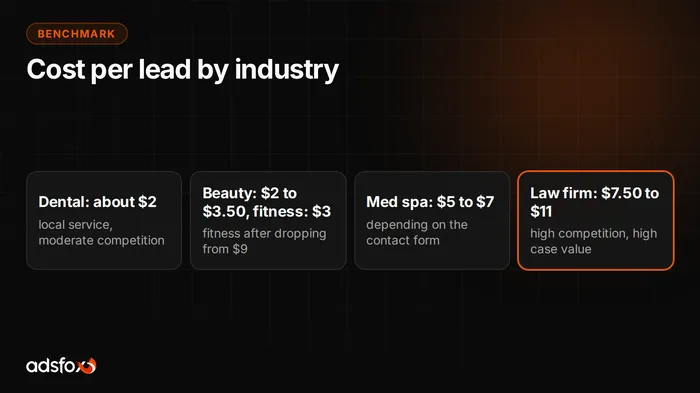
- Dental: a lead (appointment inquiry) cost about $2, one of the lowest costs in the whole benchmark, because it is a local service with moderate competition. See the dental practice case study.
- Beauty and cosmetics: cost per lead was $2 to $3.50. At one salon it rose from $2.12 to $3.48 because the client was scaling up and opening a second studio, so the win was growth, not the cost itself. See the beauty salon case study.
- Fitness: cost per lead dropped from about $9 to $3 after we fixed tracking and optimized for lead quality. See the gym chain case study.
- Recycling (ink cartridge buyback): cost per lead dropped from about $12.50 to $4. See the ink cartridge recycling case study.
- Medical aesthetics: cost per lead ranged from about $5 at a clinic to about $7 with Meta Lead Ads instant forms. See the med spa case study and the Meta Ads case study.
- Law firm: cost per lead was $7.50 to $11, one of the pricier niches, because competition for clients is high and a single case is worth a lot. See the law firm case study.
- Optical: cost per lead started at about $11 and was brought down through campaign optimization. See the optical store case study.
There is a pattern: local services with less competition (dental, fitness, beauty) run at a few dollars per lead, while more competitive, high-margin industries (legal, optical) run closer to ten dollars or more.
Customer acquisition cost in e-commerce (ROAS)
For online stores, the metric is return on ad spend (ROAS) and cost per purchase rather than cost per lead. Here too we break results down by industry, with a link to the source case study:
- Kids clothing: ROAS 24.5 at the start and about 12 after scaling the budget. See the kids clothing store case study.
- Raw dog food (BARF diet): ROAS 10 to 16, thanks to a good margin and repeat purchases. See the raw dog food store case study.
- Online language courses: ROAS about 6:1 after six months of working together. See the online language school case study.
- Medical footwear: Meta ROAS 3.58, cost per purchase about $8. See the medical footwear case study.
The highest ROAS came with good margins and repeat purchases. Important: very high ROAS usually drops as you scale the budget, because you reach a broader, less warm audience (in the clothing store, ROAS fell from 24.5 at a $300 monthly budget to about 12 at $1,250, but at much higher revenue).
How to read this data (methodology)
Before you draw conclusions, two honest notes:
- Different industries mean different costs. A lead for a local service costs something different than a lead in a competitive nationwide niche. That is why we give ranges and a breakdown, not one average.
- A conversion is not always the same thing. Sometimes it is a form lead, sometimes a phone inquiry, an add to cart, a purchase, or a generated return label. We do not collapse such different events into one number.
What lowers CPL and raises ROAS the most
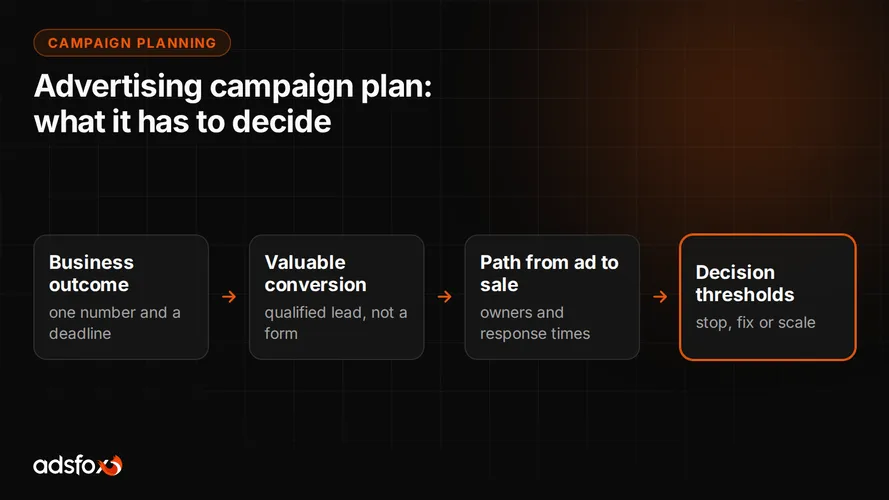
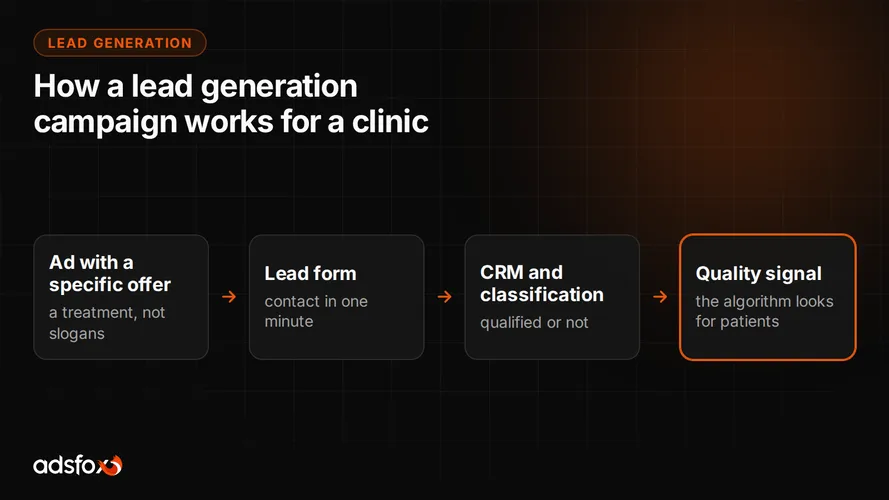
Looking across these campaigns, one pattern repeats. The biggest jump in results comes from accurate tracking and sending lead quality from the CRM back to the ad platforms. That lets the algorithm optimize for real sales instead of cheap clicks.
In several campaigns, after we set up server-side tracking and optimization, cost per lead dropped by 60 to 68 percent:
- Gym chain: from about $9 to $3
- Ink cartridge recycling: from about $12.50 to $4
- Local service business (Google Ads): cost per valuable action dropped 67% with almost the same budget
That is why we invest in server-side tracking and CRM integrations. We describe how we set this up on the server-side tracking page.
Important caveats (in the spirit of honesty)
- These are our campaigns, not a market average. Your cost per lead depends on your industry, competition, offer, and tracking.
- Not every win is a lower CPL. At one beauty salon, cost per lead actually went up (from $2.12 to $3.48) because the client was scaling and opening a second studio. The win there was more volume and more leads, not the CPL itself.
- Some clients do not disclose budgets or amounts, so some case studies only report percentage changes.
Want to know what your business could achieve?
The best reference point for your business is not someone else’s average but an assessment of your situation: your industry, offer, competition, and current tracking. Browse our full case studies or book a free consultation, and we will estimate the real potential of your campaigns on Facebook, Instagram, and Google Ads.