Dental Practice Marketing: What Works and What It Costs
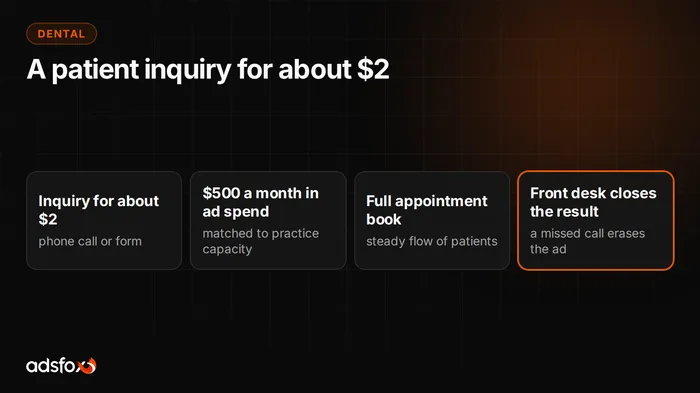
Dental practice marketing comes down to one job: filling the appointment book with patients from the area at a predictable cost per inquiry. In our case study that job looked like this: a $500 monthly ad budget, a phone or form inquiry for about $2 on average, and a steady flow of patients with no gaps in the schedule. This post breaks down what makes up such a result and what you can repeat in your own practice.
We write from the position of the people doing the work: we have run campaigns for dental practices and clinics since 2018, and every number in this post comes from our dental practice advertising case study, not from internet averages.
Why dentistry responds well to paid advertising
Three traits of the industry work in favor of campaigns. First, intent is urgent and local: a patient with a toothache or a postponed treatment looks for a practice nearby and decides quickly. Second, patient value is high and recurring: one visit often opens months of treatment, so even an inquiry costing a few dollars pays back many times over. Third, the supply of appointments is limited, so the campaign can be matched precisely to the practice’s capacity instead of chasing maximum reach.
These traits also drive the first strategic decision: advertising a dental practice is a local game. Miles from the chair matter more than any interest targeting.
What our case study looked like
The starting point was typical: one practice, a local market, and an owner with limited time for marketing. After a conversation about needs and resources, we set an ad budget of $500 a month, matched to the practice’s capacity, not to ambition.
The results that held over time: a phone or form inquiry cost about $2 on average, and a budget of about $500 turned out to be enough to keep a 100% steady flow of patients, with no gaps in the schedule and no queue that could not be served. That is the right definition of success in this industry: a calendar exactly as full as the practice has capacity for.
How much does a patient from ads cost: how to calculate it for your practice
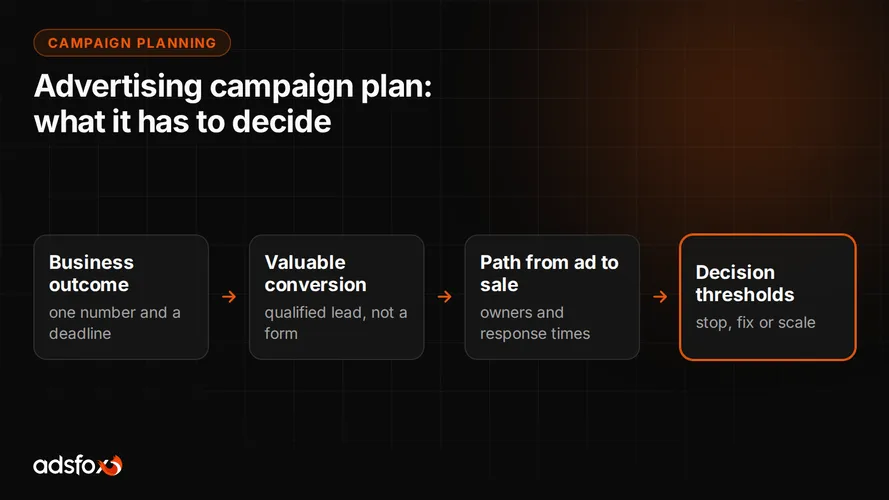
Our $2 per inquiry is the result of one specific case, not a promise. To calculate your own numbers, you need three elements:
- Inquiry tracking. Phone number clicks and submitted forms tracked as events. Without it you cannot tell an ad that brings patients from one that brings traffic.
- Cost per inquiry. Budget divided by inquiries, per campaign. Reference points from different industries are in our benchmark of 20 campaigns across 11 industries.
- Front desk conversion. How many callers book an appointment. This link is often the weakest, and no campaign can replace it: a call missed during office hours is the most expensive loss in the whole funnel.
On top of the ad budget comes campaign management: at adsfox from $490/month per channel, with the rules spelled out.
What is allowed and what is not in dental advertising
Medical services are advertised within a tight set of restrictions, and it is better to know them before the campaign than after a rejection. No promises of cures, no scare tactics, no comparisons with other doctors, caution with before-and-after photos. That does not paralyze marketing; it moves it to where it works best anyway: appointment availability, range of services, location, the team, and calm communication that addresses patients’ real concerns.
The good news: patients do not choose a practice based on a flashy ad, but on trust and convenience. A message that follows the rules is also the message that converts.
What channels make up the whole
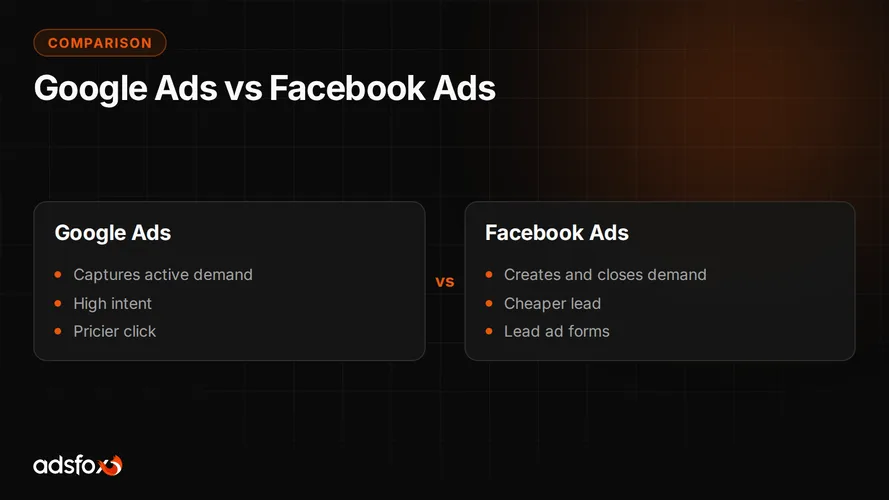
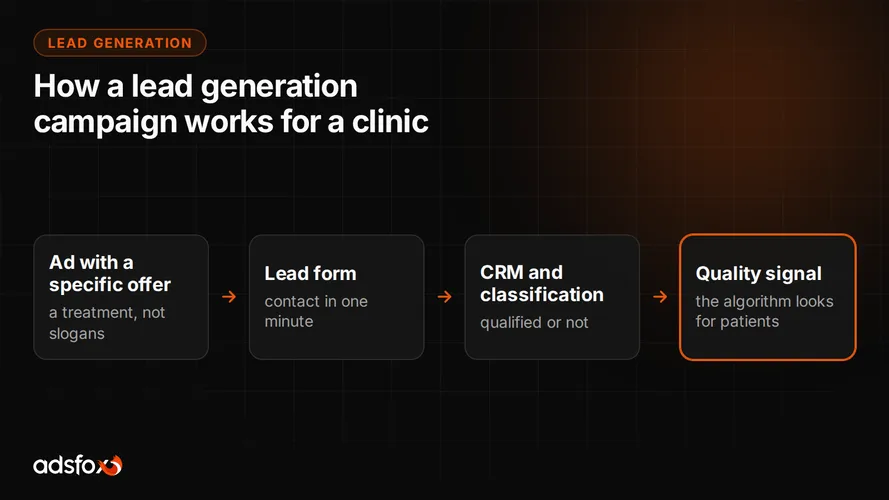
In dentistry a simple, repeatable setup works. Search campaigns capture urgent intent (“dentist near me”, “toothache”), Facebook and Instagram campaigns remind people about checkups and build recognition in the area, and Google Ads and Meta Ads work on shared tracking, so you can see where patients really come from. The foundation underneath is a website with a visible phone number, a form and measurable events.
A Google Business Profile and patient reviews reinforce the whole: they are the first thing a patient checks after seeing the ad.
Where to start in your practice
- Set up phone and form tracking before you spend a dollar.
- Start with a budget matched to the practice’s capacity; in our case $500 a month was enough for one practice.
- Watch the front desk as closely as the campaign: a missed call erases the ad’s result.
- Scale only when the calendar and the team can handle it.
If you want a team that has already done this for dental practices and clinics to set it up, see our Google Ads campaigns and book a free consultation. We will calculate your case on numbers from your market, not on someone else’s averages.