Google Ads vs Facebook Ads: Which Is Better for Your Business
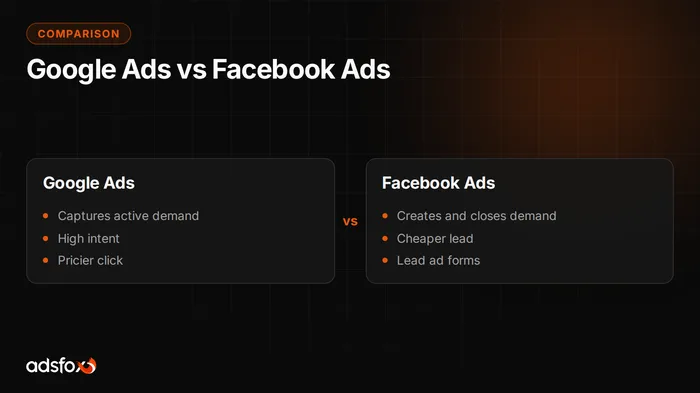
Google Ads or Facebook Ads? In short: Google captures demand that already exists, and Facebook creates and closes it, so the question is not “which channel” but “in what proportion.” In our campaigns that proportion looked completely different depending on the industry: a law firm spent 70% of its budget in Google Search, a medical aesthetics clinic ran 70% in Google and 30% in Meta, and a beauty salon put 100% into Meta Ads. All three setups were right, because each followed where the customer’s decision is born in that industry. Below we show how to pick the ratio for your business based on these three real cases, all from our European campaigns.
How does the mechanism of Google Ads differ from Facebook Ads?
Google Ads shows an ad to someone who has just typed what they need: “probate attorney near me,” “laser hair removal cost.” Intent is high, so conversions come fast, but volume is capped by the number of searches, and clicks in competitive industries are expensive.
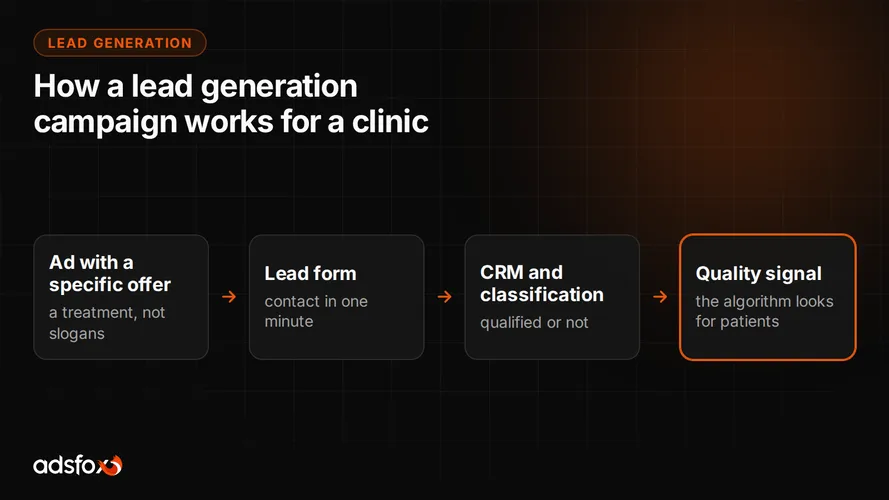
Facebook and Instagram Ads show an ad to a person picked by the algorithm who is not searching for anything right now. Intent is lower, but reach is practically unlimited, a contact is cheaper, and the formats (video, carousels, instant forms) let you trigger a need the customer has not named yet. This is the engine of lead generation campaigns: an ad with a specific promotion plus a form that takes a minute to fill out.
That difference in mechanics has a practical consequence: comparing channels on cost per click is pointless. A high-intent Google click can be worth many times more than a cheaper Facebook click, and the reverse is true when the offer is impulse-driven.
When should you bet on Google Ads?
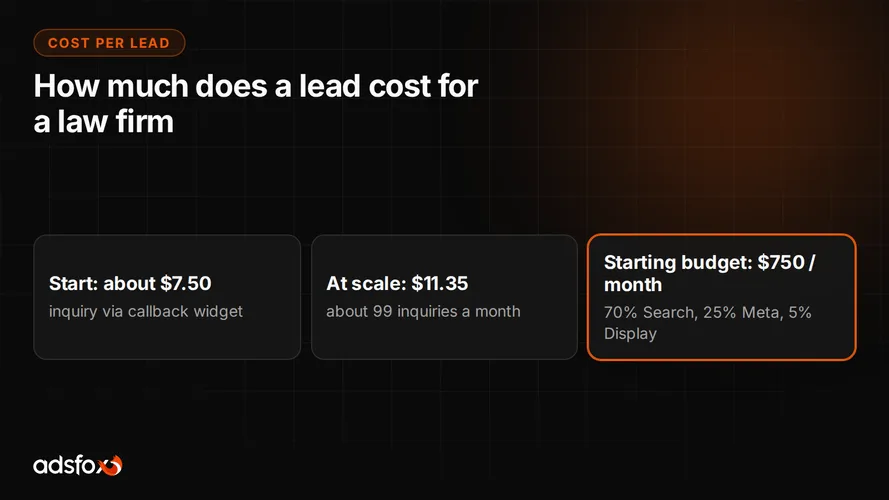
When customers actively search for your service and have a problem to solve now. Our law firm campaign is the textbook case: we split a budget of $750 a month 70% Google Search, 25% Facebook and Instagram, 5% Display, because a person with a legal problem does not wait for an ad to find them; they type the query themselves. The result: about 99 valuable inquiries a month at $11.35 each, at a level where the firm could barely keep up with handling them (law firm case study).
This group includes professional services (law, accounting, specialist medicine), repairs and emergencies, and anything the customer buys after comparing offers in a search engine. Social media then plays second line: retargeting reminds people who visited the site and have not called yet. We compared the search engines themselves separately in Microsoft Ads vs Google Ads.
When should you bet on Facebook and Instagram Ads?
When demand has to be triggered, or gathered more cheaply than search allows. We ran our project for a suburban beauty salon 100% in Meta Ads: lead form campaigns with specific treatment promotions produced contacts at $2.10 at the start and $3.50 while scaling, more than 700 leads a month in total across two accounts, which funded the opening of a second studio (beauty salon case study). Search would not have delivered that volume, because hardly anyone types “stretch mark smoothing promotion” into Google.
This is the domain of local services with a visual offer (beauty, fitness, restaurants), promotions and packages, e-commerce with impulse-bought products, and lead generation campaigns where the form collects the contact right inside the app. If you are considering other social platforms for this role, our comparison of TikTok Ads vs Meta Ads shows when it is worth going beyond Facebook.
How do you combine both channels in one strategy?
The most common good setup is Google to capture demand, Meta to build the brand and close. In our campaign for a newly opened medical aesthetics clinic we split a budget of about $750 a month 70/30 between Google Ads and Facebook Ads: Search caught people looking for a specific treatment nearby, while video and carousels on Facebook and Instagram built recognition for the new brand and came back with retargeting to the undecided. The result: a 70% increase in customers in 3 months at a cost per lead of about $4.75 (clinic case study).
The practical order for a business that is just starting: first one channel matched to where the customer’s decision is born (a test at $500 to $750 a month), conversion tracking from day one, and the second channel only once the first one works and you know exactly what it is supposed to support. We collected wider cost ranges across industries in our benchmark of 20 campaigns in 11 industries, and broke down detailed cost per lead separately for law firms, medical aesthetics and beauty salons.
Summary: how do you choose?
Ask yourself one question: does my customer search Google for this service before buying it? If yes, start with Google Ads and add Meta as support (law firm: 70/25/5, clinic: 70/30). If not, because they buy on impulse or respond to a promotion, start with Facebook and Instagram Ads (beauty salon: 100% Meta). And if you are not sure, let’s talk; we run both channels as a Google Partner and Meta Business Partner, so we will recommend a ratio based on data from similar businesses, not a preference for either channel.