Gym Marketing: What Works and What a Lead Costs
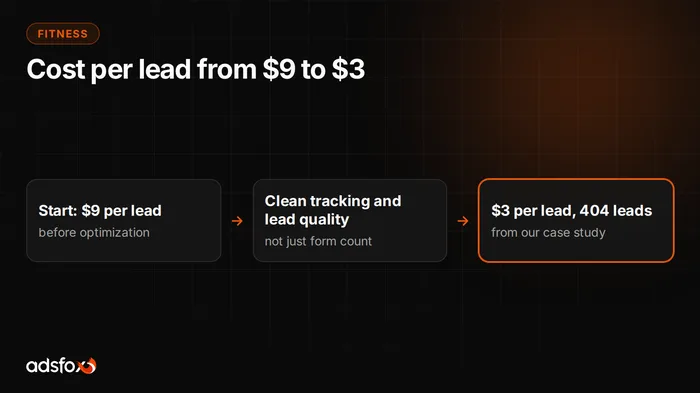
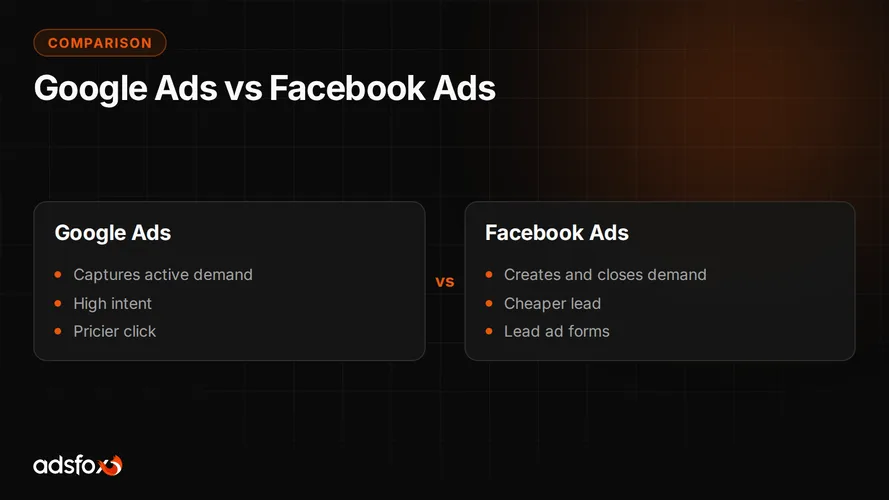
In gym marketing, the most effective approach combines four elements: local lead campaigns on Facebook and Instagram, video creatives shot in the club, a simple membership offer, and form tracking in a CRM. A gym sells a service people use close to home or work, so the ad has to be local and show a real place, not generic slogans about staying active. In our case study for a chain of fitness clubs, this approach cut cost per lead from about $9 to $3 and brought 404 leads in 5 months. In this guide we show how to apply it to your own club: how to sell memberships, how to use the January and September seasonality, how to target locally, and how to measure whether the campaign actually supports sales.
What a gym sells and why it changes the ad
A fitness club does not sell a single transaction but a membership: monthly passes, day passes, access to training zones and classes. That changes how you calculate ad profitability. One acquired member pays every month, so a lead that cost a few dollars can pay back for many months if the person stays with the club. That is why we do not compare cost per lead with the price of a single visit, but with the value of a membership over time.
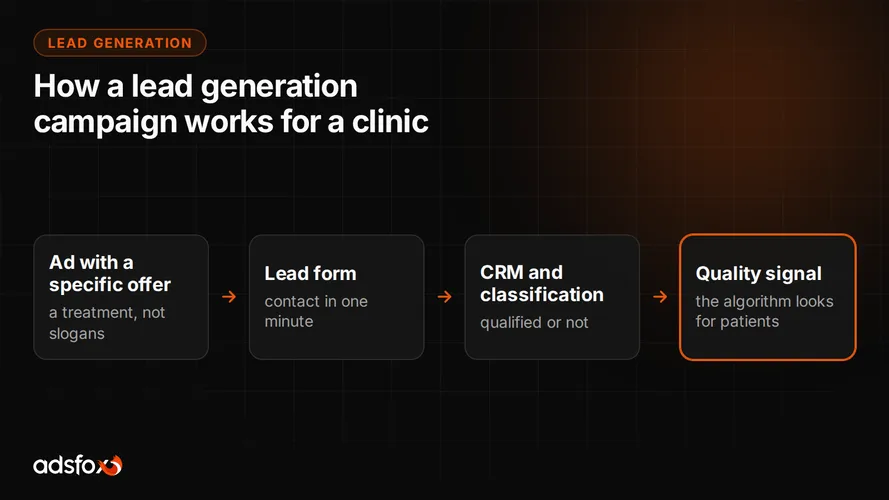
The second consequence: the ad should lead to a form, not to likes. An interested person leaves their contact details, and the front desk or sales team books them for a trial workout or a club tour. Third: exclude current members from targeting. In our fitness project, audience exclusions made sure the budget went to people who could still join the club, not to those already paying for a membership.
How to use seasonality: January and September
The fitness industry has two natural peaks: January, when New Year’s resolutions kick in, and September, when the daily routine returns after summer. The most common mistake is launching ads only at the peak. A campaign needs a few weeks to gather data and optimize, so a mid-January launch means the best traffic passes the club by.
A more sensible setup is an always-on campaign that runs all year and collects leads at a predictable cost, plus promotional campaigns boosted before the peaks: in December before January and in August before September. In our case study this split was visible in the results: the always-on campaign brought 325 leads and the promotional one 79. The result did not depend on a single source, but on the combination of both. Outside the peaks, the always-on campaign keeps inquiries flowing, and seasonal promotions add volume when interest in training is highest.
Why location decides the effectiveness of gym ads
The decision to join a club is made locally: is the gym on the way to work, can you get there in about fifteen minutes, does it look like a place you want to visit regularly. That is why targeting should cover the real commute area, not the whole city or state. Targeting that is too broad gives cheaper clicks but weaker leads, because a person who lives too far away will not buy a membership even after a good conversation with the front desk.
Location also applies to the message. The ad has to say clearly where the club is, what you can do there, and why to leave your details right now. For a chain of clubs, each location should have its own creatives and its own message, because the offer and atmosphere of individual clubs differ. In our project we ran the campaign in a competitive city, and matching the message to the specific club is what set the ad apart from competitors’ generic slogans.
How to make effective video from the club
The best creative for a fitness club is video shot in the club itself: the floor, the equipment, a group class, the trainers, the entrance and the front desk. Before signing up, the user wants to see the place and imagine working out there. Static graphics with stock photos will not do that; a reel from a real workout will.
A few rules we apply in campaigns:
- show the location in the first seconds: the club name, the street or a landmark,
- film real people in real situations, not staged scenes,
- end with a clear call to action: leave your details, book a trial workout,
- prepare vertical versions for reels and stories.
The same material works on Facebook, Instagram and TikTok, where younger audiences look for clubs and group classes. If the club targets that group, we describe how we work on that platform on our TikTok Ads agency page. In our case study, video showing the club, workouts and atmosphere was one of the pillars of the creative.
How much does a lead cost in the fitness industry
In our fitness club case study, cost per lead was about $9 at launch and dropped to $3 after optimization. The ad budget started at $200 a month and rose to $250 a month after the first results. A typical starting budget for this industry is usually $250 to $375 a month; this project started below that level.
Against a wider backdrop, these numbers look credible. In our benchmark of 20 campaigns across 11 industries, cost per lead ranges from $2 to $11, depending on the industry, city and offer. A result of $3 sits in the lower part of that range.
On top of the ad budget comes campaign management. At adsfox it starts from $490/month per channel. For a fitness club this means the total cost of launching consists of the media budget and a fixed management fee, with conversion tracking working from day one.
What our fitness club case study looked like
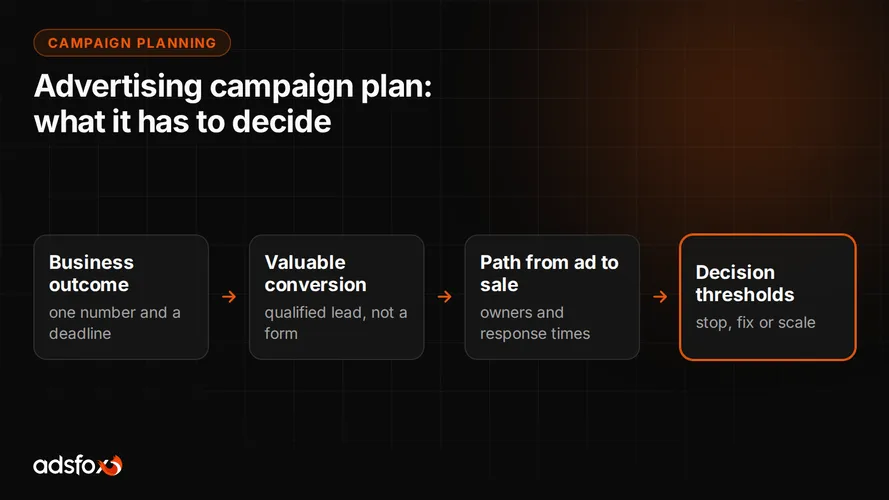
We run a Meta Ads campaign for a regional chain of fitness clubs and gyms, one of our European campaigns. Before working with us, the client promoted individual posts with the “boost post” button and did not know what a single lead cost. At launch there was no Meta Pixel and no conversion tracking, so we started by implementing form tracking, a CRM and integration with the client’s system.
Results after 5 months: cost per lead dropped from about $9 to $3, and the campaigns acquired a total of 404 leads. The first results were visible after 2 weeks. After the first month the client submitted another club for promotion, and the partnership was extended. The always-on campaign accounted for 325 leads, the promotional one for 79.
The full project description, with Meta Ads dashboard screenshots and implementation details, is in the fitness club advertising case study. It is a good reference point if you run a club in a comparable city and start with a similar budget.
How to measure whether the campaign sells memberships
Clicks and reach say nothing about membership sales. You need to measure three things: the number of forms, the cost of a single lead, and what happens to the lead after it is acquired. The first two are shown by the ad dashboard; the third only by the CRM: who left their details, how fast the front desk called back, and whether the conversation ended in a signup.
In our fitness project, tracking forms as the main conversion is what allowed us to optimize the campaign from about $9 to $3 per lead. Without it the campaign would have looked active, but there would be no way to tell ads that build reach from those that deliver sales leads.
To connect campaign and CRM data we use our own lead generation optimization system. We write more about why a CRM changes the way lead campaigns are run in our post on CRM and ad campaigns.
What should happen after a lead comes in
A lead is the beginning of the process, not the end. A person who left their details on an ad is often comparing several clubs at once, so the one that responds fast and specifically wins. In practice this means a clear division of duties: who calls back, during what hours, what they offer in the first conversation. A simple entry offer works well: a trial workout, a day pass, or a club tour with a walkthrough of the membership options.
A CRM organizes this process. You can see which contacts are waiting to be handled, which have been booked, and which ended in a signup. That matters for the campaign itself too: if the club knows which ads bring people who actually buy memberships, the budget can be shifted to where leads have the highest quality, not just the lowest cost. In our fitness project we treated the ad, the form and the CRM as one system, and that approach is described in the case study.
Where to start with marketing for your club
Start with tracking, not creative. Check whether the website and forms track conversions, whether leads go into a CRM, and whether someone handles them during the club’s opening hours. Then prepare video from the club, set targeting to the real commute area, and plan an always-on campaign with promotions before January and September.
If you would rather hand this to a team that has done it for the fitness industry, we run lead campaigns as a Facebook Ads agency. adsfox has been in business since 2018, has served more than 350 clients in over 20 industries, and is a Meta Business Partner at the Badged level. For a fitness club that means a proven working pattern: tracking, forms, CRM, local creatives and constant control of cost per lead.
Get a free consultation: write to us, and we will analyze tracking, forms and cost per lead in your club.