How to Increase Online Sales with Paid Advertising
This article focuses on the technical side of performance marketing, meaning marketing that is judged by results. We cover how to create and optimize ads on Facebook and Google, how to start advertising a business, where it’s worth advertising and which elements make an ad effective.
The first step is a sound marketing strategy. Every business is different, so every advertising strategy should fit your specific needs and budget. That is why it pays to experiment with different tactics until you find the ones that bring the best results.
1. Set advertising goals
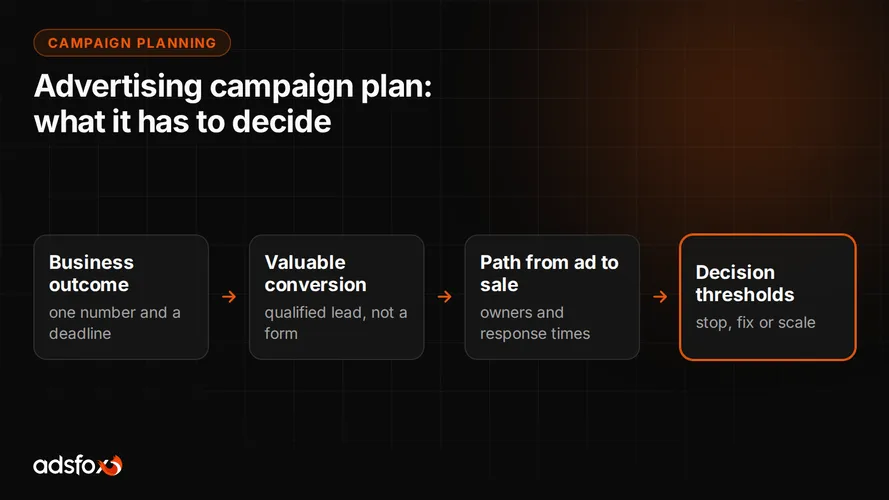
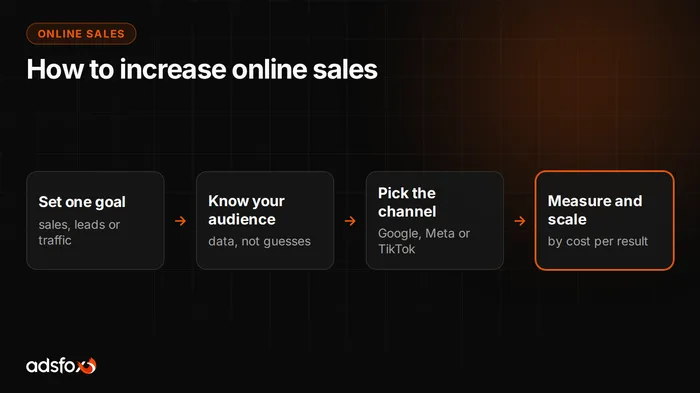
This is a critical step in building an effective strategy. To increase online sales, start by setting specific advertising goals. They should be clearly defined, measurable and matched to your business and the stages of your customers’ buying journey.
Conversions
Focus on what really matters: selling products or services. To get there, define exactly which user actions count as a conversion, whether it’s a purchase, a sign-up or a completed form. Install Google Analytics to track conversions and analyze user behavior. The Meta Pixel and Google Tag Manager are your allies in measuring ad performance. Landing page optimization matters too: make sure your pages load fast and are easy to navigate.
Website traffic
Want your website to be busy? Focus on attracting traffic with compelling ads and valuable content. Google Ads is a powerful tool: target the right keywords, which you can find with Google Keyword Planner. SEO is simply the work of raising your site’s position in search results. A company blog is one of the things that build your position as an expert. Engaging articles not only attract attention but also improve visibility in search engines. Social media marketing on Facebook, Instagram or TikTok will bring in people interested in your offer.
Lead generation
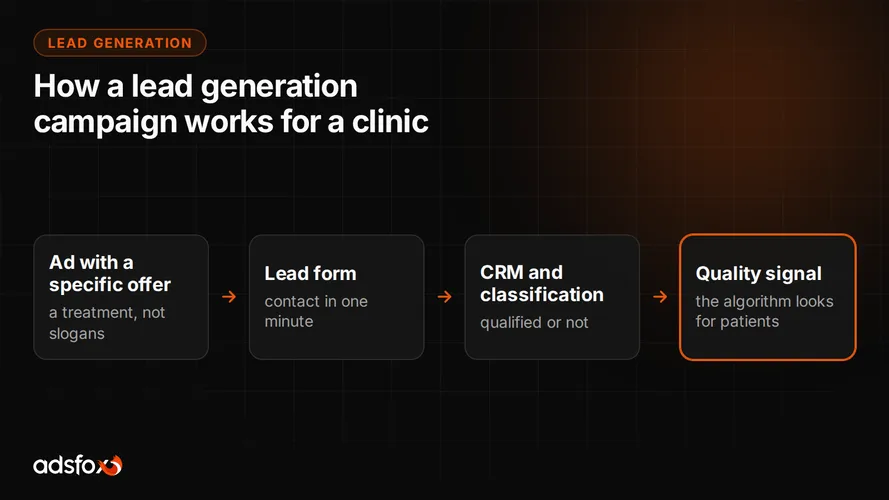
Effective lead generation is an art that requires a subtle approach. Newsletter sign-up forms and special offers are designed to capture contact details from potential customers. Build attractive landing pages to encourage users to leave their data. Webinars are another way to get in touch with prospects. After the event, use the collected information to warm up the leads you’ve gained.
Know your target audience
Understanding who your customers are is the foundation of an effective campaign. Start with demographics: age, gender, location. Then dig into their interests and behavior to learn what really engages them. Follow online forums and Facebook groups to see what they share and discuss.
Ask customers directly, for example through surveys, to better understand their needs and expectations. Sales data will show you which products are most popular and why.
Monitor social media to stay current on the opinions and mood of your audience. Test different campaigns and analyze which messages work best. Stay flexible and ready to make changes so your campaigns always reach the right people.
2. Facebook advertising
Advertising on Facebook plays a huge role in modern marketing strategies. The platform has close to 3 billion monthly active users and offers an unmatched way to reach a broad and diverse audience.
Creating ad campaigns
To make the process easier, we’ve broken campaign creation into steps:
Choosing the campaign objective
An effective Facebook campaign starts with choosing the right objective. It should be tied directly to what you want: more sales, more conversions or more brand awareness? Each objective calls for a different approach and different techniques. In your copy, use strong calls to action such as “Shop now” or “Sign up.”
Audience targeting
Audience targeting is the next important element. Facebook Ads offers precise tools for setting detailed audience parameters such as demographics, interests and even online behavior. Precise targeting raises your chances of winning new customers.
Ad format
The ad format matters a great deal too. Facebook lets you use different formats, such as images, video and carousels, which can be tailored to different goals and audiences. Choose the format based on what will best capture your audience’s attention and communicate your message.
Campaign optimization
Ongoing optimization lets you make better use of your budget by concentrating on the most effective tactics, which significantly lowers your cost per lead. Improving metrics such as conversions and ROAS is possible through constant analysis and removal of the weaker parts of a campaign. Optimization also lets you adapt quickly to changing market conditions and user preferences. The result is better business outcomes.
A/B testing
Imagine you have two headlines, two images and two versions of ad copy. Which combination will attract the most attention? A/B testing lets you compare these versions to find the most effective one. It works like an experiment: one version may get more clicks, another may bring more purchases. Regularly testing elements such as headlines, images and calls to action (CTAs) helps you keep improving your ads.
Monitoring results
Tools such as Meta Ads Manager let you monitor how well your ads are doing. With the data from these reports you can see which ads work best and where something needs fixing. Think of it as a regular health check for your campaign: the better the control, the better the results.
Retargeting
Retargeting is a smart way to remind people about your offer. When someone visits your website but doesn’t buy, the Meta Pixel records that. Remarketing lets you reach those interested people again and remind them about the products or services you offer. It’s a gentle nudge: “Hey, remember us? We still have what you were looking at.” That gives you a much better chance of closing the sale.

3. Google advertising
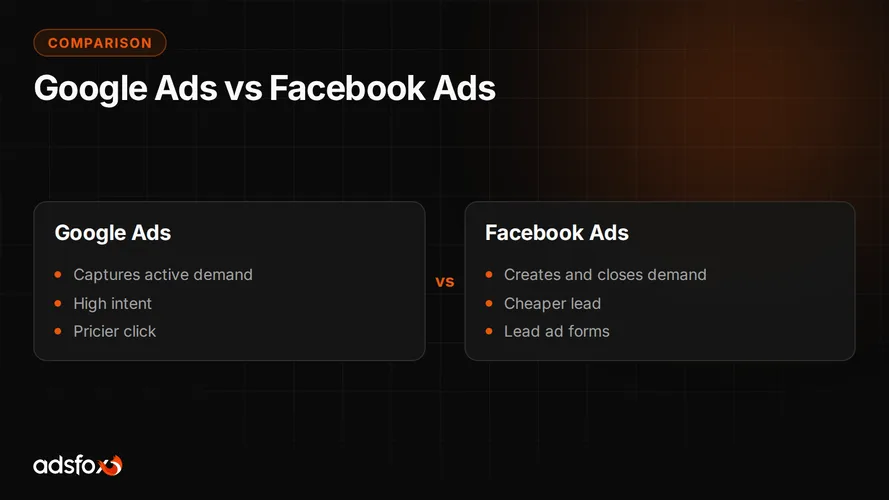
Google Ads plays a central role in modern digital marketing because it reaches users at the exact moment they are actively looking for information, products or services. To get the most out of Google Ads, focus on two main areas: keyword selection and writing text ads.
Keyword selection
Choosing the right keywords is the foundation of an effective Google campaign. Through careful keyword research you can identify the phrases potential customers type into the search engine when looking for products or services like yours. Tools such as Google Keyword Planner help you find the most relevant and popular keywords and assess how competitive they are. Precise targeting ensures your ads are shown to users who have a real interest in your offer.
Writing text ads
Text ads must be not only appealing but also precisely matched to the chosen keywords. Headlines need to be catchy and grab attention right away, and the ad copy should be clear, concise and include a clear call to action. Well-written text ads can significantly increase click-through rate and, more importantly, conversions. Regular testing and optimization of text ads, by analyzing results and making changes, allows continuous improvement of the campaign.
4. How to start advertising your business
Advertising a business in today’s digital environment takes not only creativity but also a strategic approach and careful planning. Effective advertising is not just about budget; above all it’s about using the available tools and channels intelligently to reach the right audience. With advanced technology and broad access to data, companies can understand their customers more precisely and create campaigns that truly match their needs and preferences.
Choosing ad platforms
Each platform has its own characteristics, targeting options and ad formats that may be better suited to specific goals and audiences. Understanding which platforms best support your business goals and reach your audience most efficiently is fundamental to campaign success. Below we look at the most popular ad platforms, their strengths and how to use them to get the most out of your marketing.
Facebook and Instagram
Facebook and Instagram, both owned by Meta, offer advanced ad tools that allow precise audience targeting. Thanks to their huge user database, ads on these platforms can be aimed at detailed demographic, geographic and behavioral segments. Meta Ads Manager lets you create a variety of ad formats, such as images, video, carousels and slideshows, adapted to different campaign goals, from building brand awareness to effective lead generation. Instagram, with its emphasis on visual content, is especially effective for brands that want to present their products in an attractive way to younger users. Who should choose it? Facebook and Instagram ads are ideal for businesses that want to reach a wide audience, both younger and older. They are especially effective for consumer, fashion and beauty brands, and for anyone who can benefit from the visual, engaging nature of these platforms.
Google Ads
Did you know that billions of people use Google search every month? It is one of the most effective ad platforms, reaching users at the exact moment they are actively searching for information, products or services. Google ads can appear in search results, on Google partner sites and in mobile apps. With tools such as Google Keyword Planner, advertisers can choose the most relevant keywords to attract interested users. Precise result tracking and real-time optimization make Google Ads a powerful tool for increasing online sales and improving your company’s visibility. Who should choose it? Google Ads works best for businesses whose products or services are actively searched for, such as e-commerce, professional services, travel and education. It’s also ideal for companies that want to target users precisely based on search intent.
TikTok
TikTok, one of the fastest-growing social platforms, offers unique ad opportunities, especially for brands targeting a younger audience. TikTok Ads Manager lets you create engaging, creative video campaigns that can gain popularity fast thanks to a variety of formats. TikTok’s algorithm, which promotes content based on user interests, reaches a broad but well-matched audience. TikTok campaigns can quickly raise brand awareness and engagement, making them ideal for companies that want to stay on top of the latest trends. Who should choose it? TikTok ads are especially effective for brands aimed at younger users, particularly Gen Z and millennials. They are ideal for industries such as fashion, cosmetics, entertainment and technology, and for any campaign that can benefit from the creative, dynamic character of the platform.
Budgeting
Good budget management lets you maximize return on investment and hit your business goals. Here are a few steps to help you start and scale your campaigns.
Set an initial budget
Start by setting an initial budget you can devote to testing. It’s wise to begin with smaller amounts to see how the campaigns perform. For many businesses the initial budget is a few hundred to a few thousand dollars a month, depending on the scale and goals of the campaign.
Monitor and analyze results
Use analytics tools such as Google Analytics, Meta Ads Manager and Google Ads to track key performance indicators (KPIs). Analyzing this data will show you which campaigns work best and where adjustments are needed.
Scale the campaigns
Once you identify which campaigns bring the best results, you can start scaling them. That means increasing the budget on the most effective campaigns. Scale gradually to avoid sudden cost spikes and keep control of spending. For example, if a campaign delivers a strong return at $250 a month, try raising it to $375 and check that the return stays at a satisfactory level.
5. What effective online advertising depends on
Effective online advertising is the result of many factors, but the most important are the ad creative and analytics and reporting. Both play a key role in building campaigns that not only catch attention but also deliver real results.
Ad creative
The creative is the heart of every campaign. How your ad looks and what it communicates directly affects whether it will capture attention and prompt action. Effective ad creative should be:
- Visually attractive: graphics and video should be high quality, aesthetically pleasing and consistent with your brand. Bright, eye-catching colors and well-designed graphic elements can significantly increase engagement.
- Clear and concise: the message should be simple and easy to understand. Users need to know immediately what you offer and why they should care. Avoid complicated language and cramming too much information into one ad.
- Personalized: personalization, for example dynamic content matched to a specific viewer, can substantially raise campaign performance. Using demographic, geographic and behavioral data lets you create more relevant, engaging ads.
- A strong call to action (CTA): effective ads include a clear CTA that tells viewers what to do next, such as “Shop now,” “Sign up” or “Learn more.”
Analytics and reporting
The second essential element is analytics and reporting, which allow you to continuously measure and optimize campaign performance. Without solid data you can’t properly judge what works and what needs improvement. Effective analytics and reporting include:
- Conversion tracking: use tools such as Google Analytics, the Meta Pixel and Google Tag Manager to track conversions and analyze which actions bring the best results.
- KPI monitoring: regularly check your key performance indicators. They help you assess campaign performance and identify areas for optimization.
- Reporting results: create regular reports that present campaign results in a clear, understandable way. They should include quantitative and qualitative data that allow proper analysis and conclusions.
- Campaign optimization: based on the collected data, make changes to improve performance. That may include testing different ad versions (A/B testing), adjusting budgets, changing targeting or modifying ad copy.
In short, effective online advertising depends on well-designed creative that attracts and engages the audience, and on solid analytics and reporting that allow continuous improvement based on real data. These two elements, combined with strategic thinking and flexibility, will significantly improve your company’s online sales process.
6. Working with a marketing agency
Working with an agency that specializes in performance marketing brings businesses a number of benefits that can significantly affect the effectiveness of their advertising and the achievement of their business goals. Performance marketing, focused on results and measurable effects, requires specialized knowledge and advanced tools that marketing agencies can provide.
A team of experts
Performance marketing agencies have a team of specialists with diverse experience in digital marketing. Such teams include experts in strategy, data analytics, PPC (pay-per-click) campaigns, SEO, SEM, design, copywriting and social media marketing. Thanks to their combined work, campaigns are managed and optimized comprehensively to deliver the best possible results.
Advanced tools and technology
Agencies specializing in performance marketing use the latest tools and technology, which allow precise targeting, real-time result tracking and campaign optimization. Tools such as Google Analytics, Meta Ads Manager and others enable accurate monitoring of campaign performance, trend identification and quick reaction to changing market conditions.
Automation and machine learning
Modern performance marketing agencies use automation and machine learning to make campaigns more effective. Automation means that repetitive tasks, such as setting bids or splitting audiences into groups, are handled by software, which saves time and improves efficiency. Machine learning, a technology that lets computers analyze data and predict outcomes, makes ad campaigns more precise and better matched to customer needs. All of this makes marketing more accurate and more effective.
Access to specialists
Despite advanced technology, the human element still plays a key role. Working with a marketing agency, you can consult specialists regularly. They can provide valuable insights, adapt strategies to changing market conditions and take an individual approach to your needs. This combination of technology and human expertise delivers the best results.
Time savings
Running effective performance marketing campaigns takes a lot of time. By working with an agency you can focus on other key aspects of your business while experts handle planning, execution and campaign analysis. That means greater operational efficiency and better use of your company’s resources.
Personalization and creativity
Agencies bring a fresh perspective and an innovative approach to ad campaigns. Your ads can be more creative and engaging, which makes them more effective. Agency specialists serve many industries, so they know which techniques and lead generation methods work in different sectors.
Continuous optimization and analysis
Performance marketing agencies constantly monitor and analyze campaign results, making the adjustments needed to maximize effectiveness. Regular reporting and analysis allow strategies to be adapted on an ongoing basis to changing market conditions and audience preferences.
Why work with an agency?
In summary, working with an agency that specializes in performance marketing gives you access to an experienced team, advanced tools and technology, and savings in time and resources. With the ability to scale campaigns, personalize, take a creative approach and continuously optimize, your campaigns can be more effective and better adapted to changing market conditions. All of this helps you achieve better marketing results while you focus on growing the business.
Summary
The internet has become the main place where consumers look for information, products and services. Online advertising allows precise audience targeting, which increases campaign effectiveness and makes better use of the budget. With advanced analytics tools you can monitor results in real time and optimize your activity, which leads to a better return on investment.
The internet also offers many forms of advertising, from social media to search ads, so you can adapt the strategy to the specific needs and goals of your company. Investing in online advertising also lets you react quickly to changing market conditions and consumer preferences. That’s why online advertising is a vital part of modern marketing that helps companies succeed in a fast-moving digital world.
The biggest problem with online advertising rarely comes down to choosing a channel. Usually it’s that each piece is run by someone else and nobody owns the whole. If you’re looking for one team for content, SEO, campaigns and the website, see how our full-service marketing agency works. If at this stage you only care about paid campaigns, we describe them on our PPC agency page.