Is Pinterest Advertising Worth It? Costs and Who It Fits
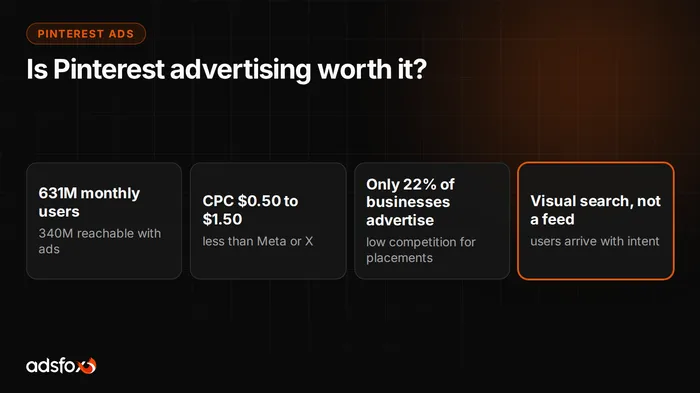
Pinterest advertising is a channel most B2C brands ignore, even though it can be a cheaper source of purchases than Meta or Google. In Q1 2026, Pinterest had 631 million monthly active users, and its ads can reach about 340 million people. Meanwhile, only 22% of businesses run campaigns there at all. For owners of fashion, home decor, lifestyle, and DIY brands, that is either an undervalued niche or a missed opportunity.
In this post we show why Pinterest works differently from Meta, which businesses it makes sense for, and how to start without burning through your budget in two weeks.
What is Pinterest advertising and why does it work differently?
Pinterest is not another feed to scroll. Users treat the platform as a visual search engine: they run more than 80 billion searches a month and save 1.5 billion Pins a week. People come with intent: they are looking for inspiration for a remodel, an outfit, a gift, or an interior.
That changes the rules of the game. On Meta you pay to interrupt scrolling. On Pinterest you show up when someone is already looking for a solution. According to Hootsuite, Pinterest users are 90% more likely to buy than users of other social platforms. These are not random scrollers. They are people in the planning stage.
That is why Pinterest advertising works especially well in categories where seeing the product helps make the decision.
Pinterest Ads in numbers
The data below shows why this channel deserves a look from a budget perspective.
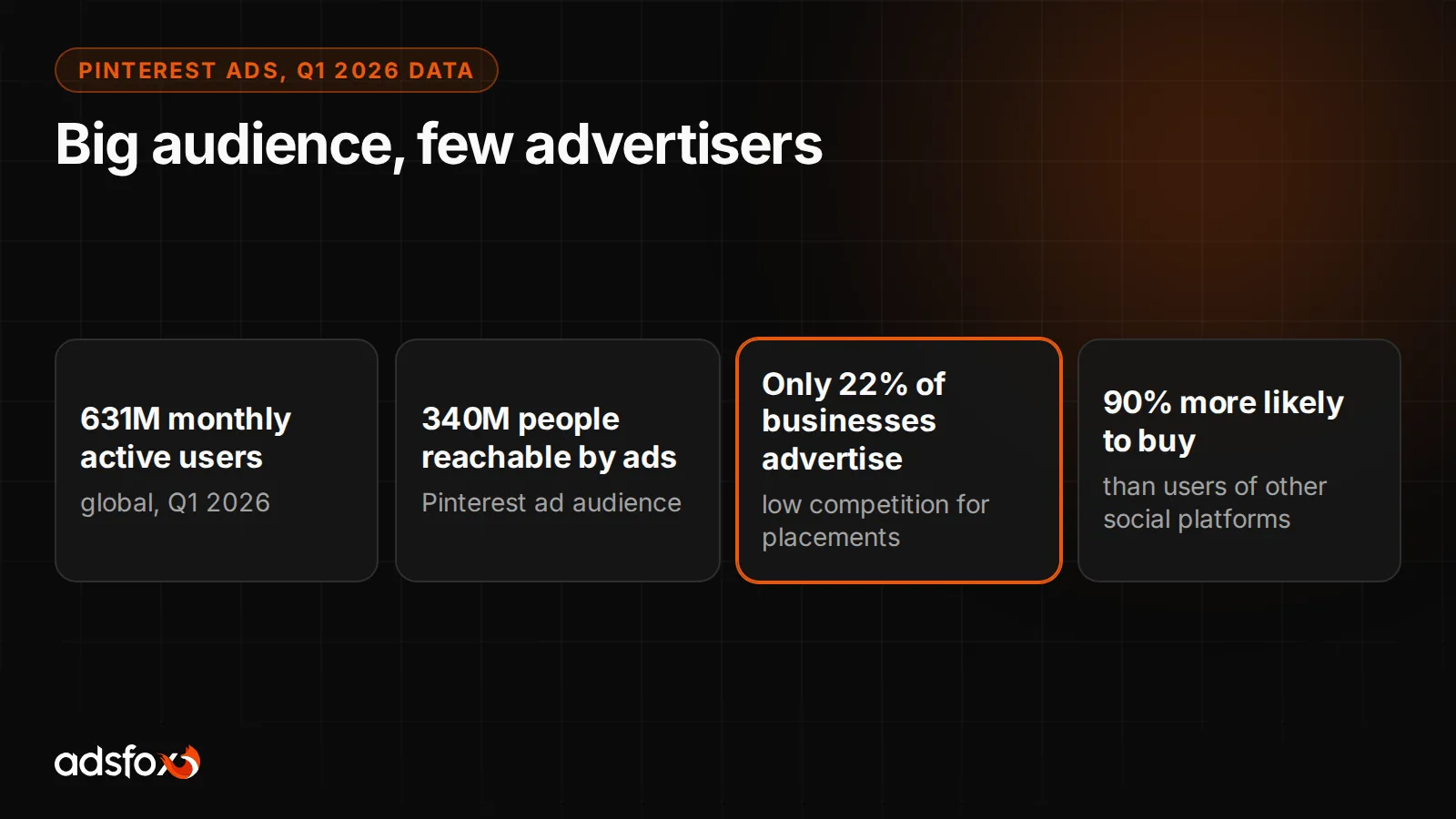
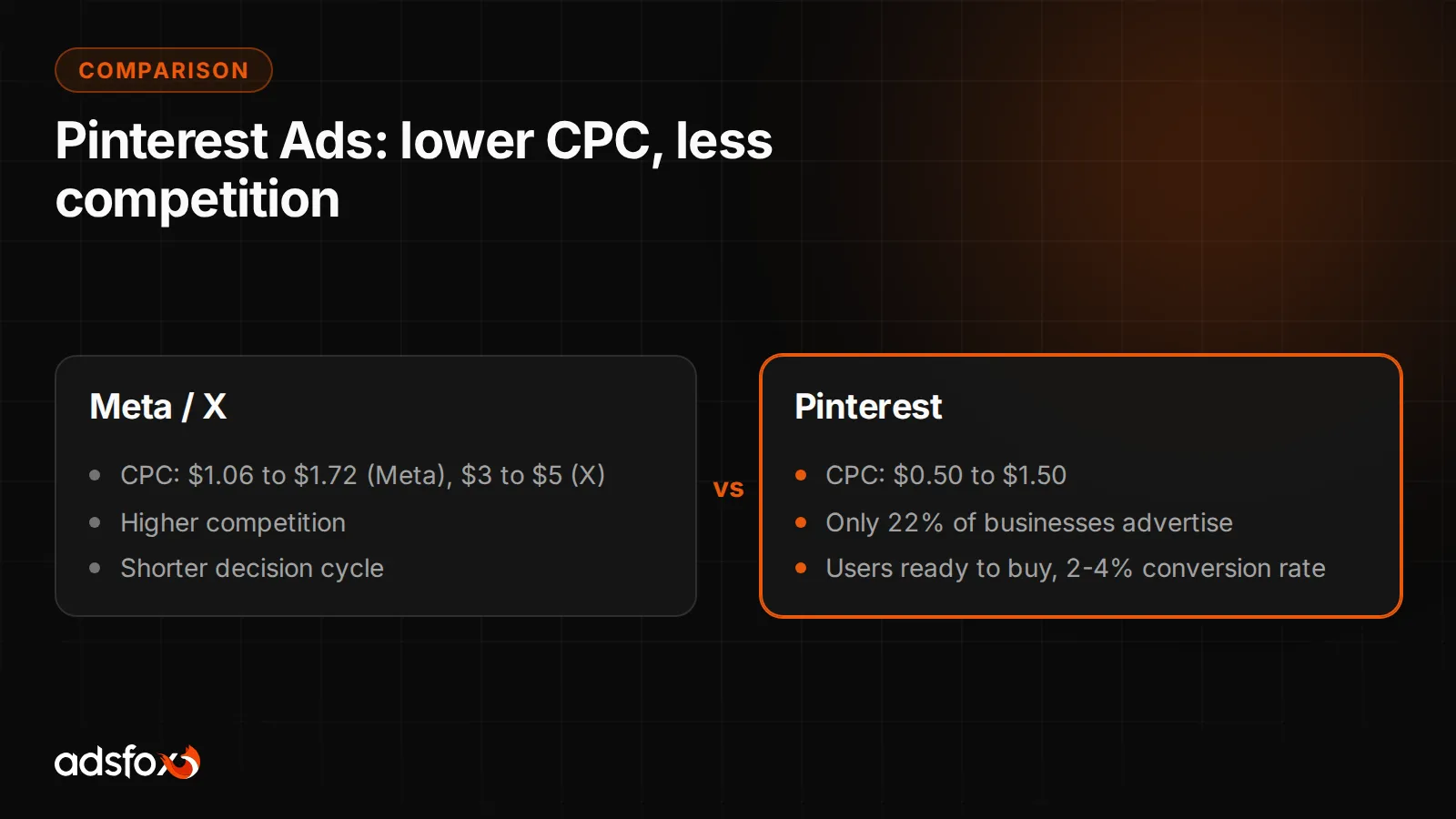
Sources: Hootsuite, “42 Pinterest stats that matter to marketers in 2026” (June 2026), WebFX benchmarks, DataReportal, Statista.
Low CPC and low competition are a combination that lets you test a new channel without much risk. But a cheap click does not yet mean a cheap sale. What matters is whether your product and creatives match the intent of Pinterest users.
Who does Pinterest advertising pay off for?
Yes, if your business meets these conditions:
- you sell visual products: fashion, home decor, furniture, beauty, DIY, handmade;
- you have good product photos and lifestyle shots;
- your customers are mostly women (70% of Pinterest users) or Gen Z (the fastest-growing group);
- you have a test budget and time, because Pinterest needs a longer funnel than Meta.
No, if:
- you sell B2B services, software, or consulting;
- your products cannot be shown visually;
- you are counting on “clicked today, bought tomorrow” conversions;
- you have no product catalog and no good photos.
Pinterest advertising is a channel for product brands with a visual offer. If you sell abstract services, you are better off investing in PPC campaigns on platforms where intent is more clearly defined.
The most common Pinterest Ads mistakes
1. Treating Pinterest like Meta
On Meta, the creative has to stop the scroll. On Pinterest, it has to show how the product fits into the user’s life. Product shots on a white background with a price perform worse than lifestyle arrangements and styling ideas.
2. No product catalog
Pinterest Shopping Ads and a product catalog are the foundation. Without them you lose the cheapest clicks, from users who are already looking for a specific product.
3. A test that is too short
The Pinterest algorithm needs time to learn who buys. A test should run at least 4 to 6 weeks and have a budget that allows a statistically meaningful number of conversions.
4. Measuring only the last click
Pinterest often works as a planning funnel: a user sees a Pin, saves it, and buys a few days later through direct traffic or brand search. If you only measure the day of the click, you are setting the campaign up to fail.
How to start advertising on Pinterest
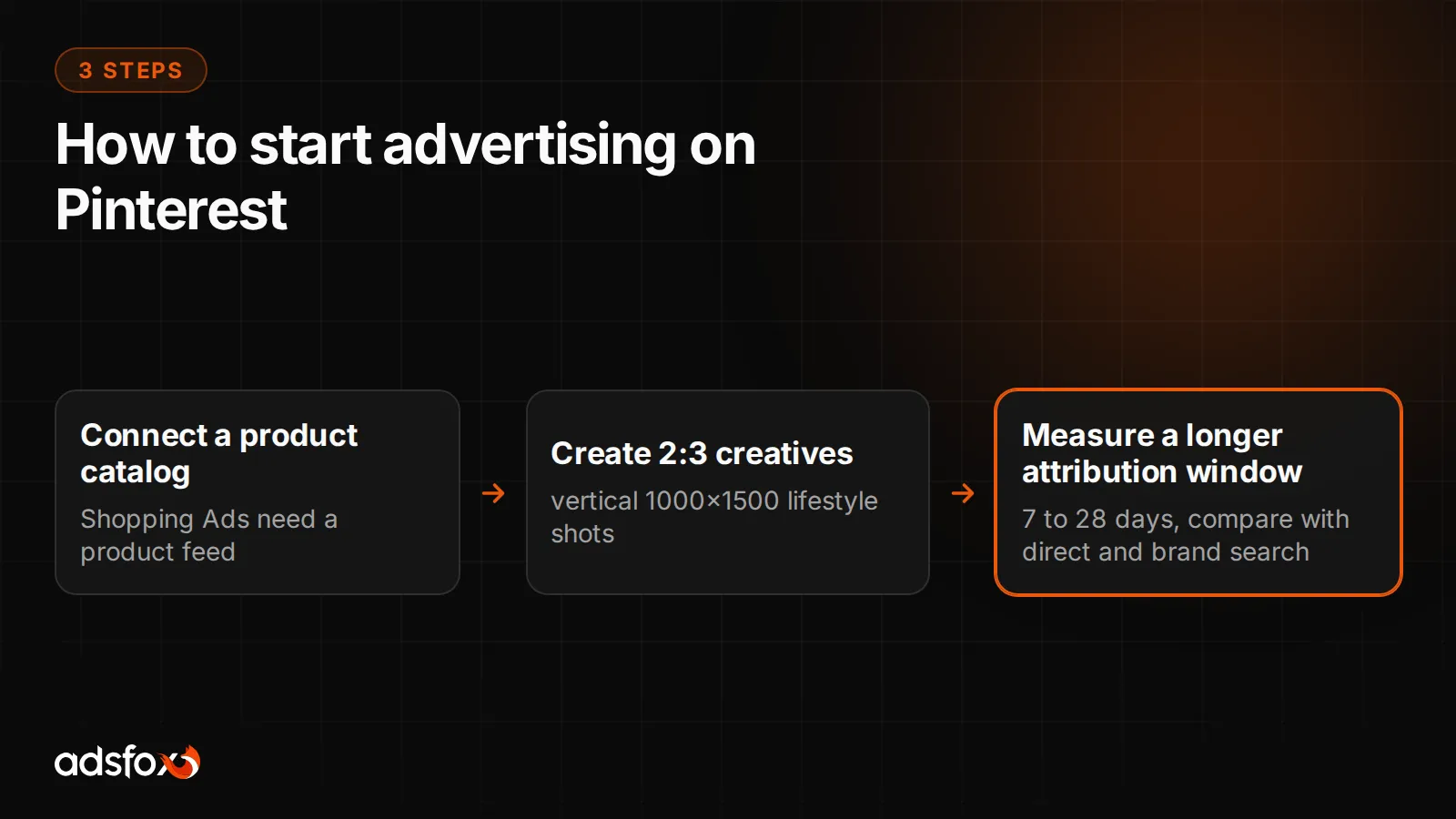
The diagram above is the minimum starter kit. The key is combining three elements: a good product catalog, creatives in the platform’s format, and measurement with an extended attribution window.
Remember the technical side of measurement too. Like Meta, Pinterest performs better when the campaign receives complete conversion signals. A properly configured Pinterest tag and conversion events increase the chance that the algorithm finds the users who buy.
Is Pinterest advertising worth it in 2026?
Pinterest Ads will not replace Meta for every brand. But for businesses in fashion, home decor, lifestyle, DIY, handmade, and beauty, it can be a cheaper, less crowded channel with users who come with purchase intent on their own.
So the key question is not “is it worth it” but “do we have the products and creatives that fit this platform.”
adsfox is a full-service digital marketing agency for service businesses and online stores: content, SEO and GEO, paid campaigns, and your website. We run Pinterest Ads campaigns alongside Meta and Google. If you are wondering which ad channel is the best fit for your business, book a free consultation: we will review your campaigns and show you where you can gain additional sales.