Lead Generation for Clinics and Med Spas: How It Works
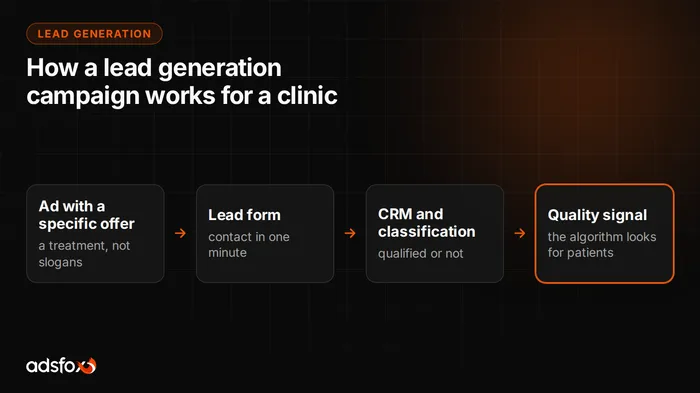
A lead generation campaign for a clinic or med spa works like this: the ad leads to a short contact form, the inquiry lands in a CRM right away, the front desk calls back and marks the contact as qualified or not, and that grade goes back to the ad platform as a hint about who to look for next. That last link is the most important and the most often skipped. In our project for a beauty and medical aesthetics brand, closing this loop increased qualified leads from 80 to 195 (a 143.8% increase) on lower ad spend. Below we take the mechanism apart, with numbers from real adsfox campaigns in Europe instead of theory.
What does a lead generation campaign for a clinic consist of?
Four elements, each of them necessary:
- An ad with a specific offer. In treatment-based services, messages about a specific treatment, package or promotion work best, not generic slogans about beauty and health. The ad filters: it should attract people genuinely interested in booking.
- A short form instead of a landing page. Meta Lead Ads forms take a minute to fill out without leaving the app. They produce a cheaper contact than a classic landing page, but a less committed one, so the next links in the chain have to screen out the accidental inquiries.
- A CRM with a handling process. Every inquiry needs an owner: who calls back, when, and with what result. At a few hundred contacts a month, an inbox stops being enough; in our projects inquiries drop into a CRM with automatic assignment.
- Classification and a feedback signal. The front desk tags every contact: qualified, unqualified, appointment booked. Those grades go back to Meta through the Conversions API and teach the algorithm to look for patients, not form fillers. This mechanism is handled by our lead generation optimization system.
What results does closing the quality loop deliver?
Concrete numbers from a project for a beauty brand running treatments in multiple cities. In the first period the campaigns generated 379 classified leads, of which 80 were qualified, or 21.1%. Almost 4 out of 5 inquiries ate up the front desk’s time and produced no visits.
After we introduced lead classification and started sending quality signals back to Meta, the second period brought 427 classified leads, including 195 qualified (45.7%). The number of worthless inquiries fell from 299 to 232, the average cost per lead dropped from about $8.50 to about $7.10, and ad spend was lower than in the first period. Full data and dashboard screenshots are in our Meta Ads case study for medical aesthetics.
The scale this model reaches in a simpler service is shown by a second project: a beauty salon that was pulling more than 700 leads a month from lead form campaigns across two ad accounts and opened a second studio (beauty salon case study).
Why do locality and response speed decide the outcome?
A clinic sells within a radius of a few miles. A lead from outside that area can be cheap, but it will not drive in for a treatment, so you judge the campaign by contacts from the right neighborhood, not by the cost per form alone. In multi-city projects (traveling treatments, clinic chains) campaigns are geo-targeted to the dates in specific cities; that is exactly what we did in the event-based project described above.
The second thing is response time. A person who left their number for a treatment has often sent inquiries to competitors as well, and their interest cools hour by hour. So the inquiry has to hit the CRM immediately, with a clear assignment to the person who calls back. A clinic that calls back the next day is paying for leads that someone else consumes.
Where should you start in your clinic or med spa?
Check three things in this order. First, measurement: do you know what one booked inquiry (not a click and not a form) costs you today? Second, process: who calls back inquiries, how fast, and where do they record the result of the call? Third, budget: in our benchmark of 20 campaigns across 11 industries, leads in treatment-based and medical services cost from a couple of dollars to a little over ten, so meaningful tests start at $500 to $750 a month in media spend. The full range for treatments, together with the cost of a qualified lead, is in our post on how much a lead costs in medical aesthetics.
The wider picture of marketing in this industry, including advertising restrictions in medical categories, is in our guide to med spa marketing. And if you want to see how this mechanism would look in your business, book a free marketing consultation; we will walk through your current inquiry funnel and show you where quality is leaking.