Ads in ChatGPT: A New Performance Marketing Channel?
Ads in ChatGPT could become one of the more important developments in performance marketing, because they move advertising closer to the conversation, the recommendation and the user’s decision. When a user asks AI how to solve a problem, compares services or looks for a product, the ad no longer competes only for a click on a search result. It competes for presence in the context of the answer.
Ads in ChatGPT are potential ad formats inside an AI assistant that answers user questions and helps them make decisions. Search Engine Journal reported that OpenAI’s advertising plans and job postings point to display, video, native and conversational formats. Those are four signals that advertising in AI may look different from a classic banner or a sponsored result.
Why do ads in ChatGPT matter for performance marketing?
For years, performance marketing relied mainly on search, social media, marketplaces and ad networks. The user saw an ad, clicked, landed on a website and only there left contact details or made a purchase.
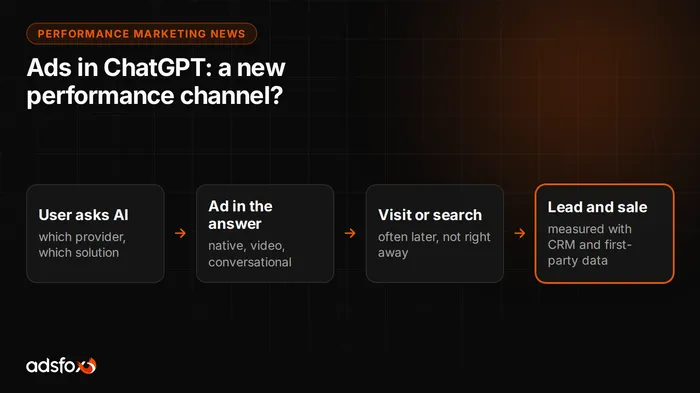
AI assistants change that setup. The user can start with a conversation: “which agency should I choose?”, “which system is best?”, “which service fits my problem?”. If an ad, a recommendation or a sponsored format appears at that point, the ad channel moves closer to the consideration stage.
For businesses, that means visibility in AI can become part of the sales funnel, not just a tech curiosity.
What could conversational ads change?
Conversational advertising differs from a classic placement. In a traditional ad, the user sees a message and decides whether to click. In AI, the user can receive an answer, refine the question, compare options and only later go to the website.
That means effectiveness will not depend only on the ad headline. Context becomes important: when the brand appears in the conversation, which problem it is associated with, and whether the user gets a clear reason to go further.
For a marketing manager, that is a real change. It is no longer enough to ask how many clicks the ad delivered. You will have to ask whether the ad appeared at the moment the user was actually making a decision.
Why might classic measurement not be enough?
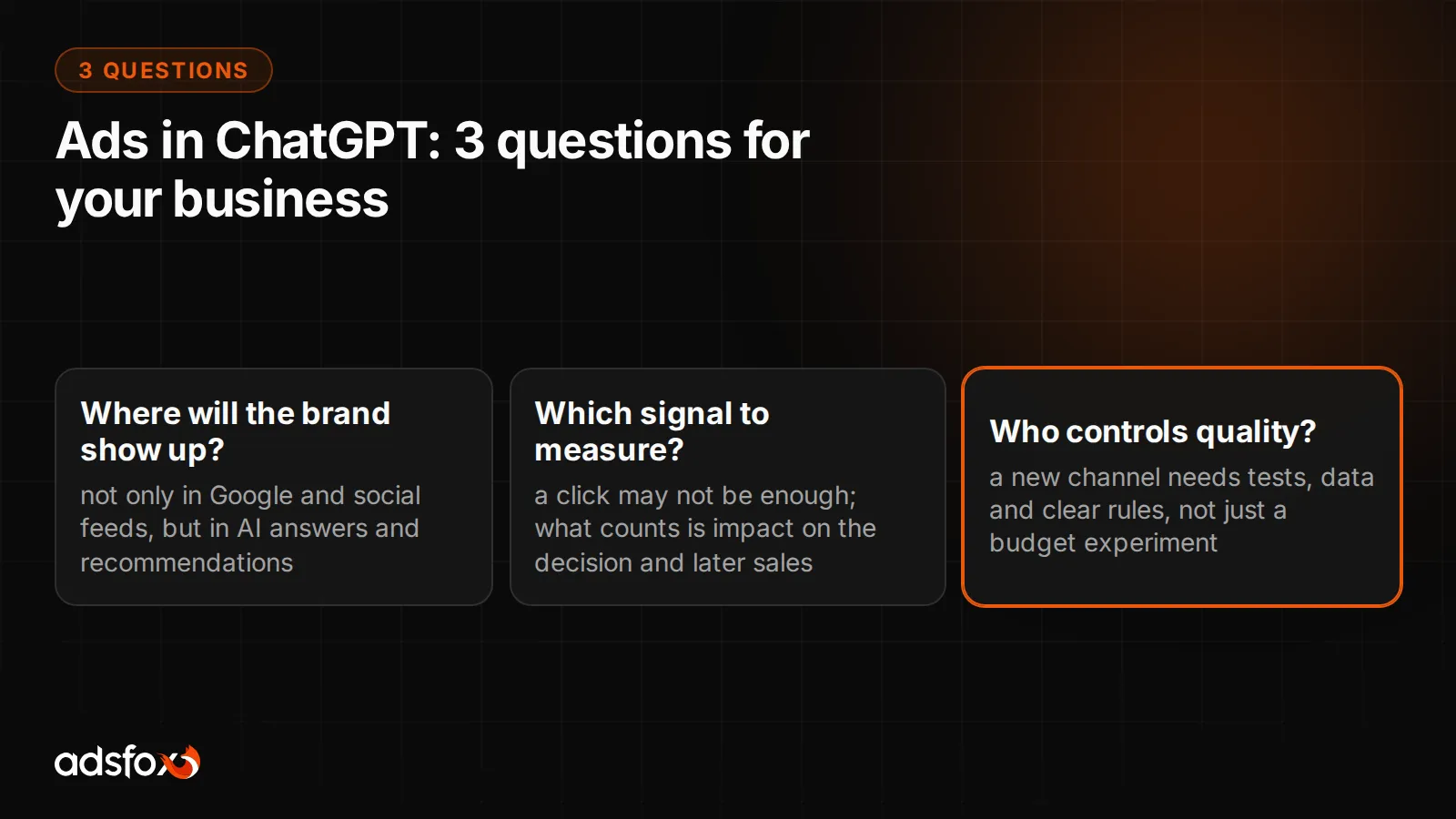
If ads in ChatGPT and similar AI tools keep developing, companies will have to rethink measurement. Part of the impact may happen before the click. A user can learn about the brand in an AI answer, come back later from a search engine, type the address directly, or ask sales about a specific service.
That makes it harder to judge campaigns by the last click alone. That is why first-party data, CRM, correct tagging and lead quality analysis matter more.
If a company sees only the final form, it may miss that the decision started earlier, in a conversation with AI. If it connects data from campaigns, the website, CRM and sales, it has a better chance of understanding the real impact of the new channel.
How should companies prepare for ads in AI?
The worst reaction would be to treat ads in ChatGPT as one more place to “throw budget at.” A new channel requires the fundamentals first.
First, the company should know which customer questions and problems matter most to it. Advertising in AI will work in the context of questions, not just keywords.
Second, the offer and content need to be in order. AI will associate brands more readily when they clearly communicate who they are for, what problem they solve and how they differ.
Third, you need good measurement. Without it, a new channel may look attractive, but it will be hard to tell whether it delivers valuable customers.
What does this mean for service businesses?
For service businesses, ads in AI may matter even more. The customer rarely buys right away. First they try to understand the problem, compare approaches, check options, and only then leave contact details.
If AI becomes the advisor at the start of that path, the brand’s presence there can affect the quality of inquiries. A company that appears in the right context can attract a customer who understands the problem better and fits the offer more closely.
But that only works when marketing and sales are connected. You have to know which inquiries from new channels turn into real conversations, offers and customers.
How adsfox looks at ads in ChatGPT
At adsfox we do not treat AI as a magic shortcut to results. We treat it as one more element of the marketing, data and sales ecosystem. New ad channels make sense when a company can measure their impact and optimize the budget toward the right signals.
That is why, with news in performance marketing, we look beyond the ad format itself. We look at the questions: how to measure traffic quality, how to connect CRM data, how to check lead value and how to avoid decisions based only on surface metrics.
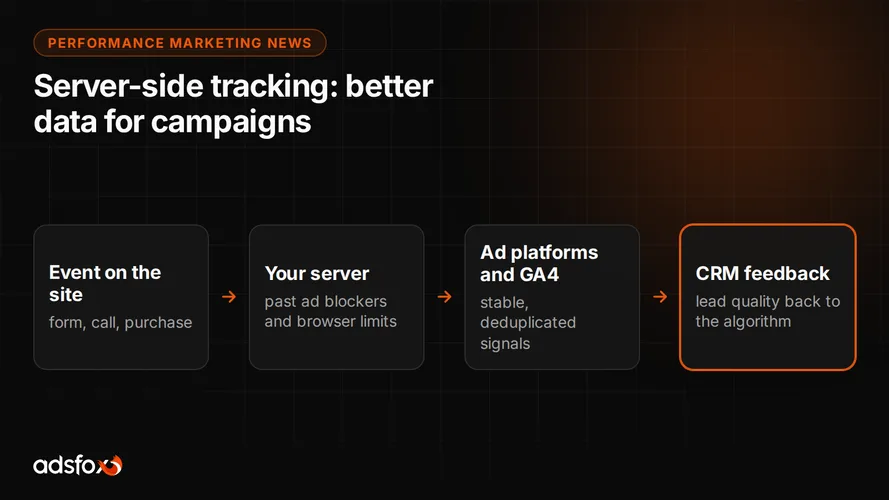
If your company invests in performance marketing or plans to test new channels, first check whether your analytics, CRM and tracking are ready for a more complex buying path. In many cases, server-side tracking helps too, because it limits data loss and strengthens measurement quality.
Summary: ads in ChatGPT are a signal of change, not just news
Ads in ChatGPT may mean that performance marketing moves deeper into conversation, recommendations and AI assistants. For businesses, that is a chance at a new channel, but also a measurement challenge.
The most important question is: will the company be able to tell which new channels actually support sales, and which only generate interest?
Book a free consultation and we will check whether your marketing is ready for new channels and whether you measure the signals that actually affect sales.
Context source: Search Engine Journal, “OpenAI Hiring Points To Image & Video Ads Coming To ChatGPT”.