Pinterest Marketing for Business: How Brands Sell There
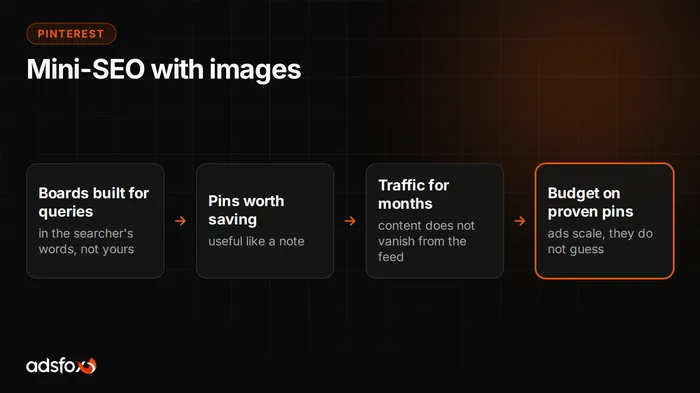
Pinterest marketing rests on one shift in perspective: it is an image search engine, not a social network. People do not go there to chat or kill time; they go to look for ideas for something they are planning: a remodel, a wedding, a wardrobe, a gift. Marketing on Pinterest means being found in those searches and saved for later. Whoever runs a profile there the way they run Instagram loses; whoever runs it like mini-SEO with pictures wins.
Why does Pinterest work differently from the rest of social media?
Three differences set the whole strategy.
Planning intent. The user arrives with a purpose: “japandi kitchen,” “wedding hairstyles,” “gift for dad.” That is closer to a search engine than a feed, so matching queries wins, not shouting louder.
Long content life. A Pin goes into Pinterest search and onto the boards of the people who saved it, and it keeps coming back into circulation for weeks and months. A post does not vanish after a few hours; it works long-term, like SEO content.
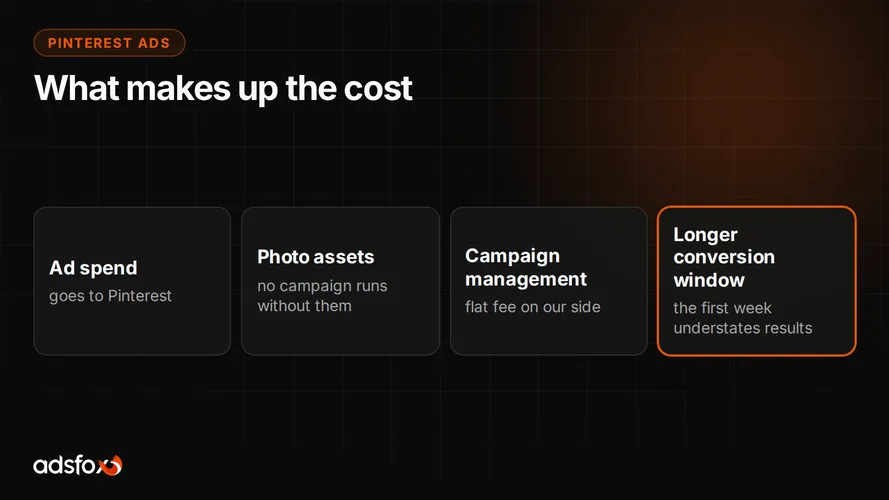
The save as a micro-conversion. Saving a Pin is a declaration of “I will come back to this.” The user builds their own shopping list with your product in it. The sale arrives with a delay, once the plan is ready, and that has to be factored into evaluating results, which we also cover in how much Pinterest ads cost.
Who is Pinterest for, and who is it not for?
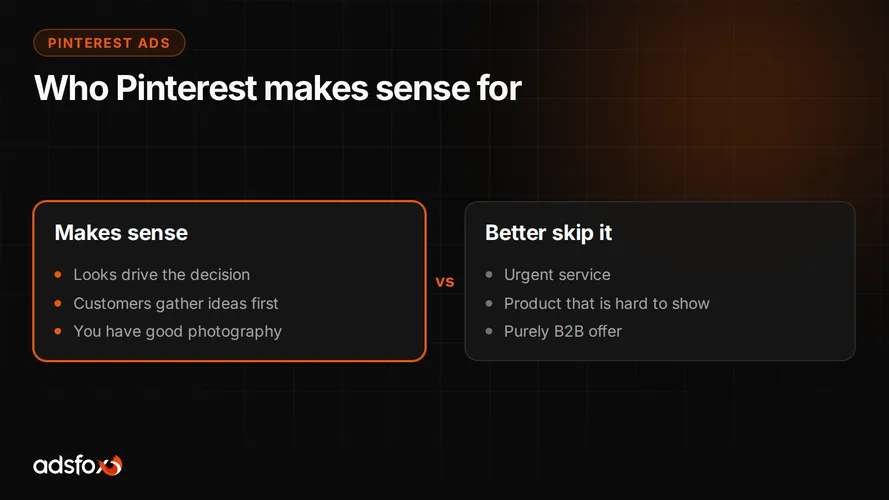
Honestly, because it saves money. Pinterest shines in industries where people buy with their eyes and the decision matures: interiors and furniture, decor, fashion and jewelry, beauty, weddings, remodeling, travel, food, handmade goods, gifts. If your customer collects inspiration before buying, Pinterest is their natural habitat.
It does poorly where the purchase is urgent or the product is not visual: emergency services, purely B2B offers, products that cannot be shown in an attractive photo. For those businesses, immediate-intent channels are the better fit, which we compare on our PPC agency page. A fuller breakdown of “who yes, who no” is in who should advertise on Pinterest.
How to build an organic presence step by step
- A business profile with a claimed website. A business account gives you analytics and advertising options, and a claimed domain ties your Pins to your site.
- Boards built around search terms, not the company’s internal logic. A board is the equivalent of a category in SEO: “small bathroom ideas” will find people, “Projects 2026” will not. Write board names and descriptions in the language of queries.
- Pins people want to save. Vertical format, a clear image, a concrete promise on the graphic. A Pin should be useful as a note: a recipe, a layout, an idea, a product in context.
- Descriptions with search terms. The Pin title and description are the place for search terms, just like the title and headings on a web page. The method for choosing them is described in our post on keyword research; it works the same way here.
- Consistency over bursts. A steady flow of Pins works better than a one-time dump, because every Pin is a new ticket into search.
When and how to add paid campaigns
Paid Pinterest amplifies what already works organically. The sensible order:
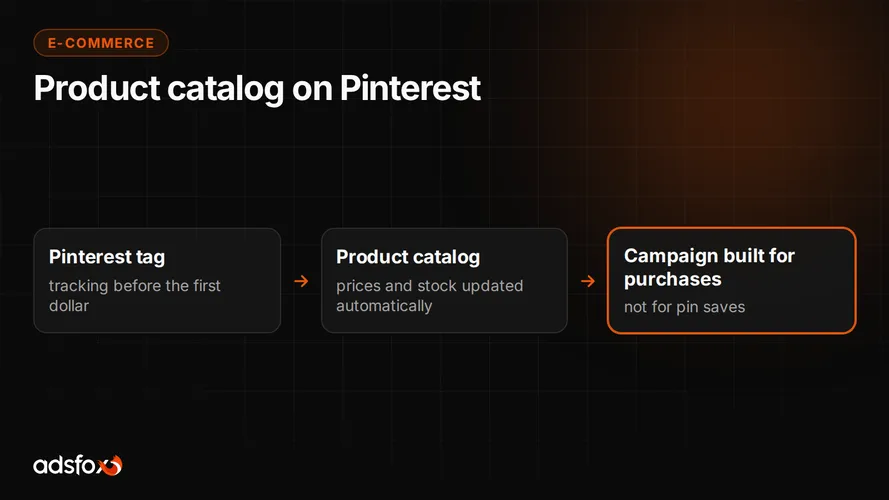
- Measurement first. The Pinterest tag on your site and defined events, so you see visits and sales, not just saves.
- A product catalog for stores. Your inventory is pulled in automatically with prices and availability, and product Pins lead straight to the store. The setup is described in our guide to Pinterest catalog ads.
- Campaigns on proven topics. Pins and themes that collected saves organically get the budget. The ad does not guess; it scales.
This sequence protects you from the classic mistake: pumping budget into creatives nobody knows resonate.
How to measure whether Pinterest sells
Not by saves and not by reach, however nice they are to look at. What counts is website visits, events, and sales attributed to the channel, with the delay factored in: some conversions will arrive weeks after the first contact with a Pin, once the purchase plan is ready. Judge monthly trends and treat Pinterest as a long-tail content investment, not a weekend campaign.
Reference points for acquisition costs in paid channels are collected in our benchmark of 20 campaigns in 11 industries; for organic Pinterest the main cost is consistent content production.
Where to start
By checking whether your customers search there at all: type search terms from your industry into Pinterest and see what comes up. If you see live results and competition, the demand is there. Then a profile, three boards built around your most important search terms, and a publishing rhythm you can keep up.
If you would rather skip learning by trial and error, we run Pinterest from strategy to campaigns in our Pinterest advertising service. Get a free consultation: we will check live what the demand looks like in your industry and whether this channel is worth your time.