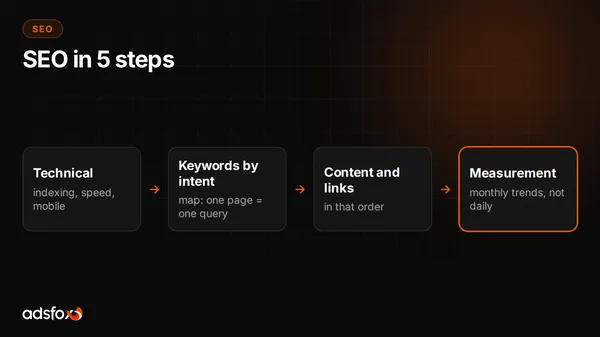
SEO step by step: technical fixes, keywords, content, links, and measurement in the order that gets results. No theory, a realistic plan for the months ahead.

Search engine optimization (SEO) is the most cost-effective long-term channel for winning customers from Google. Below you will find our guides on ranking business websites and online stores: what SEO is, what it costs, how to audit a site, and how local and ecommerce SEO differ from the basics. If you are looking for someone to run it for you, see our SEO agency services.
SEO step by step: technical fixes, keywords, content, links, and measurement in the order that gets results. No theory, a realistic plan for the months ahead.
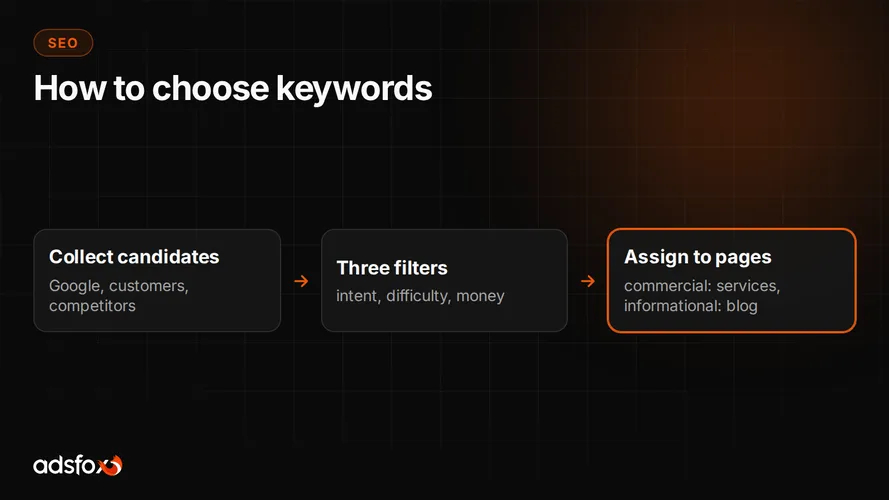
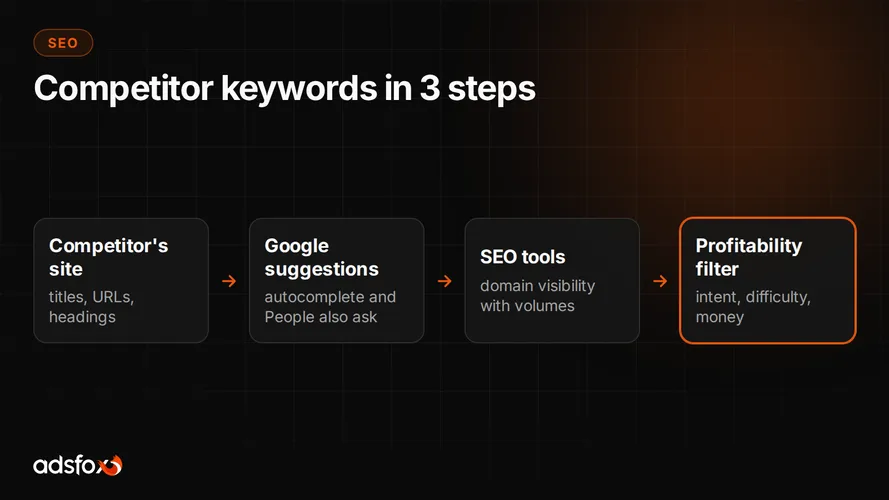
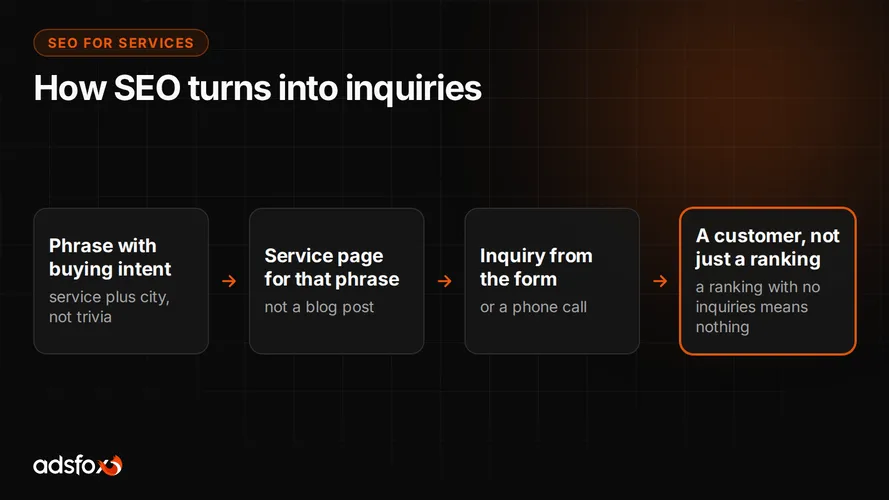
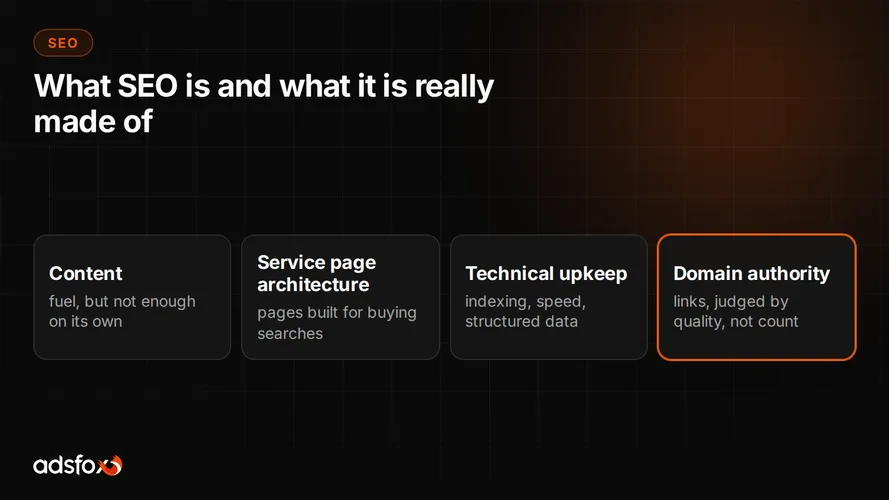
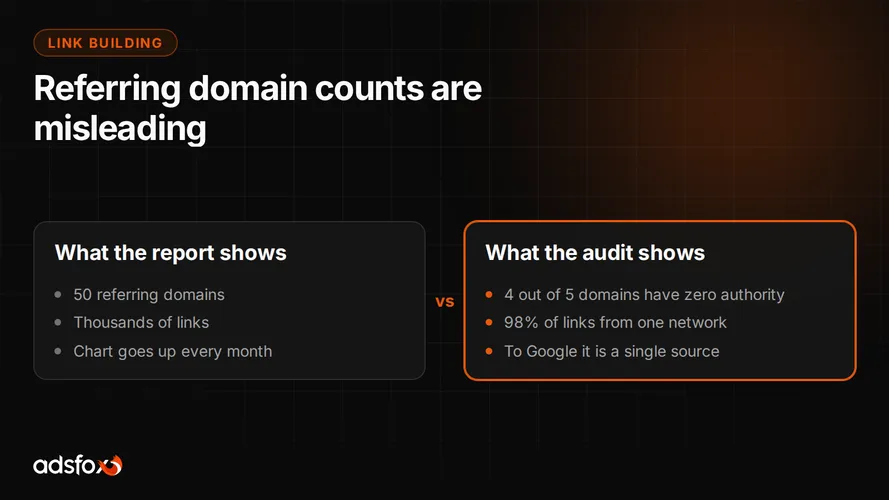
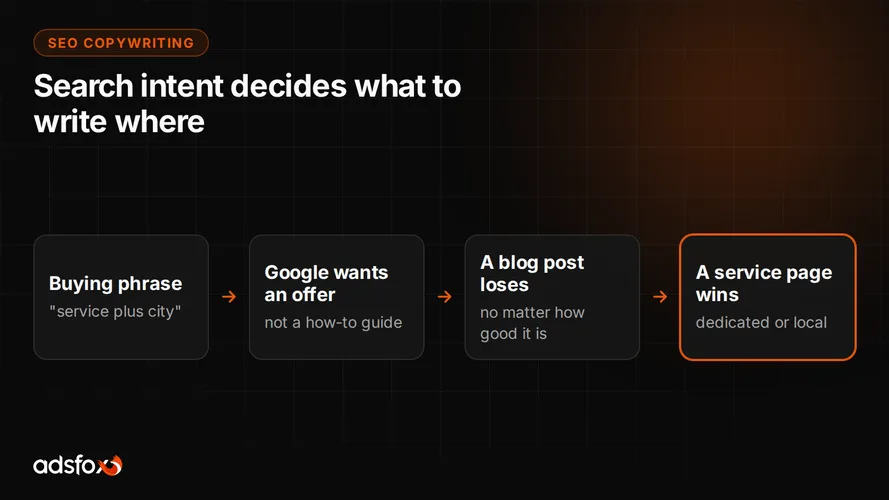
Search engine optimization is the work of making a website show up higher in Google's free (organic) results for the searches your customers actually type. Google looks at three things: whether it can crawl and understand your pages, whether your content answers the searcher's question better than the alternatives, and whether other credible sites point to you. Unlike paid ads, a ranking you have earned keeps sending visitors without a fee per click. That is why a plumber in Phoenix or a dental practice in Austin that ranks for "emergency plumber phoenix" or "invisalign austin" gets a steady stream of calls without paying $20 to $60 for each click in Google Ads.
The trade-off is time. Paid search starts working the day you fund it. SEO usually needs three to six months to show measurable movement on a new site and twelve months or more to compete on high-value phrases against established players. For most service businesses the right answer is both: ads to get customers now, SEO to lower the blended cost of acquisition over time.
Technical SEO makes sure Google can reach and render your pages: crawlable structure, fast load times, mobile layout, clean URLs, structured data, and no duplicate or thin pages competing with each other. Content is what earns the ranking: pages written around the questions and phrases real customers search for, with enough depth to be the best answer and enough clarity to be quoted by AI Overviews. Authority comes from links and mentions on other sites, reviews, and consistent business listings. A site that is strong in one pillar and weak in the others rarely ranks for anything competitive.
In practice, most of the ranking gains we see for small and mid-sized businesses come from the first two pillars. Fixing a site that loads in six seconds, splitting a single "services" page into one page per service, and writing each of those pages around a specific search phrase moves the needle far more than buying a handful of links.
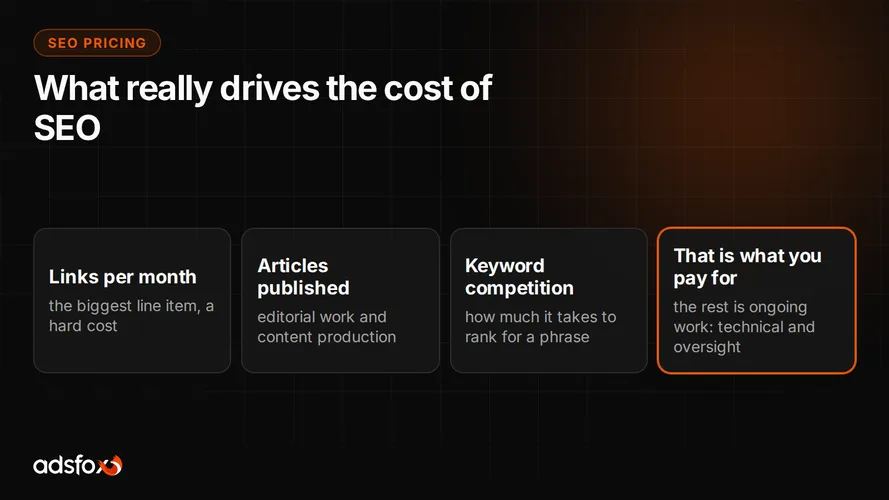
SEO pricing depends on three variables: how competitive your phrases are, how many pages of content need to be written or rewritten, and how much link building is required. A local service business typically sees monthly retainers between $1,000 and $3,000. Ecommerce stores and companies competing nationally spend $3,000 to $10,000 or more, because they need dozens of pages, ongoing content, and a real link program. Hourly SEO consulting in the US usually runs $150 to $300 an hour. One-time audits are often priced separately.
What matters more than the number is what it buys. Ask any vendor for the list of deliverables per month: pages written, technical fixes shipped, links earned, and the phrases you are tracking together. If the answer is "we optimize your site" with no specifics, keep looking.
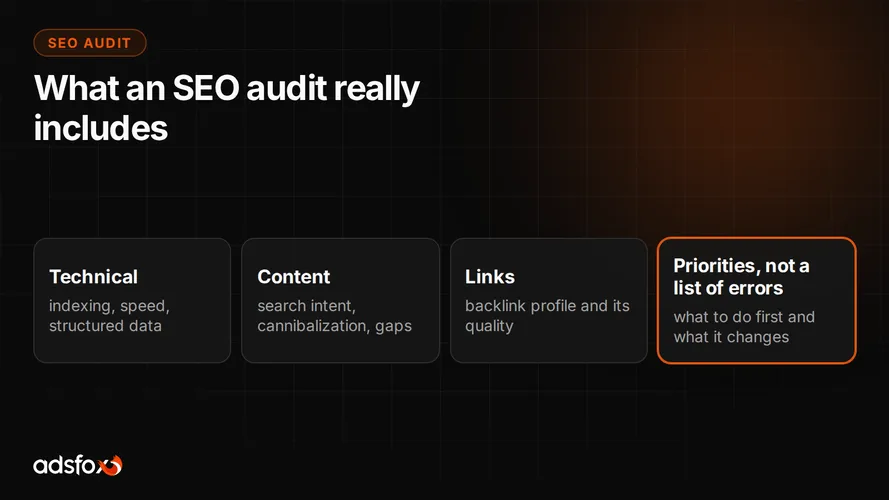
Before you fund months of work, find out what is actually holding the site back. A proper SEO audit covers crawlability and indexing (are the pages you care about even in Google?), page speed and Core Web Vitals, on-page elements (titles, headings, internal links), content gaps against competitors, and the backlink profile. The output should be a prioritized list of fixes with the expected impact of each, not a 60-page PDF of automated warnings. Many sites gain more from resolving five structural problems than from any amount of new content layered on top of them.
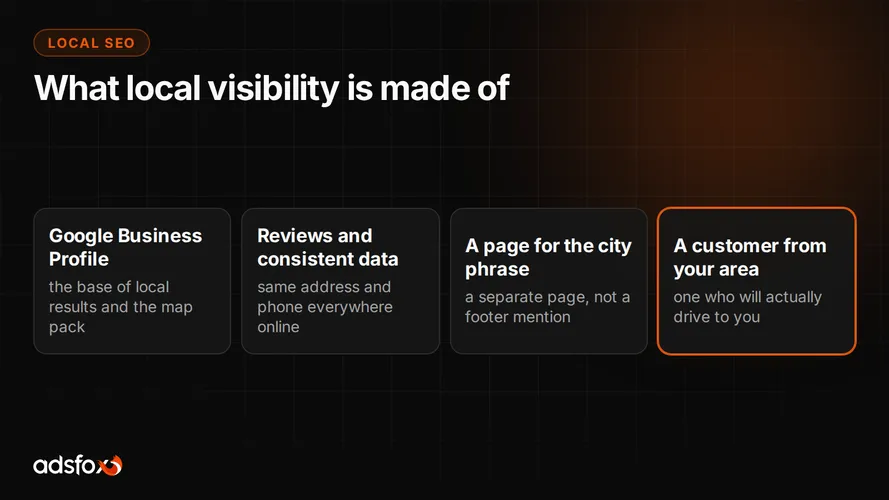
If your customers come from one metro area, local SEO is the highest-return part of the whole discipline. It combines a fully completed Google Business Profile (categories, services, photos, hours, posts), a steady flow of reviews, consistent name, address, and phone number across directories, and location pages on your website that mention the areas you serve. Ranking in the "map pack" for a phrase like "roof repair denver" often drives more calls than the organic listings below it. Local SEO is also where results show fastest, sometimes within weeks.
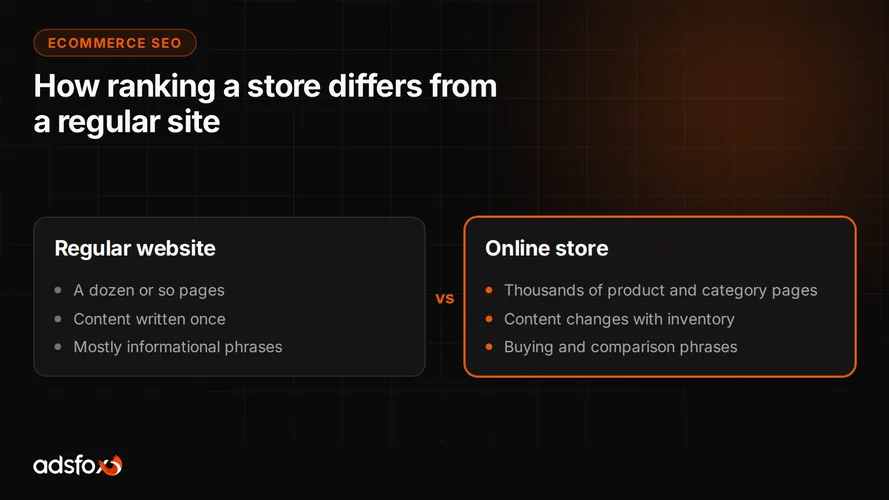
Online stores face a different problem: hundreds or thousands of URLs, faceted navigation creating duplicate pages, product descriptions copied from the manufacturer, and category pages with no text at all. Ecommerce SEO focuses on category page content, product schema, canonical tags for filters, internal linking from blog content to categories, and a technical setup that keeps crawl budget on the pages that sell. It is also where SEO and paid channels are easiest to compare, because both report revenue.
Links remain a ranking signal, but the shortcut era is over. Purchased links from irrelevant sites and private blog networks are at best ignored and at worst penalized. What works is earning mentions with content worth citing (original data, tools, in-depth guides), digital PR to industry publications, partnerships and supplier pages, local sponsorships and chamber of commerce listings, and unlinked brand mentions turned into links. Link building should follow content, not replace it.
Google's AI Overviews, ChatGPT, and Perplexity now answer a growing share of questions directly, citing a handful of sources. The sites they cite are almost always the ones already ranking well, written clearly enough to be quoted. That means solid SEO is the foundation of visibility in AI answers. We cover that extension of SEO in our generative engine optimization guides and offer it as a service through our AI SEO agency page.
Look for a company that talks about leads and revenue, not just rankings. Ask what phrases they would target for you and why, what they will ship in the first 90 days, how they measure results (Search Console, GA4, and your CRM, not a proprietary "visibility score"), and who owns the content and accounts if you part ways. Be skeptical of guaranteed rankings, month-to-month promises of "page one," and unusually cheap retainers, which usually mean automated reports and no real work.
We have worked on data-driven search campaigns since 2018 for clients in the US and Europe. We track which phrases generate inquiries and sales, not just positions, and we speed up content production with our own AI agents while a human editor controls every page that goes live. If you want us to take care of your visibility, see our SEO agency page, or book a free consultation and we will tell you what is realistic for your site.
Most sites see the first measurable gains within three to six months, with local SEO often moving faster. Competitive national phrases can take twelve months or more. SEO compounds: the work you do in month one keeps paying off in month twelve, which is the opposite of paid ads.
Local service businesses in the US typically pay $1,000 to $3,000 a month. Companies competing nationally or running an online store usually invest $3,000 to $10,000 or more, because they need more content and links. Hourly consulting runs $150 to $300 an hour.
SEO is earning free organic rankings. SEM (search engine marketing) is the broader term that includes paid search ads such as Google Ads. Many businesses run both: ads deliver customers immediately while SEO builds a lower-cost channel over time.
Yes. AI Overviews and chat assistants cite sources, and those sources are overwhelmingly pages that already rank well and are written clearly. Good SEO is the prerequisite for showing up in AI answers, which we cover under generative engine optimization.
The basics, yes: a complete Google Business Profile, one page per service, sensible titles, and fast hosting. Technical audits, content at scale, and link building take time and experience most owners do not have, which is where an agency or consultant pays for itself.