SEO Copywriting: How to Write Content That Ranks

SEO copywriting is writing content that serves the reader and helps the page rank in Google at the same time. It combines two things: matching the search intent and the keywords your customers use, and delivering real value so the visitor stays, trusts you, and comes back. Despite the name, good SEO copywriting is not written for an algorithm. It is written for a person, with the search engine in mind.
Today it is one of the strongest levers in SEO. Content that thoroughly answers customer questions ranks for more and more phrases over time and builds topical authority for the whole site.
Start with intent, not with the keyword
The biggest mistake is starting from a keyword instead of the question behind it. Before you write anything, ask yourself: what exactly does the person typing this phrase want? A definition, a comparison, a price, a set of instructions? Matching intent matters more than keyword density. When you answer exactly what the searcher is looking for, Google recognizes on its own that your page fits the query.
Answer first, then structure the rest
A good SEO article gives a direct answer in the first paragraph and expands on it afterward. That structure helps the reader (they get what they came for immediately), and it helps search engines and AI models, which prefer to quote specific, well-organized passages. Organize the rest of the text with logical headings that read like the real questions your customers ask.
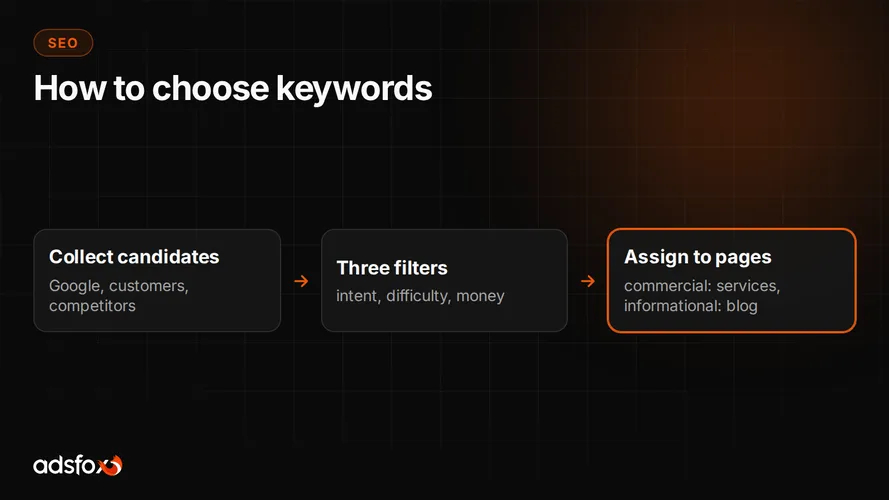
Keywords: naturally, not by force
Use keywords where they fit naturally: in the title, the first paragraph, a few headings, and the body. Add related terms, because Google understands topics, not just strings of characters. Avoid keyword stuffing; it hurts the reader and the rankings alike. The text should sound like you explaining the topic to another person.
Originality and specifics
What sets a page apart in the eyes of Google and AI models is original data, first-hand observations, and concrete examples. Generic statements are everywhere, so by themselves they build no advantage. At adsfox we base content on real campaign experience and client data, and we speed up the process with AI agents while a person always controls the substance and the quality. The result is more useful articles that actually rank.
What to avoid
The most common traps are keyword stuffing, writing for the algorithm instead of the reader, duplicating the same content across multiple pages (cannibalization), and having no point of view of your own. Each of these lowers both rankings and reader trust.
If you want the content on your site to bring in customers from Google, take a look at our SEO agency services or book a free consultation. We will help you plan content that matches intent and sells.