What Is an SEO Audit and What Should It Include
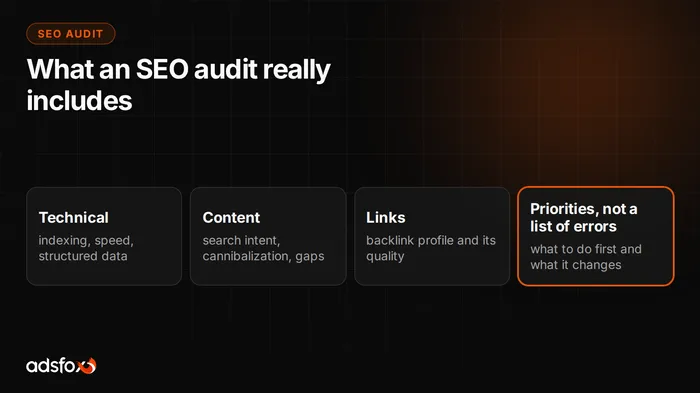
An SEO audit is a detailed analysis of a website that shows what helps it rank high in Google and what holds it back. A good audit covers three areas: technical SEO, content and keywords, and the backlink profile, and ends not with a bare list of problems but with recommendations ranked by impact. It is the diagnosis every sensible SEO effort should start with.
Without an audit it is easy to spend budget on work that will not move results, because the real problem is somewhere else. That is why we treat the audit as a map: it shows where you are losing visibility and where to start.
What does an SEO audit include?
A complete SEO audit looks at several layers of the site:
- Technical SEO: indexing (does Google even see the right pages?), load speed, URL structure, errors, and the correctness of sitemaps and structured data.
- Content and keywords: does the site answer the questions customers actually search for, does it cover the topic thoroughly, and are its own pages competing with each other?
- Backlink profile: the number and quality of links pointing to the site, compared against competitors.
- Competitor analysis: which phrases competitors rank for and where the gaps are that you can fill.
Why priorities matter more than a list of errors
Most tools can spit out a list of a hundred issues. The value of an audit lies elsewhere: in pointing to the three or five things that will produce the biggest result for the least effort. Fixing a single indexing error can do more than a hundred small tweaks. That is why we always rank recommendations by their real impact on visibility and sales, not by the number of issues detected.
When should you get an SEO audit?
An SEO audit makes the most sense at a few moments: before starting SEO (so you know where to begin), when organic traffic drops for no clear reason, after a site migration or redesign, and when you are investing in SEO but the results are not coming. In each of those situations the audit saves money, because it directs the budget where it will actually change results.
What you should get at the end
At the end of an audit you should receive a concrete document: what is wrong, why it matters, and what to do first. No vague advice like “improve your meta tags,” but reasoning and priorities you can implement yourself or with an agency. That data-driven approach is how we have worked at adsfox since 2018, in SEO and in paid campaigns alike.
If you want to find out what is really limiting your site’s visibility, take a look at our SEO agency services or book a free consultation. We will assess the state of your site and show you where to start.