
Server-Side Tracking Made Simple, Without a Developer
Server-side tracking sends your conversions from the server, not only from the browser, so ad blockers, cookie limits and closed tabs stop eating your data.With adsfox you connect your ad accounts, add one script to your website (or a tag in Google Tag Manager), choose the events and platforms you want to track, and set triggers by clicking on your own pages.Deduplication, consent logic and a cookie banner are included.No server-side GTM project, no developer, no extra tools.


Join 350+
happy clients.
Set up server-side tracking triggers by clicking on your website
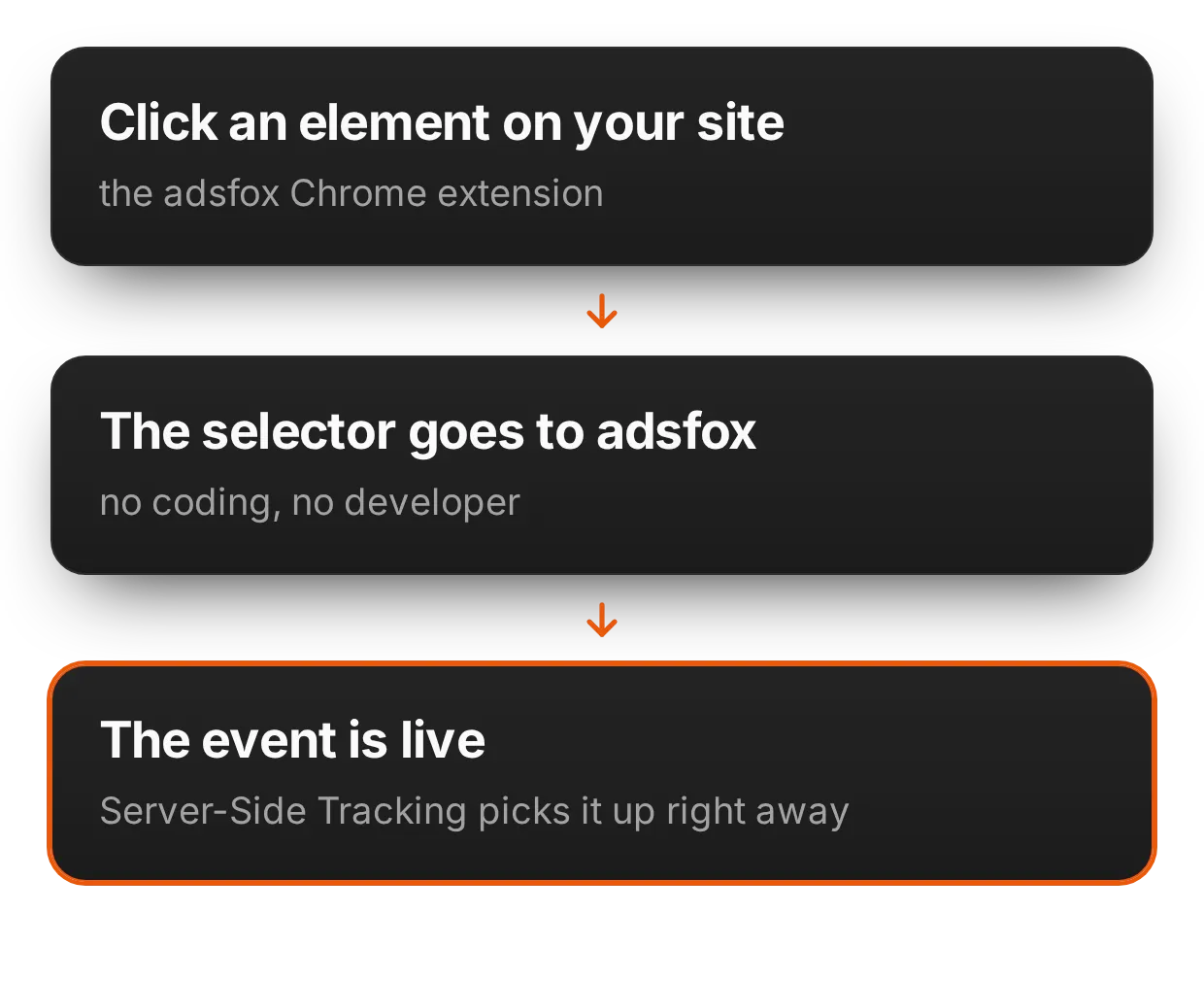
- The adsfox Chrome extension lets you click any button, form or link on your live website and turn it into an event trigger.
- No coding.
- No manual CSS selector setup.
- Click the element, send the selector to adsfox, and the event is ready to fire browser-side, server-side or both.
- Change your mind later and pick a different element in seconds.
- It is the fastest way we know to implement server-side tracking on a business website.
Server-side tagging that respects consent: GDPR, CCPA and Consent Mode v2
Server-side tagging does not exempt you from privacy rules, and a setup that ignores consent is a liability, not an upgrade.
adsfox builds consent logic into every trigger: an event fires only when the required permission has been granted, and withdrawn consent is respected on both the browser and the server layer.
It works with most cookie banners already on the market (CookieYes, Cookiebot, OneTrust, Usercentrics and others) and also ships its own banner with Google Consent Mode v2 support.
Keep your current consent setup or manage it inside adsfox.
Either way, your team moves faster without cutting corners on GDPR, CCPA or other state privacy laws.
No developer and no GTM server-side tagging project
- A typical server-side GTM rollout means a cloud container, a tagging server, a subdomain, custom clients and weeks of testing, and adsfox skips all of it.
- Connect your ad accounts and answer a few questions about your current setup.
- Add one snippet to your site or deploy it through Google Tag Manager.
- Choose events, platforms and triggers.
- You do not host a server-side layer, configure every tag by hand or patch five tools together.
- Marketers, agencies and lead generation teams run the whole thing without waiting for engineering time.
Server-side conversion tracking with deduplication included
When the browser pixel and the server both report the same form submission, an ad platform counts two conversions unless it can match them.
That inflates reports and trains Smart Bidding and Advantage+ on numbers that are not real.
In the full adsfox setup, with browser-side and server-side tracking together, deduplication is handled for you: both signals carry the same event name and the same event ID, so one action equals one conversion in Google Ads, Meta, TikTok, LinkedIn and GA4.
Already running browser tags in Google Tag Manager? Add the adsfox Event ID to your existing tags and keep them.
Nothing needs to be rebuilt.

Cookie banner included, or keep the one you have
adsfox comes with its own cookie banner, and it still works with most banners already on the market.
Match the banner to your brand in a few minutes: colors, copy, button labels, layout, and how it shows on desktop versus mobile.
Consent choices feed straight into your tracking triggers and into Google Consent Mode v2, so there is no separate integration to maintain.
If you prefer the banner you already use, keep it: adsfox reads its consent state and applies the same rules to server-side events, so consent handling stays consistent on both layers.
Server-side tracking for Google Ads and Meta that goes past the form fill
adsfox is more than server-side tracking software.
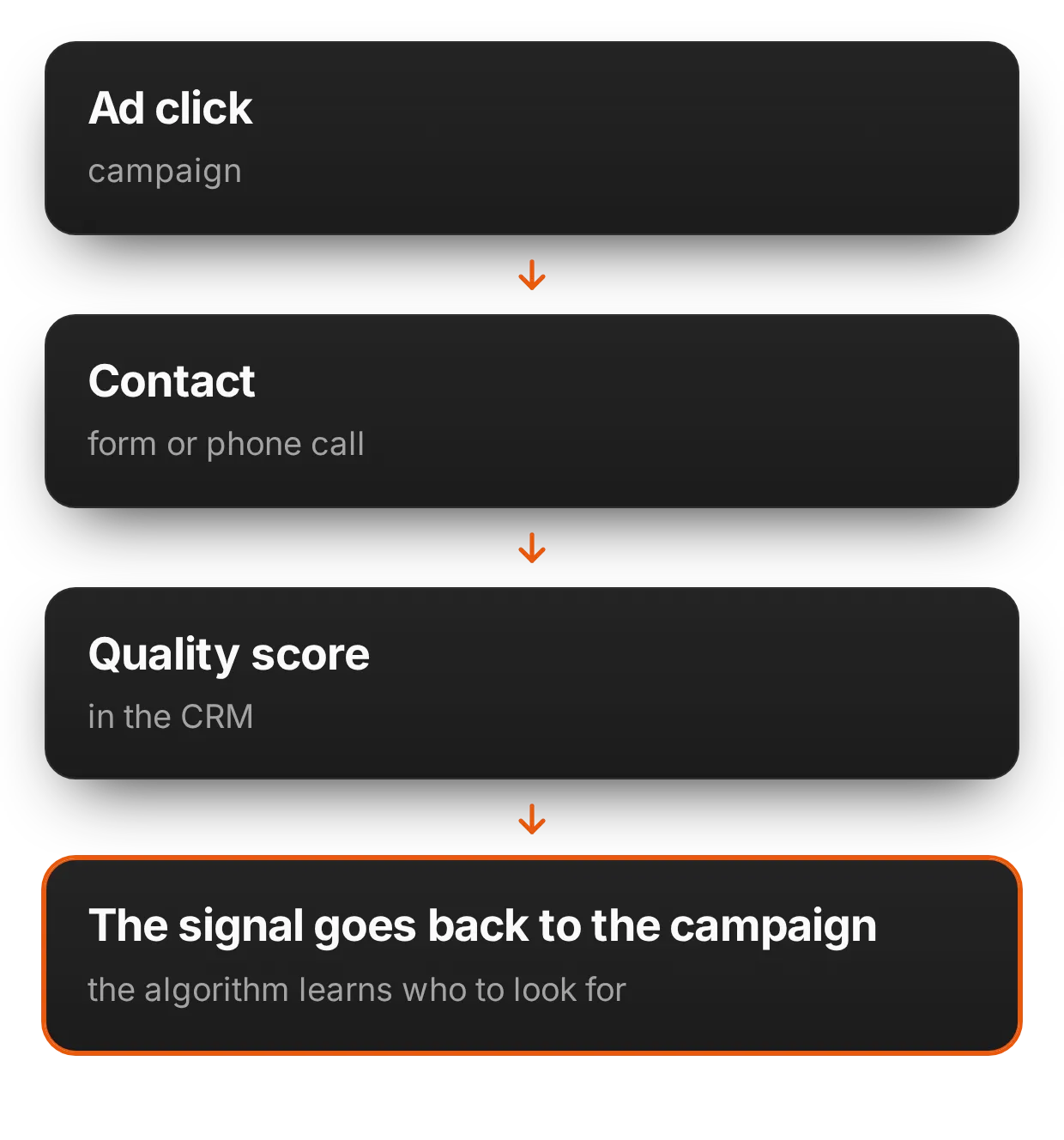
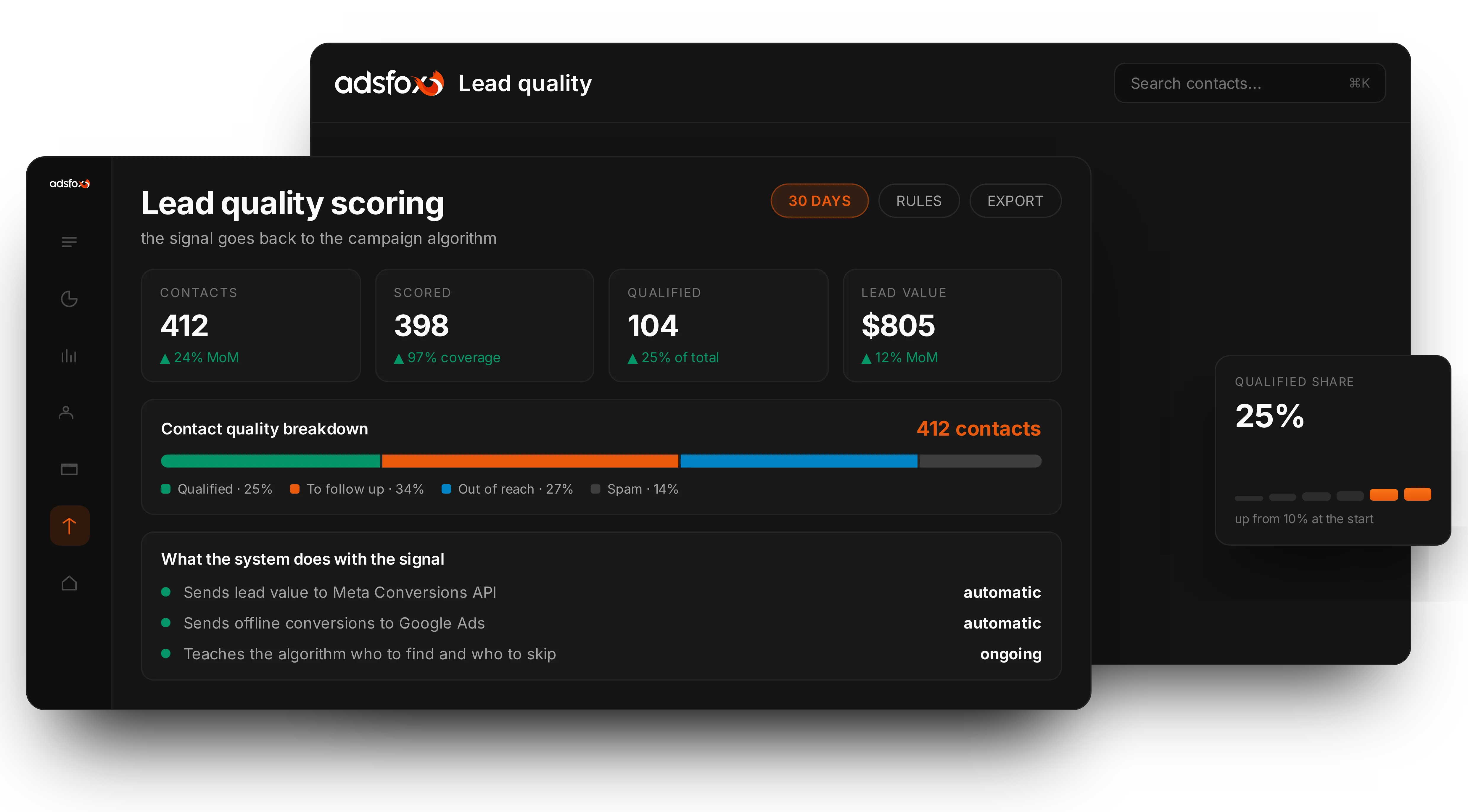
It is a lead generation optimization platform: the same server-side connection that sends a website lead to Google Ads and Meta also sends what happens next in your CRM.
Qualified lead, non-qualified lead, sale with revenue, lost opportunity: every stage change becomes a conversion event with a value, delivered through the Conversions API of each platform and through the GA4 Measurement Protocol.
Your campaigns optimize for customers and revenue instead of cheap form submissions, and GA4 shows the full journey from first click to signed contract.
Digital marketing services for small and mid-sized service businesses: web design, SEO and AI search, paid ads
Web design
Fast websites for service businesses and e-commerce, built for SEO and AI search and connected to a regular publishing plan.
SEO services
Technical upkeep, service pages for buying-intent keywords, and link building with the budget included. Inquiries, not just rankings.
AI SEO (GEO)
We get your brand cited in ChatGPT, Perplexity, and Google AI Overviews. We apply generative engine optimization to our own site first.
Paid ads (PPC)
Google Ads, Meta Ads, and TikTok Ads campaigns managed for leads and sales, not for clicks.
Social media marketing
Graphics, video, and publishing across every channel. Content is built on your brand, and every piece is approved by a specialist.
Analytics and tracking
Server-side tracking, the Conversions API, and CRM integration close the measurement loop, so decisions rest on data instead of guesses.
Why adsfox?
adsfox has run marketing for service businesses since 2018: more than 350 clients across 20+ industries.
We work with businesses in the US and Europe, fully remote.
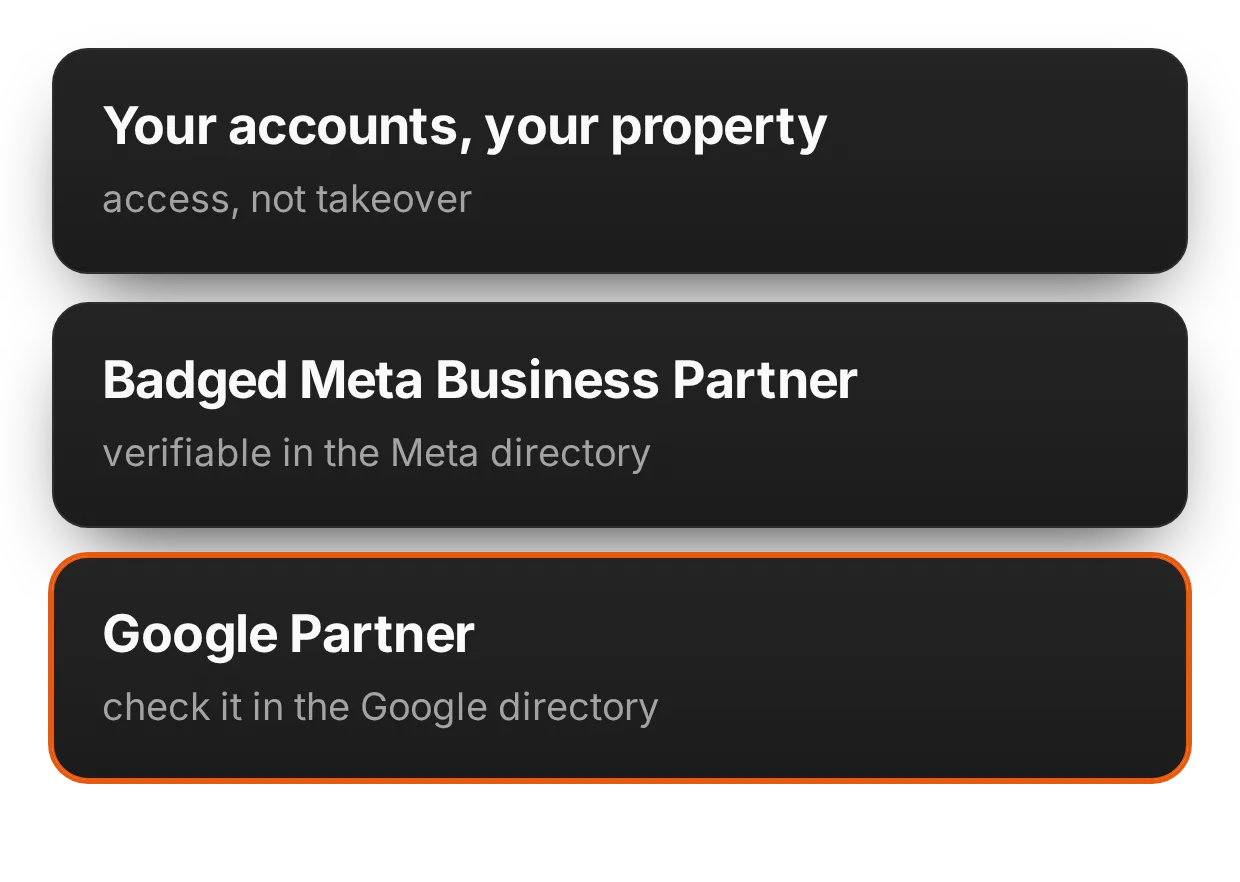
We are a Meta Business Partner (Badged) and a Google Partner.
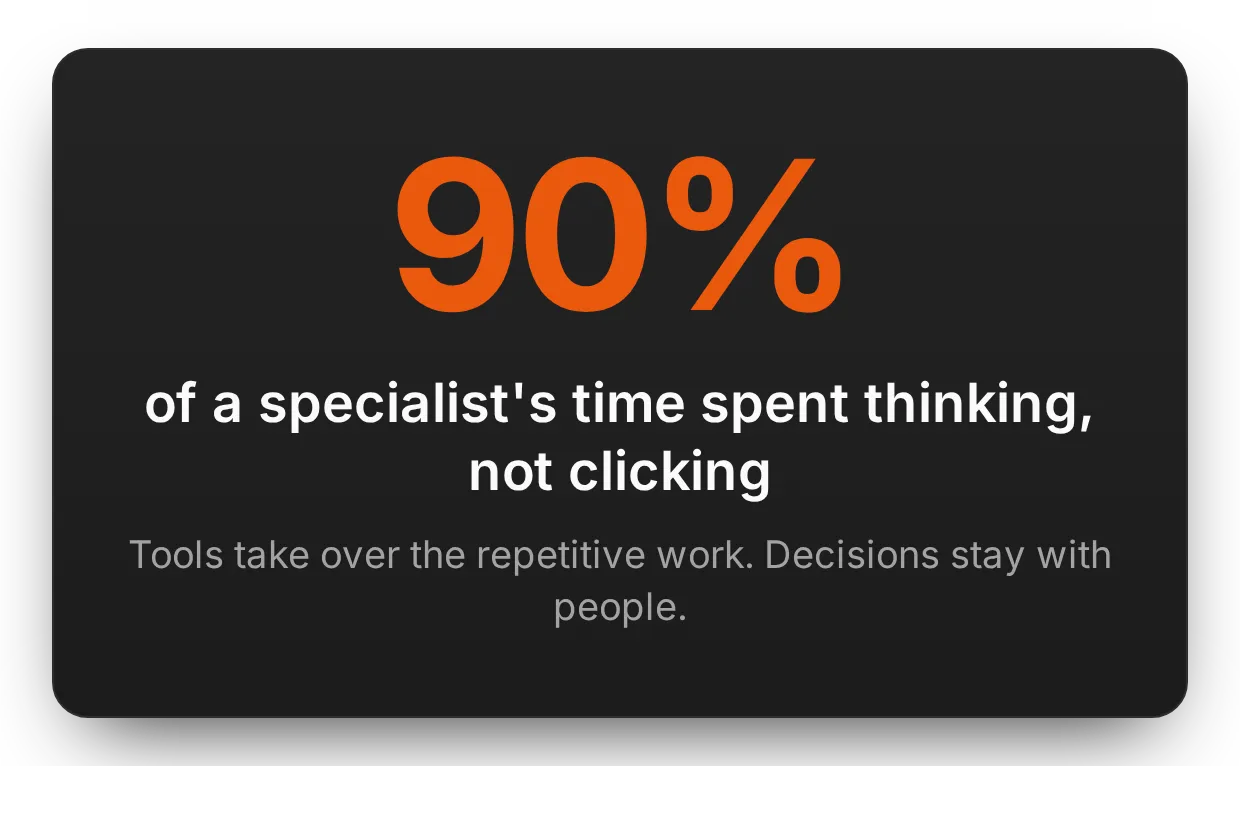
Over those years we built our own tools and AI agents that take over the repetitive work, so our specialists spend their time on analysis and decisions.
Websites, SEO and GEO, paid campaigns, and measurement come from one team, instead of four vendors you have to coordinate.

What our clients say
What I value most about working with you is having a dedicated specialist. The person matters, what they can do and how they communicate, and that is what I appreciate at adsfox. With other agencies and freelancers I could never get satisfying results. Now, after two years of working with you, it simply works.

Piotr
Owner, outdoor LED lighting manufacturer (luminous paving stones)
Given my own marketing background, I would definitely recommend working with adsfox. Highly recommended. These guys know what they are doing. I think adsfox is a great partner to work with.

Przemysław
Marketing director, event services company (crew and technical staffing)
What I value most about adsfox is that it is not a "pay and wait" arrangement. At any moment I can see where the money goes and what return it brings, and I have direct contact with specialists who advise me not only on ads but also on my offer and strategy. I delegate the complicated stuff and still keep full control over the outcome.

Dawid
Owner, e-commerce store (personalized wooden gifts)
Our revenue grew significantly and we won a lot of new clients, which is not easy in our business. That month was a record in terms of revenue, and a lot of women decided to book our services. Our schedule was packed, so we actually had to pause the ads for a while.

Justyna
Owner, women's body shaping and fitness studio
I am very happy with the cooperation. Many more customers started calling. We also see much higher traffic in our stats, both from Facebook and from Google, and it turns into phone calls and new bookings. I am very pleased with working with you.

Marcin
Owner, paintball park and outdoor events venue
With you I now pay almost 10 times less per conversion and get 200 new subscriptions a month, so for me this is a game changer.

Łukasz
Marketing manager, online courses and consulting (personal development)
Server-side tracking FAQ
Server-side tracking is a way of sending conversion and event data from your server, backend or CRM to advertising and analytics platforms, instead of relying only on the user's browser.
In a traditional setup, a script loads on the page, detects an action such as a form submission or a button click, and sends it to Meta or Google Ads. That model is easy to start with, but it depends on an environment you do not control. Browsers block scripts, cookie restrictions shorten identifiers, ad blockers cut requests, and users close the tab before the event is sent.
With server-side tracking, the same user action also triggers an event from your backend, your CRM or a platform like adsfox, delivered directly to the ad platform through an API (Meta Conversions API, Google Ads API, TikTok Events API, LinkedIn Conversions API, GA4 Measurement Protocol). That second signal is less dependent on browser behavior and can carry data the browser never sees, such as a CRM stage or a deal value.
The strongest setup is usually not browser-only or server-only, but both working together, deduplicated. Ad platforms optimize on the data they receive: cleaner, more complete conversion signals mean better bidding and better audiences. For lead-based businesses the real gain starts after the form: server-side tracking is how qualified leads, sales and revenue get back into Google Ads, Meta and GA4. That is the core of lead generation optimization with adsfox.
Client-side tracking sends data from the user's browser. Server-side tracking (often called server-side tagging when it runs through a tagging server such as server-side Google Tag Manager) sends data from your server, backend or CRM directly to advertising and analytics platforms.
Client-side tracking is fast to deploy and good at capturing on-page behavior, but it needs the browser to cooperate. If the browser blocks the request, limits storage, strips identifiers or closes too early, the signal weakens or disappears. Server-side tracking reduces data loss from browser limitations, ad blockers and cookie restrictions, and gives you control over what is sent, when, and with which identifiers.
That does not make client-side tracking useless. In most cases the best setup is a combination: browser signals feed the platform pixels and on-page events, server signals add reliability and connect the rest of the business data (CRM stages, offline outcomes). The goal is to make the two complement each other, not compete. adsfox lets you run browser-side, server-side or both from one configuration.
In most cases, yes. Browser tracking is fragile: ad blockers, Safari's Intelligent Tracking Prevention, third-party cookie limits and interrupted page loads all create data gaps, and the platform then learns from an incomplete picture. Server-side tracking sends the event from a layer you control, so the conversion still reaches Google Ads, Meta or GA4 when the browser signal is weak or missing. It also relies on first-party data (your website, your CRM, your backend) instead of third-party cookies, which improves match rates and attribution.
Accuracy is not automatic, though. A poor server-side setup produces bad data too: weak identifiers, missing event IDs, ignored consent rules or duplicated events will hurt reports just as much. The result depends on clean implementation, correct deduplication and consistent CRM data. adsfox handles the first two as part of the setup; the third is a process question we help you solve with lead generation tracking and lead tagging rules.
Duplication happens when the same user action reaches an ad platform twice and is counted as two conversions. The classic case: a visitor submits a form, the browser pixel fires a Lead event, and at the same moment the server sends the same Lead event through the Conversions API. If the platform cannot tell they describe one action, your reporting inflates, your cost per lead looks better than it is, and the algorithm optimizes on wrong counts.
Deduplication is the matching logic that merges the two signals into one conversion. In practice both events must share the same event name and the same event ID. It is not a nice extra, it is a core requirement of any serious server-side conversion tracking setup.
With adsfox, deduplication is built in. If you use the full flow (browser-side and server-side), it is handled automatically. If you already run browser tags in Google Tag Manager, you only add the adsfox Event ID to your existing tags. No rebuilding your tag stack from scratch.
Yes, if it is implemented incorrectly. A poorly executed server-side setup can do more harm than good, and the two biggest risks are predictable.
First, missing or broken deduplication: browser and server events that are not recognized as the same action get counted twice, which inflates reports, distorts optimization and trains the algorithm on bad data. Second, inconsistent consent and script management: server-side tracking does not replace cookie rules. If consent logic, trigger rules or script loading are not aligned across both layers, you end up with compliance issues and measurement that nobody trusts.
That is why implementation quality matters more than the technology. adsfox is designed to keep it safe: connect ad accounts, add one snippet, choose the setup type, select events and triggers. Deduplication and consent requirements are part of the configuration, and existing GTM tags keep working after you add the adsfox Event ID. The whole implementation takes minutes, not a project plan.
No. Server-side tracking can be implemented in several ways: your own backend, a server-side Google Tag Manager container hosted on Google Cloud or with a provider like Stape, or a platform that handles the server layer for you. adsfox is the third option. You add one code snippet to your website, or deploy it through your existing web GTM container, and adsfox hosts and maintains the server-side layer.
Google Tag Manager server-side tagging is a solid technology, but a GTM server-side tagging project usually means a tagging server, a custom subdomain, client and tag configuration for every platform, and someone to maintain it. If you already have GTM for browser-side tracking, you do not have to throw it away: keep your web container, add the adsfox Event ID to your existing tags for deduplication, and let adsfox deliver the server-side events to Google Ads, Meta, TikTok, LinkedIn and GA4. Guides: how to integrate adsfox with your website, WordPress, and how to implement a cookie banner via GTM in adsfox.
adsfox sends server-side data to every major ad and analytics platform from one setup, so you do not build a separate integration per platform.
- Server-side tracking for Google Ads: conversions are uploaded through the Google Ads API with the stored GCLID and, as a backup match key, hashed email or phone (enhanced conversions for leads). Google matches them to the campaign, ad group and keyword, and Smart Bidding can optimize for conversion value. Guide: how to connect adsfox with Google Ads.
- Meta (Facebook and Instagram): events go through the Conversions API with email, phone, FBCLID, the _fbp cookie and the lead ID for Instant Forms, deduplicated against the pixel by event ID. Guide: how to integrate adsfox with Meta Ads.
- GA4 server-side tagging: events are sent through the Measurement Protocol with the client ID captured on the first visit, so the qualified lead and the sale stay attached to the original session and source. Guide: how to integrate adsfox with Google Analytics 4.
- TikTok and LinkedIn: the same events through the TikTok Events API and the LinkedIn Conversions API (TikTok guide, LinkedIn guide).
Website actions, CRM updates, lead qualification stages and sales outcomes all travel the same way. The CRM part is described on the CRM Conversions API page.
No, and anyone who tells you otherwise is selling you a compliance problem. Server-side tracking still has to respect consent choices. Under GDPR, non-essential tracking should not run before the user consents, and withdrawn consent must be honored. In the US, CCPA/CPRA and a growing list of state privacy laws require opt-out mechanisms for the sale or sharing of personal data, which covers most ad-platform data flows. Moving the request from the browser to the server changes nothing about those obligations.
What server-side tracking does give you is a more structured, privacy-aware framework: you decide how and when data is collected, which fields are passed, and where they go, instead of leaving it to a dozen third-party scripts. adsfox supports that balance. Triggers can require consent, so events fire only when permission has been granted. It works with most cookie banners on the market and offers its own banner with Consent Mode v2 support. Personal data is hashed where the platform requires it, and adsfox acts as a data processor under a written agreement.
Server-side tracking tools fall into three groups. Do-it-yourself: your own backend code calling each platform's API. Server-side Google Tag Manager, either self-hosted on Google Cloud or through a hosting provider such as Stape, which gives you full flexibility in exchange for a technical setup and ongoing maintenance. And managed server-side tracking platforms, where the server layer, deduplication and platform connectors are already built.
adsfox belongs to the third group, with one difference from generic server-side tracking tools: it is built for lead generation. Besides website events it connects your CRM (HubSpot, Salesforce, Pipedrive, Zoho, Bitrix24, Microsoft Dynamics 365 and any system with webhooks), so qualified leads, sales and revenue flow back to the ad platforms as conversions with value. You also get a visual trigger picker (the Chrome extension), a built-in cookie banner, GA4 journey tracking and a client-facing panel. If you only need a raw tagging server for an e-commerce data layer, server-side GTM may be the better tool. If you want Google Ads and Meta to optimize for customers instead of form fills, without a developer, adsfox is the shorter path. See the full system on the lead generation optimization page, or offline conversion tracking for the CRM-to-platform part.
In most cases the setup is done in minutes: connect your ad accounts, add one code snippet or use Google Tag Manager, pick events and triggers on your website, launch. Connecting a CRM adds a short mapping step (which stage means qualified, which means sale) and is guided at no extra cost. Plans start at $239 per month billed annually, with no long-term lock-in; see pricing, and agencies can run all clients from one account (adsfox for agencies).
If you would rather have somebody set it up and run the campaigns on top of the data, we do that too. adsfox has been a Google Partner since 2018 and is a Meta Business Partner, and we implement server-side tracking for our own clients every day through our Google Ads agency and Facebook Ads agency teams. Book a demo, schedule a marketing consultation, or contact us and we will look at your current setup (pixels, GA4, CRM) and propose the simplest route to complete, deduplicated, consent-aware measurement.