Snapchat Ads vs TikTok Ads: Which Channel to Choose
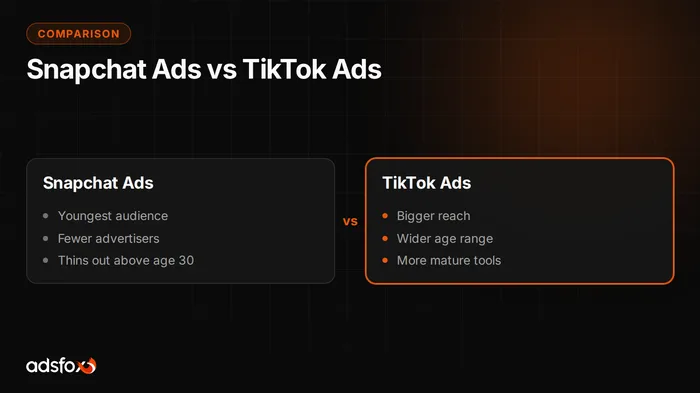
If you have budget for one vertical video channel, start with TikTok Ads and add Snapchat Ads as a supplement. TikTok covers a wider age range, has more formats built for lead capture, and produces material you can draw conclusions from faster. Snapchat is narrower and concentrates the youngest audience, but fewer advertisers compete for them, so reach can be cheaper. There is one exception: when your customer is a teenager or someone under twenty and the product sells itself in a few seconds, Snapchat can go first.
How do Snapchat Ads and TikTok Ads differ?
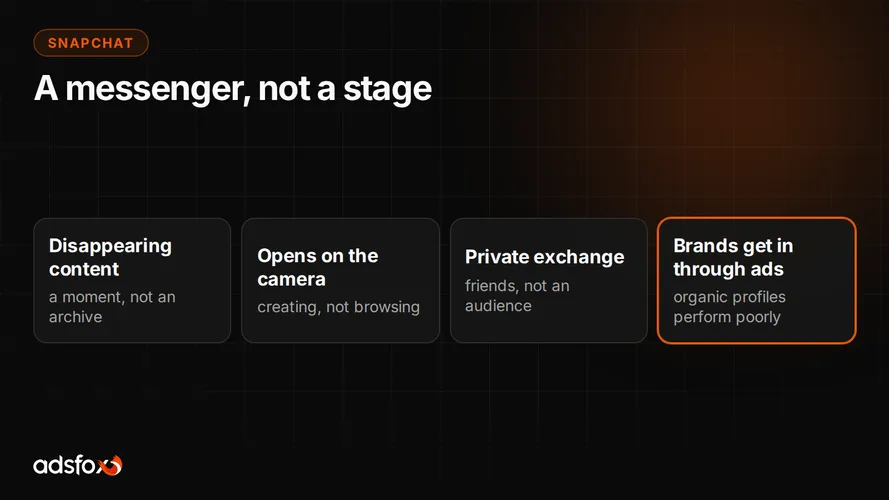
Snapchat Ads is the ad platform of the Snapchat app, where the user primarily talks with friends and watches brand content on the side. Contact with the app is frequent but short. Ads appear between messages and in the section with publisher content, always as full-screen vertical video viewed with sound on.
TikTok Ads is the ad platform of TikTok, where the user deliberately browses content and stays in the app longer. The ad enters the same stream as creators’ videos, so it has to look like regular content, not a commercial.
That difference sets everything else. On TikTok you have fifteen seconds or more of attention and can explain something. On Snapchat the first second and the clarity of the frame decide, because the user is in conversation mode, not viewing mode. We describe campaign management in the second channel on our Snapchat Ads agency page.
Snapchat Ads vs TikTok Ads: how do the channels compare?
The table below sets the two channels side by side from the perspective of a business that has a budget and wants customers, not video views.
| Criterion | TikTok Ads | Snapchat Ads |
|---|---|---|
| Age range | Wide, from teenagers to middle-aged audiences | Narrow, the youngest part of the market |
| How the app is used | Deliberate content browsing, longer sessions | Contact with friends, short and frequent sessions |
| Advertiser competition | High, everyone is bidding | Lower, the channel is still lightly contested |
| Formats | Vertical video, shopping formats, lead forms | Vertical video, product collections, augmented reality formats |
| Creative fatigue | Fast, a steady supply of videos is needed | Fast, the material has to work from the first second |
| Lead generation | Lead forms and website traffic, proven in service businesses | Mainly website traffic, fewer options to choose from |
| Measurement | Requires clean event setup, lots of mobile traffic | The same, plus exceptionally heavy tracking restrictions in this group |
| Natural role | The base channel in vertical video | A supplementary channel for the youngest group |
If you are looking for reference points on cost per contact, we collected them in our CPL and ROAS benchmark from our campaigns: 20 campaigns in 11 industries, cost per lead from about $2 to $11 depending on the industry. That is data from other channels and from our European campaigns, but it shows how widely results can spread between industries.
Who will you actually reach in each channel?
Snapchat concentrates a clearly younger audience than the other big platforms, and its use is built on contact with friends, not browsing brand content. Before you allocate budget, check the age structure of your customers in your own data, because that is what decides, not general opinions about the platform. This is also a group that cannot be reached in any meaningful way on Facebook.
TikTok covers the same young group but also reaches higher in age. In practice that means a campaign lands both with a college student and with a parent who makes the purchase decision themselves. For services and products bought by working adults, that difference is decisive.
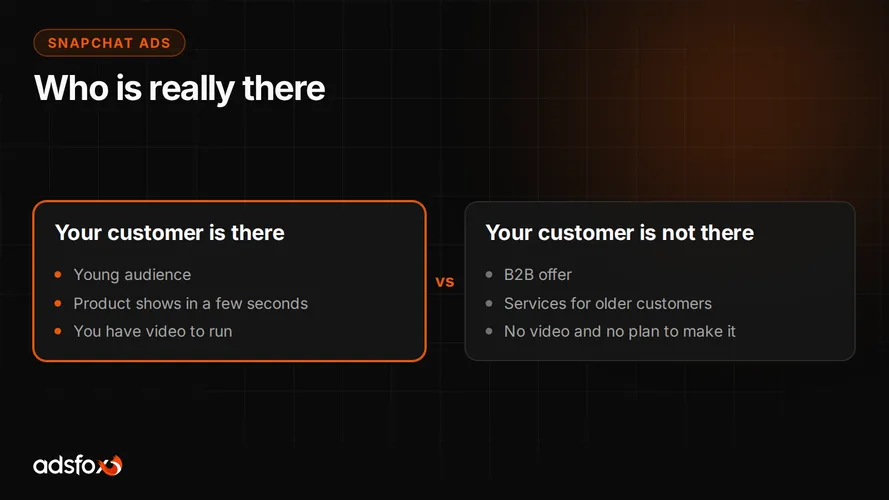
Check this against your own customer before you choose a channel. If the average age of your buyer is over thirty, Snapchat is out no matter how good your video is. If it sits around twenty, both channels are on the table, and competition and cost of reach decide. We describe the short-video channel more broadly on our TikTok Ads agency page.
Where is the competition for attention greater?
On TikTok practically everyone is bidding today: stores, local brands, apps, education. The effect is predictable. Reaching a young audience costs more and more, and an average creative stops breaking through. You need an idea, not just a budget.
On Snapchat there are clearly fewer advertisers. Less bidding usually means cheaper reach to the same young person you are pushing through the crowd to reach on TikTok. That is the strongest argument for this channel and at the same time its trap: cheaper does not mean more effective, because the group is smaller and saturates faster.
In both systems the principle is the same. You set the spending limit and the campaign goal, the platform decides who sees the material and where. Your advantage lies on the side of the offer, the creative, and the quality of conversion data, not in manually fiddling with settings.
Which ad formats do you need to prepare?
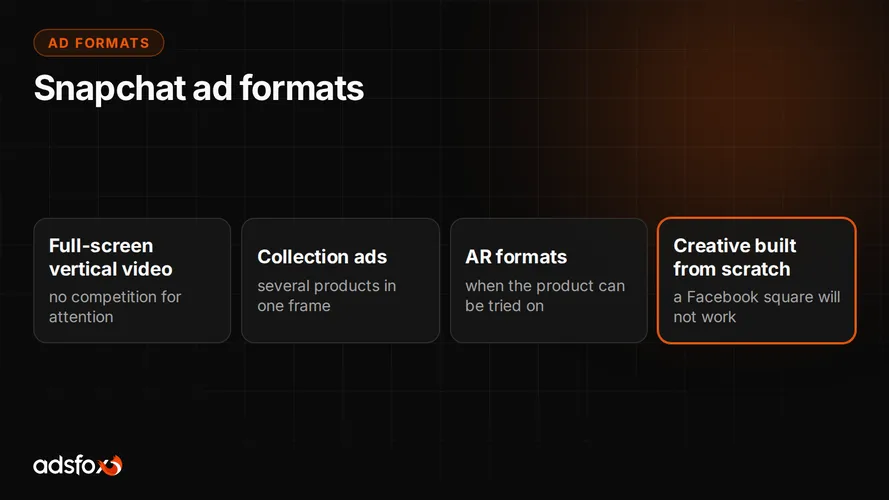
The foundation in both channels is shared: full-screen vertical video designed from scratch, not cropped from square material. A cropped frame loses its composition and it shows immediately.
The differences start inside:
- TikTok: a longer form, you can show and explain something; product demos, before and after, behind the scenes, a quick tip all work well,
- Snapchat: a shorter form, the message has to land in the first second; one strong image and one promise work,
- Snapchat adds augmented reality formats in which the user tries the product on through the phone camera; that makes sense for eyewear, color cosmetics, and jewelry,
- both channels require swapping creative every few weeks, because it burns out fast.
The material can be based on one idea and one shoot day, but editing and pace are done separately for each platform. A business without a video production pipeline will not sustain either of these channels for longer than a quarter.
How to measure results so you do not judge the channel too early?
Both channels look better in reports than they sell, because full-screen video generates impressive view and reach numbers. That is the easiest mistake when comparing: you look at reach instead of the events that matter to the business.
The second trap is incomplete data. Audiences in this age group use phones exclusively and have tracking restrictions turned on, so some conversions never reach the ad platform. The campaign is then optimized on an undercounted picture and looks weaker than it really performs. Supplementing data server-side is not cosmetics, it is a condition for an honest comparison of channels. How it works, we describe on our server-side tracking page.
The third element is lead quality, not quantity. In one of our European campaigns for an aesthetic medicine clinic, the share of qualified leads rose from 21.1% to 45.7%, and cost per lead dropped from about $8.50 to $7.10. Same channel, a different conclusion once measurement was cleaned up.
Which channel to start with and when to add the second?
The default order looks like this: TikTok first, then Snapchat. TikTok gives a wider audience, more data, and a faster first conclusion, and it is easier to line up with what you are already doing in paid campaigns. Snapchat comes in as a third or fourth channel, when the others stop growing in the younger demographic.
Signals that it is time to add Snapchat:
- the cost of reaching young audiences on TikTok is rising despite good creative,
- frequency is rising while the number of new people reached stands still,
- your product is bought mainly by people under thirty,
- you have a video production pipeline and can deliver new material every month.
The order can be reversed in one case: when you sell exclusively to teenagers and the youngest adults, for example in streetwear, entertainment, events, or mobile apps. Then Snapchat can be the cheapest entry into that group.
When is Snapchat Ads not worth it?
We will say it plainly, because it will save you money. Snapchat makes no sense for selling to businesses, for local services aimed at older customers, for offers with a long decision process, and anywhere the average buyer is over thirty. It is also out when you cannot deliver video regularly.
TikTok is not a channel for everyone either, but its range of applications is simply wider. If you have budget for one vertical video test, bet on it. If your audience is clearly younger than the market, add Snapchat as a second channel and compare both on the same events, not on reach.
We have been in business since 2018, have worked with more than 350 clients in over 20 industries, and are a Badged Meta Business Partner and a Google Partner. We will walk through your data with you and tell you which of these channels makes sense for you and which would be a waste of budget. Book a free consultation.