How the TikTok Algorithm Works and What to Do About It
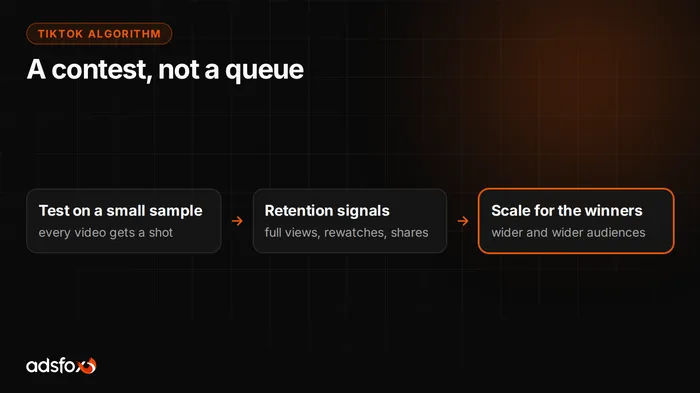
The TikTok algorithm works like a nonstop contest: every published video gets a test on a small sample of viewers, and the system measures whether it holds attention. Videos with good signals move on to further, wider rounds; weak ones quietly drop out of circulation. The most important consequence: reach depends on the reaction to a specific video, not on the size of the account. A business with zero history can record a video today that hundreds of thousands of people will watch, and that is not a flaw in the system. It is the point of it.
This post explains the mechanism as far as it is public, then moves on to the practical part: what it means for business content and paid advertising.
What does a video’s life cycle in recommendations look like?
A simplified but faithful model:
- Publication and initial matching. The system reads signals from the video itself: the sound, the caption, on-screen text, and picks a first test group of viewers with matching interests.
- Test on a small sample. The video goes out to a limited number of people, and the system collects reactions.
- Scaling decision. Good signals open up further, bigger groups; the test repeats at each one. Weak signals end distribution.
- The long tail. Videos that “popped” once can come back into circulation for weeks, because the system keeps matching them to new viewers.
This explains two things that confuse beginners: a video can “blow up” after several days of silence, and one video from an account can do a hundred times better than the previous ones from the same account.
Which signals weigh the most?
The system does not disclose weights, but practice and official statements agree on the hierarchy: the most valuable signals are the ones that cost the viewer something.
- Watching to the end and rewatching. The strongest proof that the content holds.
- Sharing. The viewer vouches for the video with their own reputation among friends.
- Commenting. It takes effort, so it weighs more than a reflexive like.
- Liking and following. They count, but less than intuition suggests.
The hierarchy implies a brutal truth about the first seconds: before any signal can exist, the viewer has to stay. A swipe in the first second is a negative signal, and mass swiping kills distribution faster than anything can save it. That is why in business videos the opening hook matters more than the logo; we collected the rules for building such content in our guide on how to create effective TikTok content.
What does this mean for business content?
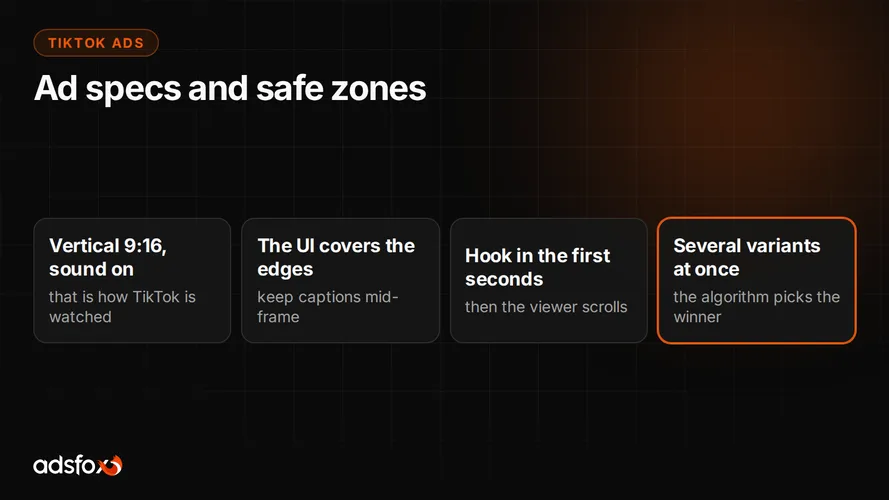
Publish variants, not single shots. Since every video gets its own test, several takes on a topic with different hooks are several lottery tickets in a draw that is not blind. Businesses used to one polished spot a month are playing the wrong game.
The account does not have to be big to start. The For You feed levels the field: what counts is the video, not the history. That is good news for businesses entering late.
Niche works in your favor. The system looks for viewers who match the content, so a video “for everyone” competes with everyone, while a video for a specific group reaches it precisely. Being specific in topic and language is not a limit on reach. It is the mechanism of reach.
Consistency produces data. Publishing at a steady rhythm is a series of tests that shows which topics and hooks work on your audience. Those conclusions are worth more than any guide, including this one.
What does this mean for paid advertising?
TikTok’s ad side works on a related principle: the system rewards creative that holds the viewer, so the cost per result depends on the video more than on targeting settings. The practical consequences:
- Several variants on a small budget instead of one on a big one. The test picks the winner, and only the winner gets scale. That is exactly how we run campaigns, as described on our TikTok Ads agency page.
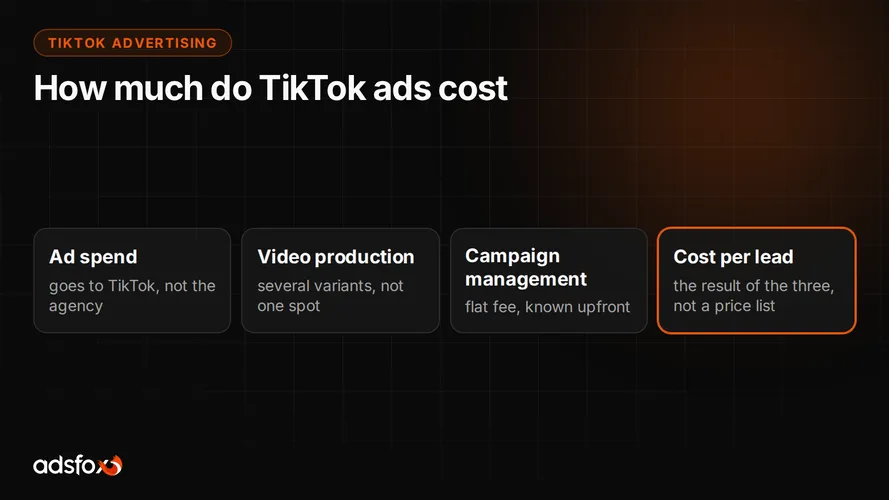
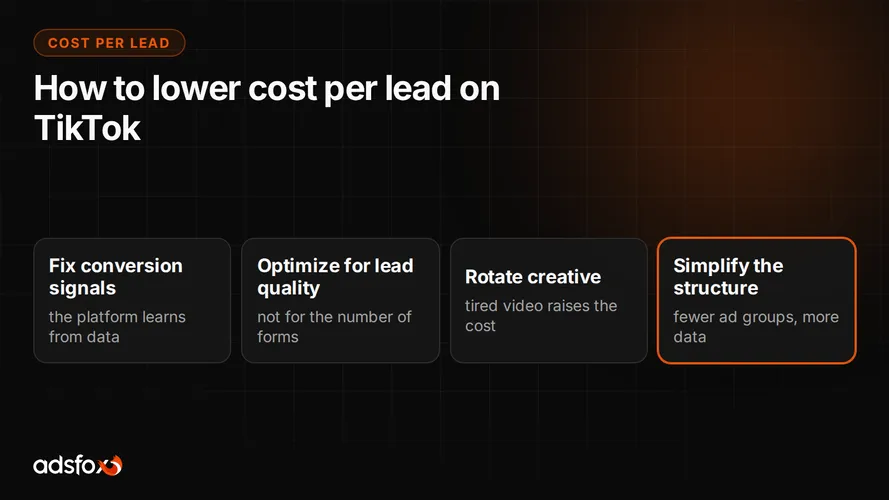
- Creative wears out. A video that has stopped holding attention gets more expensive. Rotation is a line in the budget, not an option; more in our post on how much TikTok ads cost.
- Organic tests feed paid. A video proven on your profile is the cheapest way to validate creative before spending budget. The technical setup of a campaign is walked through in our guide to TikTok Ads Manager step by step.
What will the algorithm not do for you?
It will not turn views into customers if there is no offer and no measurable path behind the video: where the traffic goes, what happens there, which videos bring inquiries and which only bring an audience. Reach without measurement is entertainment, not marketing.
If you want creative testing, campaigns and measurement handled by a team that has done this since 2018 for more than 350 clients, see our TikTok Ads agency service and book a free marketing consultation. We will check whether your offer has something to “hook” onto in this format before you spend the first dollar.